Shingle blistering is a roofing problem characterized by minor bubbles or raised spots on asphalt shingles. These look like small bumps or soft pockets below the surface. A shingle blistering roof may display these marks gradually over time. At first, they may not look but as a leading roofing company in Virginia Beach, we have seen how they can become a major problem if overlooked.. They can make shingles weak or hold moisture and decrease the roof’s life. Knowing to why shingles blisters helps you notice the problem early and take action.
The common causes include too much heat from the sun or poor airflow in the attic, moisture trapped during the making or fixing of shingles and long-term weather damage. This guide will help you recognize the signs of shingle blistering, how to stop it and simple repair ideas to keep your roof strong and long-lasting.
Key Takeaways
-
Shingle blistering is primarily caused by excessive solar heat, trapped moisture during manufacturing, or poor attic ventilation that creates an oven-like environment beneath the roof.
-
You can identify the problem by looking for small raised bumps, soft spots, or pockmarks on the shingle surface, particularly on the sun-facing sides of the home.
-
Effective prevention involves ensuring consistent airflow in the attic, using high-quality materials, and keeping gutters clean to prevent water buildup.
-
While small blisters might appear cosmetic, they weaken the roof’s protection, cause granule loss, and can lead to leaks or a voided warranty if left unaddressed.
-
Minor damage can often be fixed by replacing specific shingles and improving ventilation, but widespread blistering on an older roof usually indicates that a full replacement is necessary.
Why Do Shingles Blister? (Main Causes)
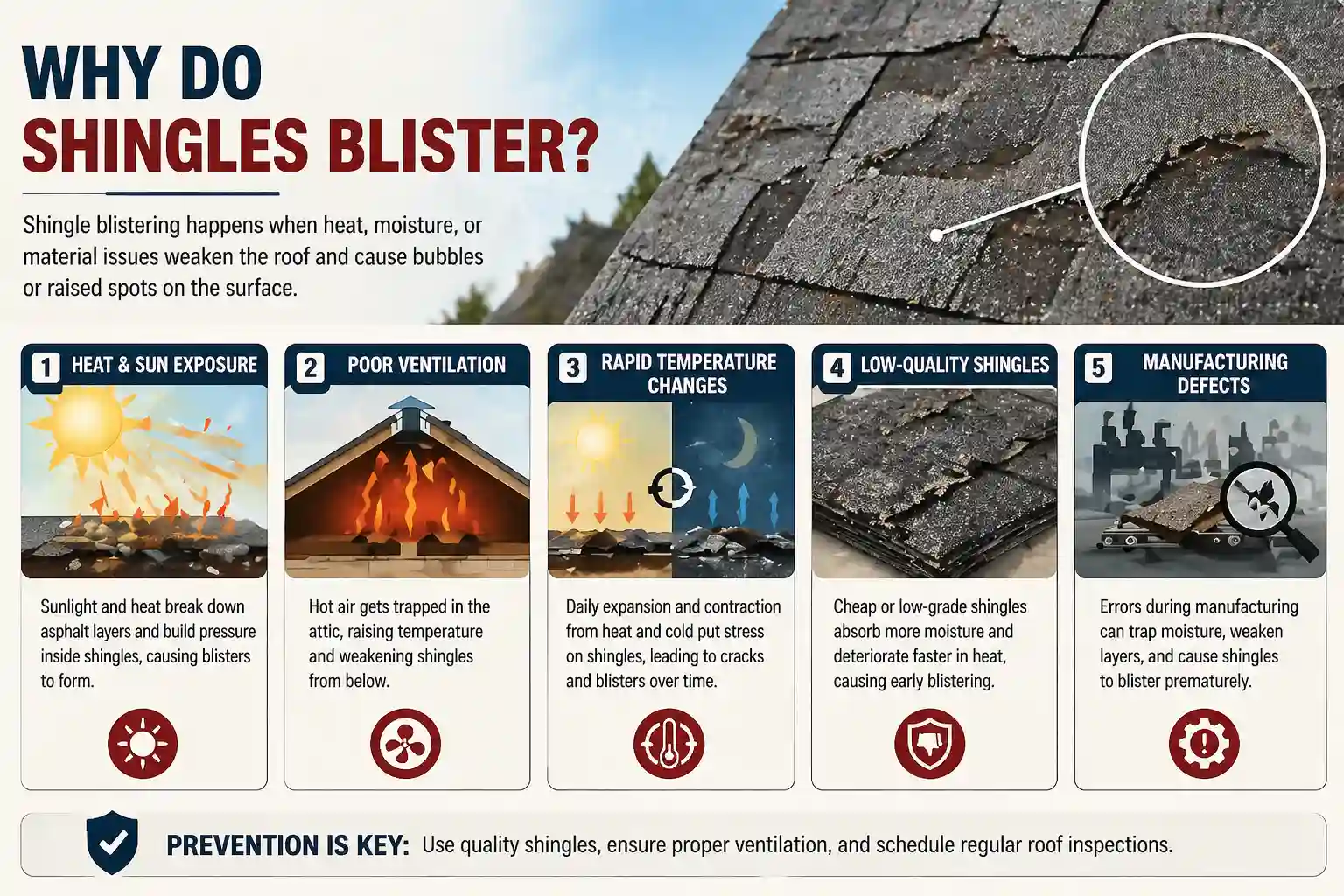
Understanding to why shingles blisters helps you stop problem on time. Below are the most common causes of roof blistering clarified.
1: Heat & Sun Exposure
Constant sunlight is one of the key reasons shingles start to blister on roofs. UV rays gradually degrade asphalt layers which weakening them over time. The high heat builds pressure inside shingles or bringing about bubbles on the surface.
- UV rays break down asphalt layers fast and weaken the roof surface
- Heat makes trapped gases expand and push shingles upward
- Pressure forms noticeable blisters on the roof surface
- Sun-facing areas are disturbed most throughout the day
These conditions together accelerate shingle blistering on exposed roofs particularly in hot climates.
2: Poor Ventilation
Poor attic ventilation means hot air gets stuck inside the roof space. This creates the attic very hot like an oven in summer. As a result, the roof shingles are damaged by the excessive heat.
- Hot air stays trapped in the attic.
- Heat builds up below the roof.
- Shingles become too hot and get weak fast.
Good ventilation is required to let hot air out and have the roof cool. Proper airflow also reduces moisture and heat complications. It helps shingles stay strong longer and withstand damage. The consistent roof inspections and proper ventilation design can prevent from shingle blistering and extend roof life.
3: Rapid Temperature Changes
Rapid temperature changes can gradually harm a roof. During the day, the sun heats the roof and causes the resources to expand. At night, when it gets cool, the resources shrink again. This repeated expanding and shrinking puts pressure on the shingles and roof structure. Over time, this stress weakens the shingles from the inside. The minor cracks or small air gaps can form under the surface. Later, these turn into blisters on the roof. If this has happened, the roof becomes weaker and can get damaged sooner. This is more common in places where temperatures change a lot each day.
4: Low-Quality Shingles
Low-quality shingles are a common cause of roof blistering as they are not strong. Cheap shingle roofing can hold additional moisture which can make them weak over time. Low-grade asphalt also gets damaged quickly in heat and sunlight which leading to early wear. Bad manufacturing can leave small hidden defects that lead to blistering. Using to good-quality shingles helps avoid these problems and keeps the roof stronger for longer. It also extends the roof’s lifespan and long-term durability.
5: Manufacturing Defects
Manufacturing defects are rare, but they can still occur in shingles. These complications start during the manufacturing process in the factory. They may not be caught at first but they can cause damage later on.
- Moisture gets trapped throughout production
- Layers are not closed correctly
- Resources are weak or uneven
These problems can cause shingles to blister prematurely, even after a few years of use. Consistent inspection and proper care can help identify these problems in a timely manner.
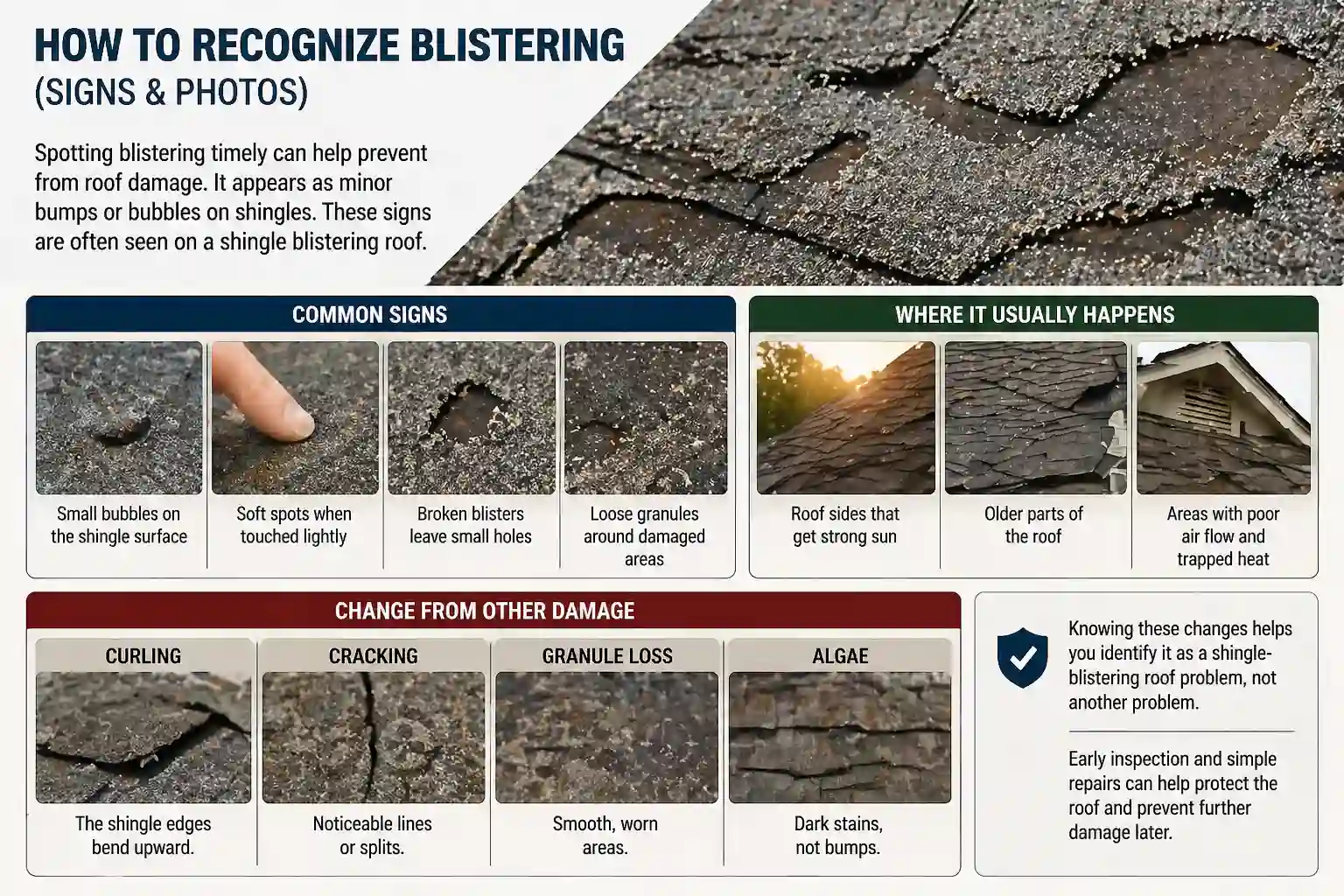
How to Recognize Blistering (Signs & Photos)
Spotting blistering timely can help prevent from roof damage. It appears as minor bumps or bubbles on on the surface of your shingle roofing. These signs are often seen on a shingle blistering roof.
Common signs:
- Small bubbles on the shingle surface
- Soft spots when touched lightly
- Broken blisters leave small holes
- Loose granules around damaged areas
Where it usually happens:
- Roof sides that get strong sun
- Older parts of the roof
- Areas with poor air flow and trapped heat
Change from other damage:
- Curling means the shingle edges bend upward
- Cracking means noticeable lines or splits
- Granule loss looks like smooth, worn areas
- Algae looks like dark stains, not bumps
Knowing these changes helps you identify it as a shingle-blistering roof problem, not another problem. Early inspection and simple repairs can help protect the roof and prevent further damage later.
Why Blistering Is a Problem
Blistering may seem like a minor issue on the surface, but it can gradually damage your roof over time. It makes shingles weak and lessens their ability to protect your home. If you overlook it, the damage can spread and cost more to repair later. That is why fixing it quickly is key.
- Makes shingles weak over time
- Lessens protection from water and moisture
- Can cause flaws or damage on the surface
- Shortens the life of the roof
- May cancel the roof warranty
Blistering is not just a surface problem. If it is not repaired in time then it can cause leakages, structural damage and serious roof complications later.
Preventing Shingle Blistering (Actionable Tips)
Preventing shingle blistering is easy with basic home care. Good airflow in the roof supports removes additional heat and moisture. Consistent roof checks help you spot damage promptly. Strong roofing materials support your roof and last longer.
Homeowner Tips
- Have attic vents open for fresh air flow
- Check the roof in the hot weather seasons
- Use light or heat-reflective shingles
- Have attic insulation balanced
- Do not allow the attic to get too hot
- Clean gutters to discontinue water buildup
- Reduce heat trapped in the attic throughout the summer
Installer Tips
- Use good-quality roofing resources
- Install correct ventilation systems
- Nail shingles properly
- Have air paths open in the attic
Good materials and proper airflow decrease roof complications over time. This supports controlling the causes of roof blistering and keeps the roof strong. Early care saves money on repairs and extends roof life. Fix problems early for the best effects.
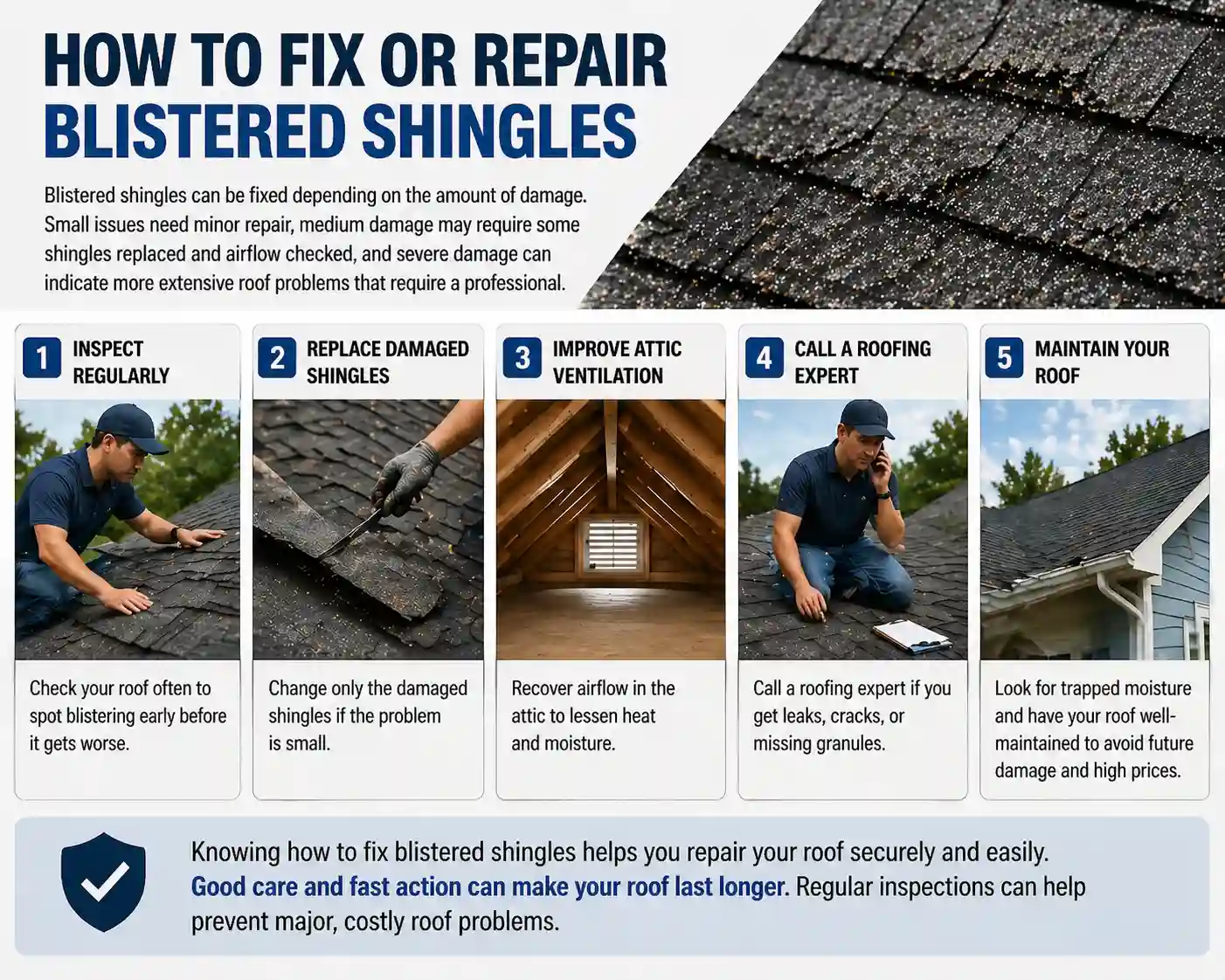
How to Fix or Repair Blistered Shingles
Blistered shingles can be fixed depending on the amount of damage they have. Small blisters typically need watching and minor repair. Medium damage may want some shingles replaced, and airflow checked. Severe damage can indicate more extensive roof problems that require a professional.
- Check your roof frequently to find blistering promptly before it gets worse.
- Change only the damaged shingles if the problem is small.
- Recover air flow in the attic to lessen heat and moisture.
- Call a roofing expert if you get leaks, cracks, or missing granules.
- Look for trapped moisture after rain or in humid weather.
- Have your roof well-maintained to avoid future damage and high prices.
Knowing how to fix blistered shingles helps you repair your roof securely and easily. Good care and fast action can make your roof last longer. Regular inspections can help prevent major, costly roof problems.
When It’s Time to Replace the Roof
Blistering alone does not always mean you need a new roof. But if it happens with other complications, replacement may be required.
Warning Signs
Many complications together, like blistering, curling or cracking
- Roof is more than 15–25 years old
- Water leakages or dampness in the attic
- Large areas of the roof are worn out
Simple Timeline Guide
0–10 years: Small problems, check habitually
10–20 years: Repairs and regular care required
20+ years: Roof replacement may be necessary if damage increases
If blistering is seen with old age and other damage, changing the roof is frequently the best long-term choice.
Conclusion
To keep your roof in good condition, you should notice minor problems promptly before they become major ones. Shingle blistering typically occurs due to heat, poor airflow or poor material quality. Regularly checking to your roof and fixing minor issues promptly can prevent serious damage.
Knowing how to fix blistered shingles helps you repair damage early and maintain a strong roof. It is very important to prevent shingle blistering by improving ventilation, using good-quality resources and doing consistent roof care.
A well-maintained roof has your home safe, lasts longer and helps you save money on repairs. Always look for early signs of damage and maintain your roof regularly for long-term protection and better performance. Regular care reduces future repair prices and keeps your home safe for many years.
Frequently Asked Questions (FAQs)
Are blisters bad for my roof?
Yes. Small blisters may look harmless, but they gradually weaken the shingles and can lead to more serious roof problems later.
Can blisters go away on their own?
No. When blisters appear; they do not go away. They can even break and cause more damage to the ter.
Do all roofs develop blistering?
No. Good fixing, correct air flow, and strong roofing resources help stop blistering.
How much does it cost to fix blistered shingles?
It depends on the damage:
- Minor repairs are priced less
- Partial replacement costs medium
- Full roof replacement prices more
A professional roof inspection provides the most accurate price.