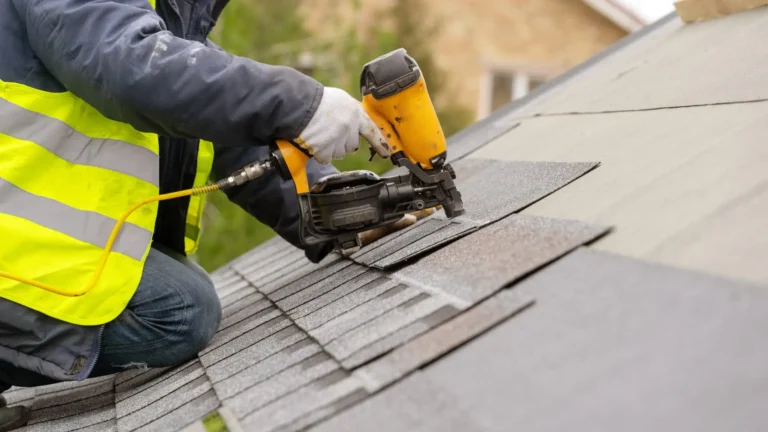
Hail damage on roofs happens when hailstones hit the roof and leave dents, flaws or take away protective granules from shingles. This roof hail damage makes the roof weaker and less able to prevent water from entering. If it is not repaired promptly, it can cause leaks, damage to the interior of the home and shorten the roof’s lifespan. As a professional roofing contractor, our team knows that roofers check for clear symbols like dents, soft or weak spots, missing granules, broken shingles and unseen water damage.
During a later inspection, repairs may include setting small damaged areas or replacing entire sections of shingles. In this guide, you will learn how to spot damage promptly, know hail damage repair roofing, deal with insurance claims and take simple steps to protect your roof in the future.
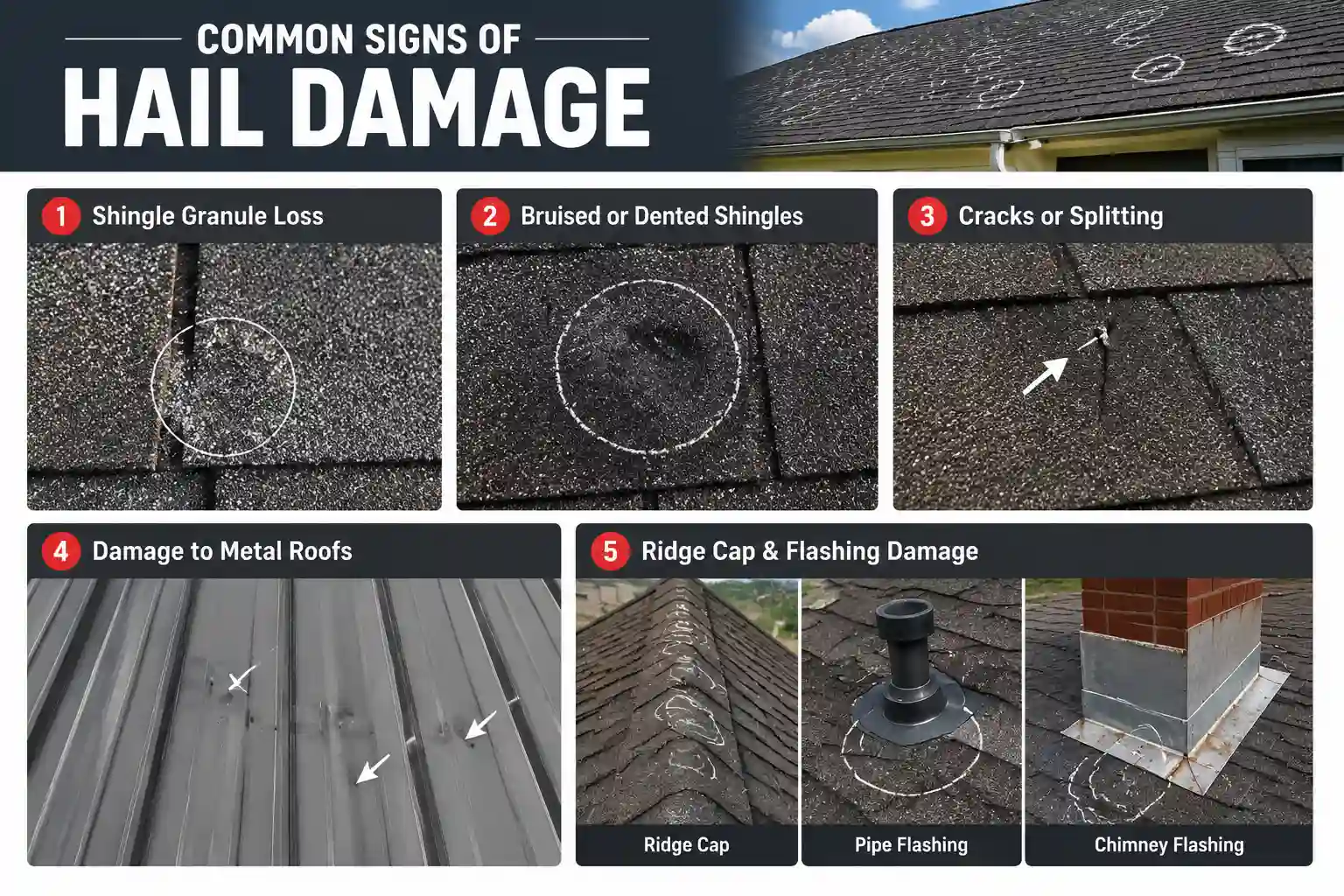
Common Signs of Hail Damage
How to tell if the roof has hail damage starts by knowing what to search for on your roof. Check for easy symbols like dents, cracks or broken shingle pieces. You may also get spots where the small granules are missing. These signs indicate that hail has damaged your roof.
1: Shingle Granule Loss
Shingle granule loss is a common roof problem after hail or bad weather. It happens when the minor protective layer on shingles wears off and the base gets exposed. Granules protect shingles from sun, rain and heat so the roof lasts longer. Fixing the damage fast is essential.
2: Bruised or Dented Shingles
Bruised or dented shingles happen when hail hits the roof but does not break the surface. The damage is not always easy to spot, but it gradually weakens the roof. It is like a bruise on a fruit where the damage is inside, not completely visible on the outside.
- Soft spots when softly pressed
- Spongy areas on the roof surface
- The fiberglass layer starts to display
Checking regularly helps stop leaks and avoid costly roof repairs later.
3: Cracks or Splitting
Cracks or splitting in shingles happen when the roof gets hit by the climate, hail or becomes old. These flaws can be straight, curved, or appear as small web lines on the surface. They mean the shingles are weak and are starting to deteriorate. These cracks allow water to enter the roof. This can cause leakages or dampness and damage inside the house. Fixing to them promptly helps protect your roof from more serious problems.
4: Damage to Metal Roofs
Metal roofs can get damaged by hail or strong storms. You may get small dents on the metal panels from hard impacts. Sometimes the paint chips off which leaving the metal exposed to air and water. Small dents may only look bad, but more serious damage can be severe. Over time, exposed metal can start to rust and gradually weaken the roof. If it’s not repaired on time then it can lessen the roof’s strength and lifespan.
5: Ridge Cap & Flashing Damage
Ridge cap and flashing damage occur when hail or strong winds hit the highest and most exposed parts of the roof. These areas are more exposed so they are easily damaged and gradually lose their protection over time. If not checked promptly then this damage can lead to leaks and more serious roof problems.
Impacts typically occurred along roof edges and roof peaks where shingles meet. Dents can also form around vents, chimneys and skylights after storms.
- Impacts along roof edges and peaks
- Dents near vents, chimneys or skylights
Early inspection of these weak areas supports stopping leaks and costly roof repairs later.
What Roofers Look For During a Hail Damage Inspection
Roofers check the roof step by step to catch hail damage. First, they look from the ground for dents, dirt and damage on gutters and siding. Then they use a ladder, drone or walk on the roof to get closer to the damage. Later, they carefully record all findings for repair and insurance purposes.
Ground and ladder check: inspect gutters, siding, and downspouts for dents and dirt.
Early signs: check roof edges, vents and outside parts for noticeable damage
Roof walk or drone check: find hail hit patterns on the full roof
Shingles check: search for missing granules, small dents, flaws and weak spots
Flashing and vents: inspect skylights or vents and other weak roof areas
Metal roof check: search for dents, scratches or exposed metal
Documentation: take photos and notes for insurance claims
Homeowner explanation: roofers clarify all damage in simple words
These steps help properly identify damage and make repair work easier and clearer.
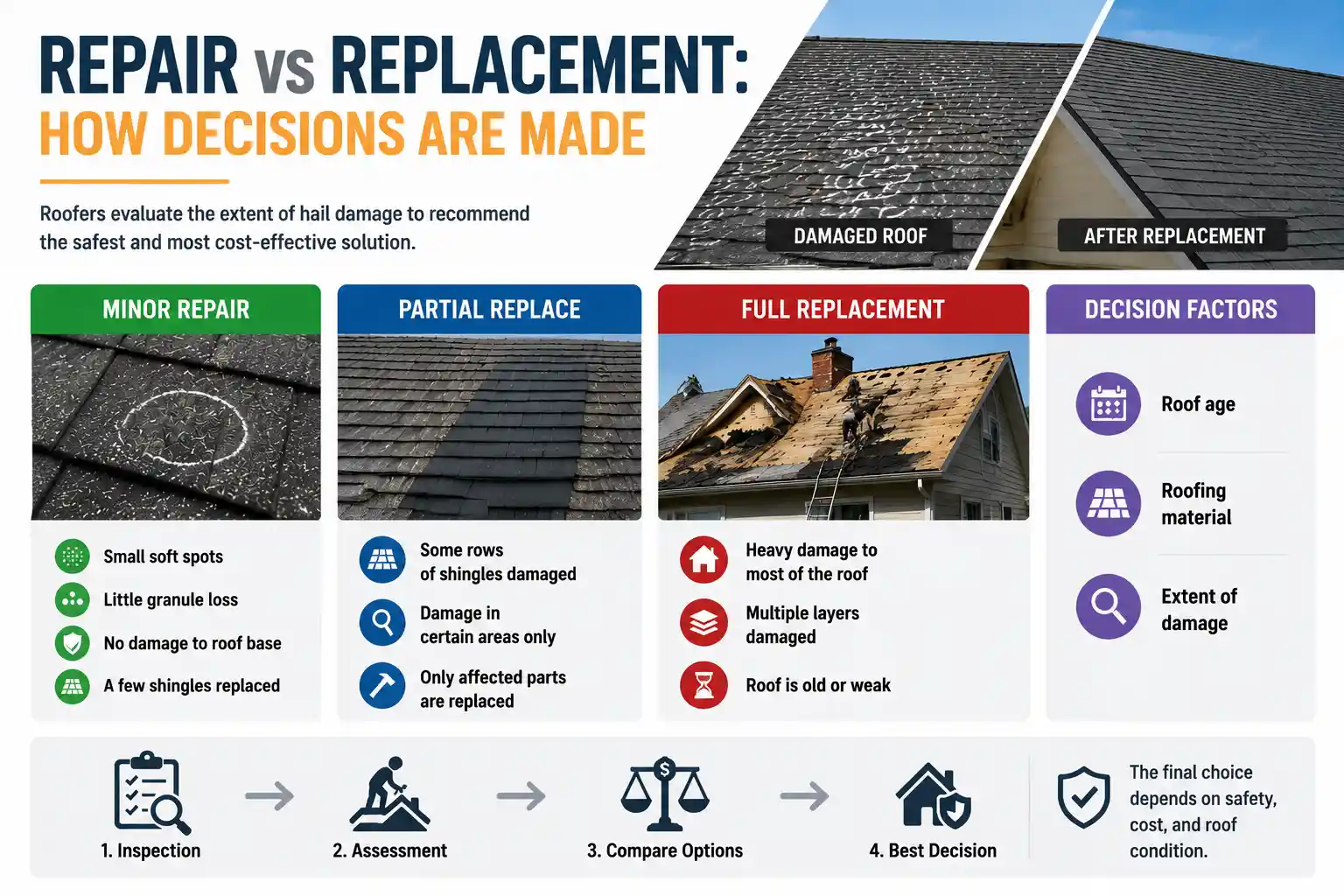
Repair vs Replacement: How Decisions Are Made
Understanding hail damage: shingle repair vs. replacement helps homeowners know what to do after a storm. Roofers assess the extent of damage and whether it is minor or widespread. The main aim is to have a safe or save money and make it last longer.
Minor Repair:
- Minor soft spots in a few areas
- Little granule loss
- No harm to the roof base
- Only a few shingles are changed
Partial Replace:
- Some rows of shingles are damaged
- Damage is in certain areas only
- Only the affected parts are changed
Full Replacement:
- Heavy damage to most of the roof
- More than one layer is damaged
- The roof is old or weak
Decision Factors:
- The age of the roof is checked
- Kind of roofing material matters
- How much damage is there?
Roofers previously decided on repair and replacement costs. A full inspection helps prevent future leaks and problems. The final option depends on safety, price and roof condition.
Typical Costs & Insurance Considerations
The price of hail-damage roof repair varies in each case. It depends on the roof size, material and how serious the damage is. Small repairs typically cost less but a full roof replacement can be expensive. Insurance can help reduce your expenses after a storm.
Repair cost depends on:
- Big roofs cost more to fix
- Asphalt, metal and tile have different rates
- More damage means greater cost
- Local labour rates can also change the price
Insurance tips:
- File your claim soon, after the storm
- Take clear photos of hail damage
- Get price quotes from changed roofers
- Know your deductible and coverage
- Work with roofers who switch insurance claims
For example, fixing a minor part of an asphalt roof is much less expensive than replacing the entire roof. If the damage is serious and well-documented, then insurance may cover most of the cost.
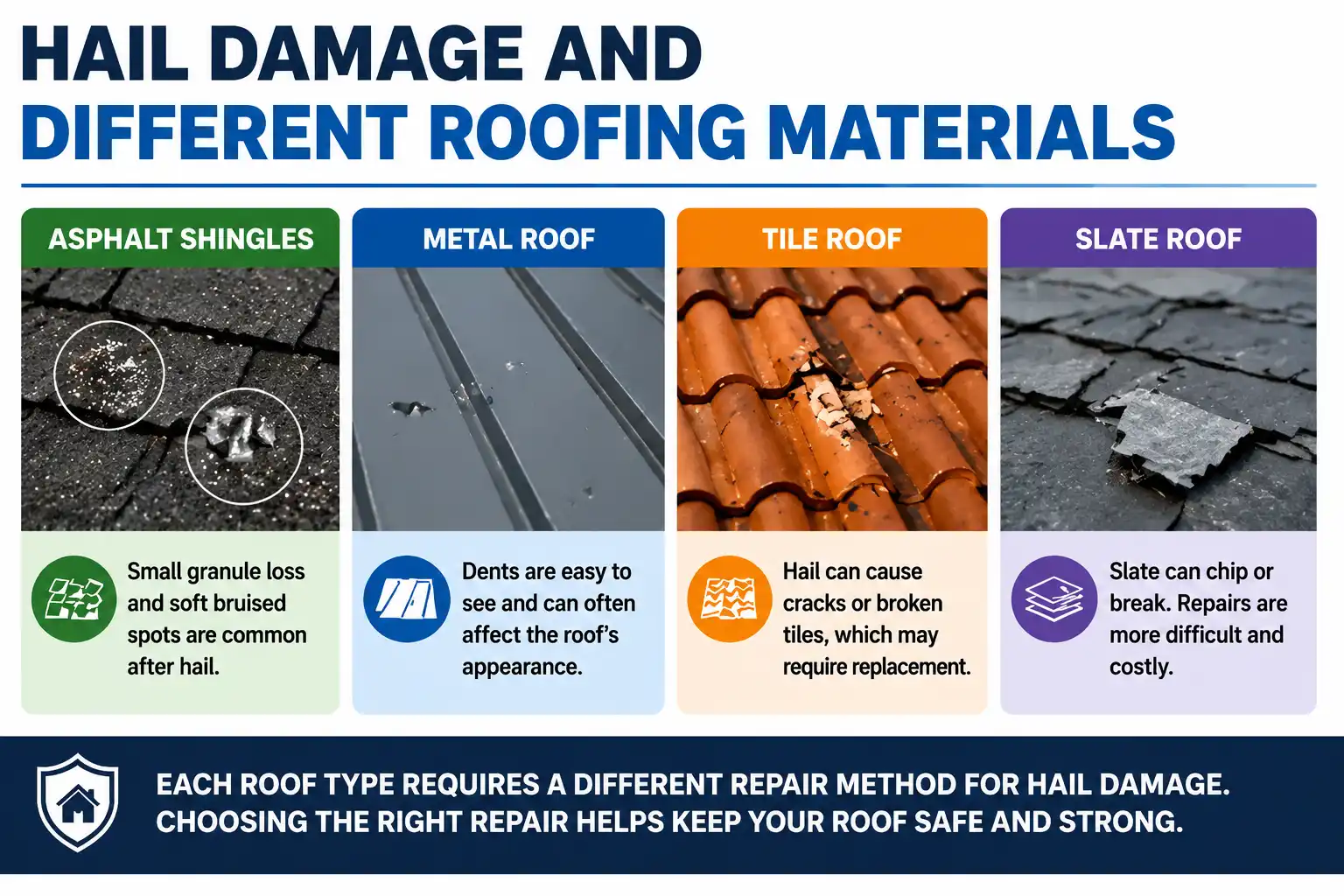
Hail Damage and Different Roofing Materials
Hail can damage roofs in different ways, depending on the material. Some roofs get dents, some get cracks and some lose their protective layer.
Asphalt Shingles: Small stone loss and soft bruised spots are common after hail.
Metal Roof: Dents are easy to get and often spoil the roof’s appearance.
Tile Roof: Hail can cause cracks or broken pieces so that damaged tiles may need replacement.
Slate Roof: Slate can chip or break, and fixing it is tougher and more expensive.
Each roof type requires a different repair method for hail damage. Selecting the right repair makes the roof safe and strong.
How to Prevent or Minimize Hail Damage
Hailstorms cannot be stopped but you can decrease roof damage by taking simple steps. Using high-quality roofing materials and maintaining consistent roof care helps protect your home from heavy hail. Good preparation also helps lower repair costs and makes your roof last longer in storm areas.
Install strong, impact-resistant shingles (Class 4)—they can withstand large hailstones.
Use roof coatings — they offer an more protective layer.
Trim nearby trees — stops branches and debris from falling on the roof.
Clean gutters — ensure water flows correctly during rain and storms.
Check insurance — make certain hail damage is included in your policy.
Class 4 shingles are very strong against hail damage. They are a good option for areas where hailstorms happen frequently. Consistent roof inspection and maintenance keep your roof safe for longer.
When to Call a Roofer
If your area has a hailstorm then you should call a professional roofer if you get any damage or warning symbols on your roof. Contact a roofer immediately if you notice dents or missing granules, leakages or water stains inside your house. Also, call if your roof is old and has just been hit by hail. As a homeowner, do a quick check by watching to gutters for granules or checking vents and metal parts for dents. Take photos of something strange. If you notice these complications then book a roof inspection as soon as possible.
Conclusion
To summaries that understanding to hail damage helps homeowners act fast and avoid costly roof problems. Knowing to the main symbols like granule loss, dents and cracks helps you find damage on time before it gets worse. Learning how professionals choose between hail-damage shingle repair vs. replacement helps you select the right option for your roof. Knowing about roofing hail damage insurance too helps you control repair prices and avoid surprise expenses. The consistent roof checks or quick repairs and strong materials like impact-resistant shingles can help your roof last longer. Must call a reliable roofer each time for a thorough inspection and guidance to keep your home safe and secure for long time.
Frequently Asked Questions
Does hail always mean roof replacement?
No. Most of the time, only minor repairs are required. A full replacement is required only when the damage is serious or covers a large area.
How soon should I inspect after a hailstorm?
You should check your roof a few days after the hailstorm to prevent minor problems from worsening.
Can hail damage be hidden?
Yes. Some damage cannot be got effortlessly. It may require a close or professional inspection to find it.
Are there warranties for hail damage?
Most basic warranties do not cover hail damage. But some upgraded resources or insurance plans may help cover it.