A roof ridge is the top line of a roof where two sloping sides meet. It is the top edge of the roof. A ridge works like a cover that stops rain, wind and dust from getting inside your house. It also helps air move in and out of the attic when ventilation is added.
Understanding the meaning of roof ridges helps you recognize why this small part of the roof is crucial to keeping your home strong, safe and comfy.
In this guide, we also introduce the types of roof ridges, such as ridge cap shingles, hip ridges and ridge vents. You will learn how roof ridges protect your home from the elements, restore airflow and support the overall performance of your roof. This will help you better care for your roof and know when repairs or maintenance are needed.
Why Roof Ridges Matter
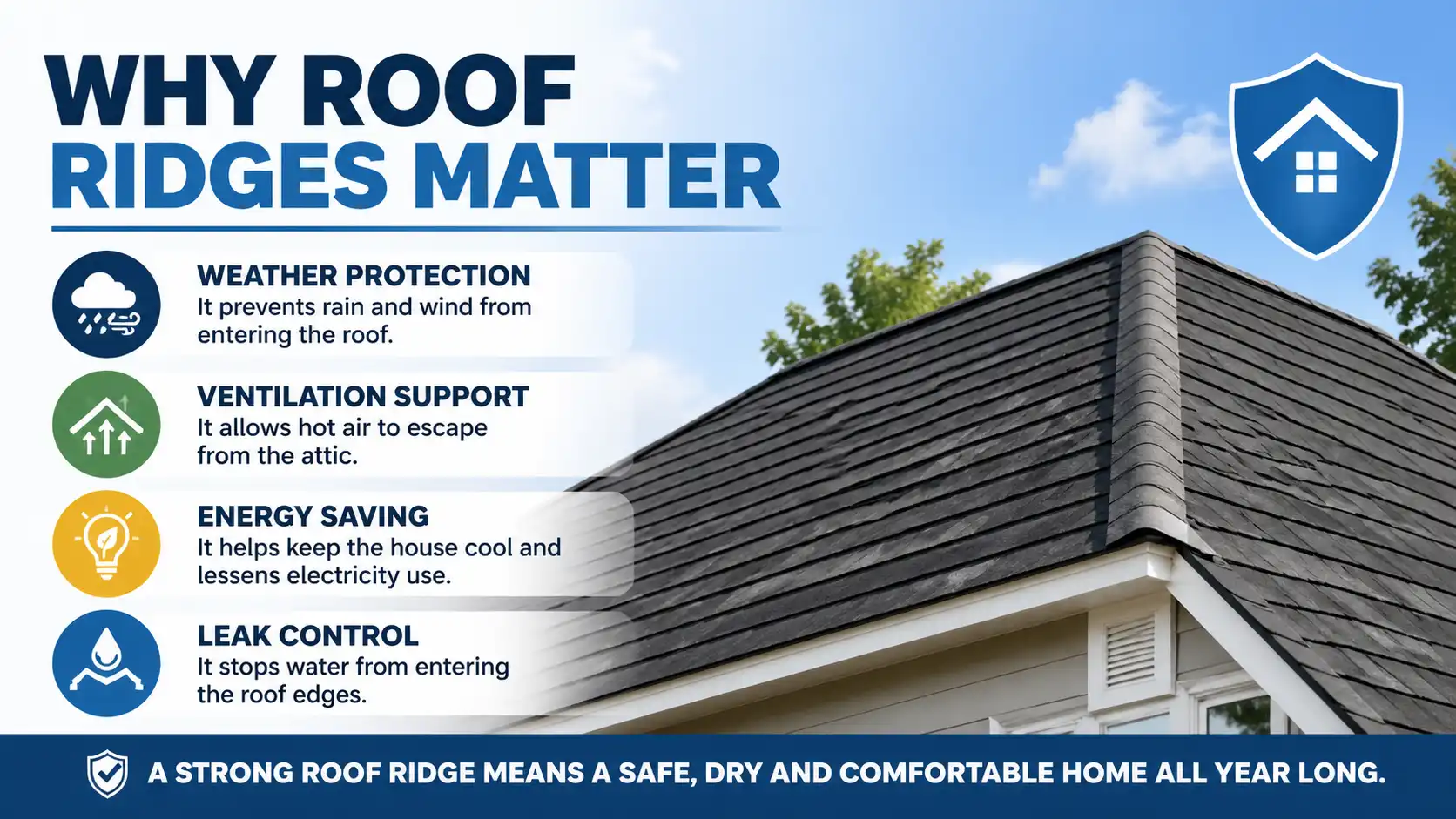
The roof ridge function is a key part of each house’s roof. The top line is where the two sides of the roof meet. This part protects the home from rain, wind, heat and dust. A strong roof ridge keeps the house safe, dry and comfortable. It also helps the roof last for various years without damage.
Main points:
Weather protection: It prevents rain and wind from entering the roof.
Ventilation support: It allows hot air to escape from the attic.
Energy saving: It helps keep the house cool and lessens electricity use.
Leak control: It stops water from entering the roof edges.
If the roof ridge is weak or broken then it can cause leakages, moisture and air complications inside the house. This can slowly damage walls and the roof structure. Consistent checking and proper installation have the roof ridge working well. A good roof ridge protects the home in all weather conditions. Overall, it offers long-lasting protection and safety for each home throughout the year.
Common Types of Roof Ridges
Common types of roof ridges are different styles used on roofs, distinguished by their shapes. Each type protects the house from rain, wind and heat. Some roof ridges are very simple while others also help air move in the attic. Learning about them helps you better understand how a roof works.
Types of Roof Ridges Table
| Ridge Type | Simple Meaning | Use |
| Standard Ridge | Where two roof sides meet at top | Gable roofs |
| Hip Ridge | Where some roof sides join | Hip roofs |
| Ridge Cap Shingles | Shingles placed on top of ridge | Asphalt roofs |
| Ridge Vent | Opening that allows air go out | Vented attics |
Explanation of Each Type
Standard Ridge: The most common type. It is the highest line where two roof sides meet. Many houses with simple roof shapes use this.
Hip Ridge: This Ridge is where various roof sides meet. It strengthens particularly in high-wind areas.
Ridge Cap Shingles: These are distinct shingles placed on the top of the roof. They protect the roof from water and also make it look neat.
Ridge Vent: A minor opening at the top of the roof. It allows hot air to go out from the attic and has fresh air moving inside.
Ridge Ventilation: What It Is & Why It Helps
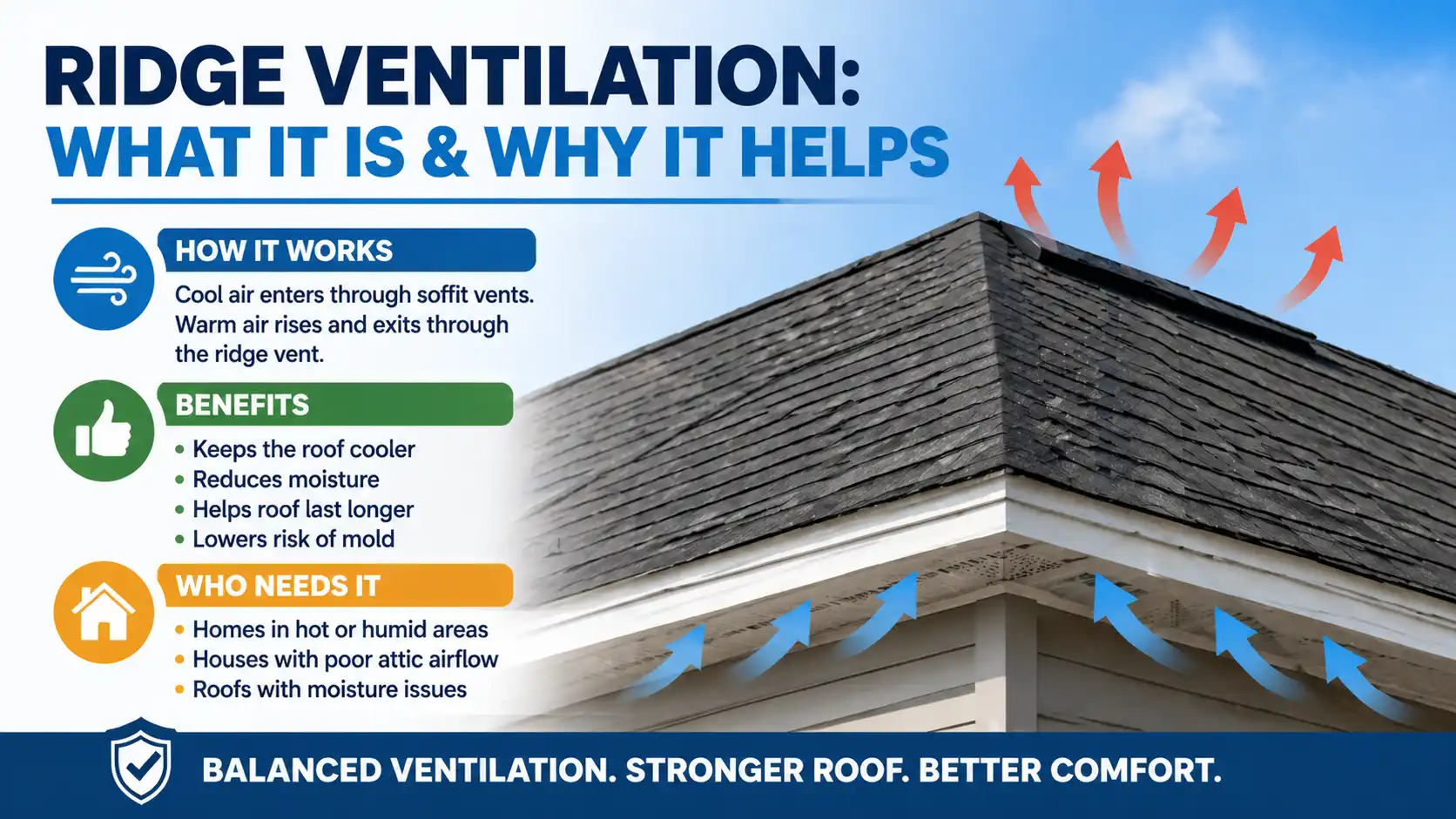
Ridge ventilation is a system placed at the top of the roof. It supports air movement in and out of the attic. It works with soffit vents to have air flowing in a natural way. This creates a roof that stays cooler, drier and stronger year-round. When watching a ridge vent vs. a ridge cap, the change is easy. The ridge cap only covers and seals the roof. A ridge vent lets air to pass through.
How it works: Cool air comes in through soffit vents below the roof. Warm air rises and exits through the ridge vent at the top. This steady air flow is known as balanced ventilation.
Benefits:
- Does the roof get cooler in hot weather?
- Lessens moisture in cold weather
- Helps roof resources last longer
- Lowers the chance of mold
Who needs it:
- Homes in hot or humid areas
- Houses with poor attic air flow
- Roofs with moisture or damp complications
Balanced ventilation means that fresh air comes in and hot air goes out in equal amounts. Ridge vents support this happening naturally. Generally, ridge ventilation protects the roof, improves comfort and increases roof life.
Materials Used for Roof Ridges
Roof ridges are made from different materials depending on the roof type and design. The material you select determines how strong the roof is or how much it prices and how well it works.
Common resources include shingles or metal caps and ridge vents. Each one is used for changing needs centered on weather, roof style and budget.
Asphalt shingles: These are inexpensive or easy to fix and match most roofs.
Metal ridge caps: These are very durable or last a long time and protect well from bad weather.
Ridge vents: These support airflows in the attic, reduce heat and keep the roof cooler.
Selecting the correct material helps your roof last longer and stay durable. It also improves air flow and saves energy. A good option also makes the roof look good and protects the home in all weather conditions.
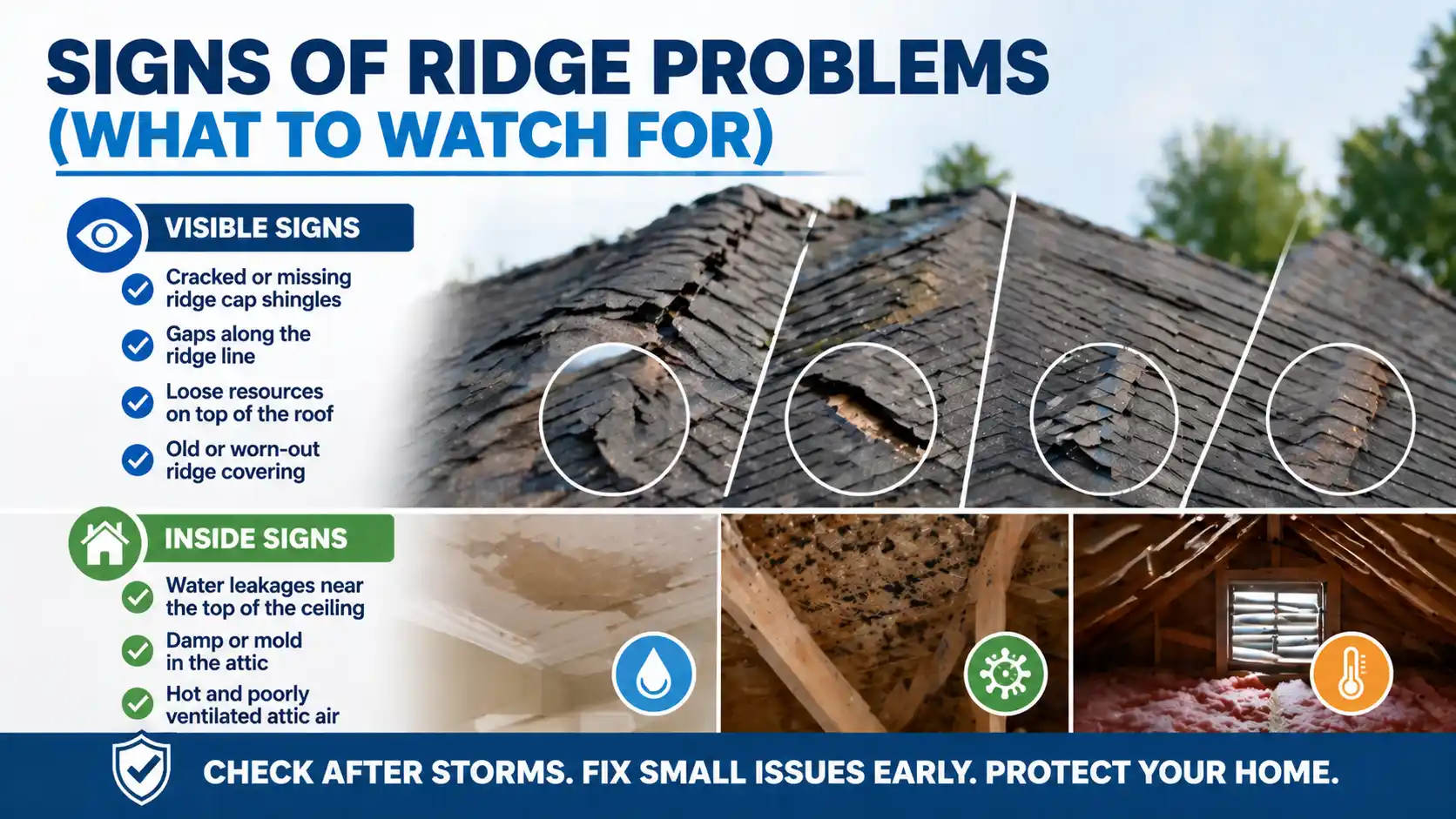
Signs of Ridge Problems (What to Watch For)
Roof ridge complications can start slowly and are frequently hard to notice at first. The small problems can cause significant damage if not fixed in time. That is why it is essential to check your roof ridge habitually particularly after heavy rain or strong winds. Early inspection helps keep your home safe and can save on repair costs. A damaged ridge can also prevent proper airflow and allow water to enter the roof area.
Visible signs:
- Cracked or missing ridge cap shingles
- Gaps along the ridge line
- Loose resources on top of the roof
- Old or worn-out ridge covering
Inside signs:
- Water leakages near the top of the ceiling
- Damp or mold in the attic
- Hot and poorly ventilated attic air
Each time, check your roof after storms and repair minor issues promptly to prevent more serious damage later.
Repair & Replacement Basics (High‑Level)
Roof ridge repair and replacement should be done carefully as even minor issues can cause significant damage if overlooked. You should call professional roofers Virginia Beach if your roof is 15 to 20 years old, after a strong storm or if you notice leaks at the top of the roof. Broken, missing or old ridge shingles are too warning signs. Roofing experts ensure the roof is sealed correctly, the right resources are used and all is fixed safely, with flashing when required. Bad or DIY repairs may look good at first but can cause more leaks later and become costly to fix. Professional help has your roof strong or harmless and long-lasting.
Ridge vs Other Roof Edges (Comparison)
To know roof parts clearly, here is an easy comparison:
| Feature | Ridge | Eave | Valley |
| Location | Top of the roof | Bottom edge of roof | Where two roof slopes meet inside |
| Function | Seals roof & allows airflow | Sends rainwater off the roof | Guides rainwater down safely |
| Common difficulties | Leakages, poor ventilation | Ice buildup, clogged gutters | Water collecting or leaking |
Key Differences (Simple Points)
- The Ridge is the very highest part of the roof.
- The eave is the bottom edge of the roof.
- The valley is where two roof slopes meet and water flows down.
Each part has its own job but the Ridge is very important because it helps cover the roof and allows air to move inside.
Why Roof Ridge Design Affects Performance
The design and quality of your roof ridge affect your full roofing system.
Better Ventilation: A well-designed ridge recovers airflow which decreasing heat and moisture.
Longer Roof Life: Correct airflow stops shingles from overheating and cracking.
Energy Efficiency: Good ventilation helps regulate indoor temperatures and can help reduce energy bills.
Weather Resistance: A strong ridge protects against heavy rain and wind.
Conclusion
To summarize that the roof ridge is an essential part of your roof that helps protect your home from rain, wind and other weather. It also allows air to move freely through the roof space. Selecting the right ridge type and strong materials helps your roof perform well and last longer. Regular checking of the roof ridge is key as it helps find small problems on time and stops leaks, damage and costly repairs.
Understanding to what a roof ridge is on a house and the change between ridge vent vs ridge cap helps homeowners make better and safer roofing selections. A good roof ridge system keeps your home strong, restores airflow, and extends roof life when it is installed and maintained correctly.
Simple care and consistent inspection after storms can protect your roof for many years and keep your home safe or dry and in good condition.