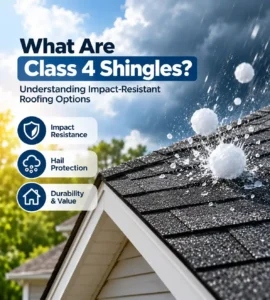
Class 4 shingles are roofing products designed to resist impact damage from hail and other objects. They meet the highest impact-resistance classification under UL 2218, a standardized laboratory test for roofing materials.
However, Class 4 shingles are not hail-proof. Their performance depends on storm severity, installation quality, roof condition, and the specific roofing product.
For homeowners considering a roof replacement, understanding Class 4 shingles can help determine whether the added cost is worth it, especially in areas that experience frequent hailstorms.
What Are Class 4 Shingles?
Class 4 shingles are impact-resistant roofing materials that meet the highest classification under the UL 2218 testing standard.
The test involves dropping steel balls onto roofing materials from specified heights to evaluate their resistance to impact damage. Class 4 products undergo testing with a 2-inch steel ball and must meet defined criteria for resistance to cracking or splitting.
This rating helps homeowners compare products based on their ability to withstand standardized impacts.
However, UL 2218 evaluates impact resistance, not every aspect of roof performance.
The rating does not establish a roof’s:
- Wind resistance
- Fire resistance
- Waterproofing performance
- Expected service life
- Overall resistance to every type of storm damage
These characteristics must be evaluated separately using the appropriate product specifications and testing standards. For deeper insights into how advanced weather profiles stand up to severe elements, you can read more about Malarkey Legacy Shingles: Durable, Stylish, and Value.
What Does the Class 4 Shingle Rating Actually Mean?
A Class 4 rating indicates that a roofing material has met the highest impact-resistance requirements under UL 2218.
During testing, steel balls are dropped onto roofing samples under controlled conditions. The materials are then examined for damage according to the standard’s evaluation criteria.
Real hailstorms are different from laboratory tests.
Hailstones vary in size, density, shape, and impact angle. Wind can also influence how hail strikes a roof, while temperature and the age of the roofing materials may affect their response.
Class 4 shingles may resist certain types of impact damage better than lower-rated products, but they can still lose granules, suffer surface damage, or deteriorate during severe weather.
The rating provides useful information about impact resistance but doesn’t guarantee a roof will remain undamaged.
Class 4 Shingles vs. Standard Asphalt Shingles
When choosing roofing materials, homeowners often compare Class 4 impact-resistant shingles with conventional asphalt shingles.
The main differences involve impact performance, upfront cost, and potential insurance benefits.
| Feature | Class 4 Shingles | Standard Asphalt Shingles |
| Impact rating | Meets Class 4 requirements under UL 2218 | May have lower ratings or be unrated |
| Hail resistance | Designed and tested for higher impact resistance | Performance varies by product |
| Initial cost | Generally higher | Usually lower |
| Appearance | Available in various architectural styles | Available in traditional and architectural styles |
| Insurance discounts | May qualify for certain discounts | Less likely to qualify for impact-resistance discounts |
| Durability | Depends on product quality and installation | Depends on product quality and installation |
| Maintenance | Requires routine roof inspections and care | Requires routine roof inspections and care |
A Class 4 rating does not mean that a particular shingle will always outlast a conventional product. Roof lifespan depends on several factors beyond impact resistance.
For the most useful comparison, evaluate specific manufacturer products rather than assuming all shingles in the same category perform identically.
Are Class 4 Shingles Hail-Proof?
No. Class 4 shingles are impact-resistant, not hail-proof.
Although they meet a higher level of laboratory impact testing, severe storms can still damage the roofing system.
The extent of hail damage may depend on:
- Hailstone size and density
- Wind speed and direction
- Impact angle
- Roof pitch
- Age and condition of the shingles
- Condition of the roof decking
- Quality of installation
Large hailstones can damage shingles, flashing, vents, gutters, and other roof components even when impact-resistant materials are installed.
After a significant hailstorm, a professional roof inspection can help identify damage that may not be visible from the ground.
Benefits of Class 4 Shingles
Class 4 shingles can offer practical advantages, particularly for homes in areas with frequent hailstorms.
1. Greater Resistance to Impact Damage
The primary benefit is improved resistance to certain types of impact damage.
Class 4 shingles are designed to meet higher testing requirements than lower-rated products. This may reduce the likelihood of cracking or other damage under comparable impact conditions.
However, protection levels vary by product and do not guarantee repairs will never be needed.
2. A Practical Option for Hail-Prone Areas
Homeowners in regions that experience frequent hail may benefit from considering impact-resistant roofing materials.
Choosing a higher-rated product can be part of a broader approach to reducing storm-related roof damage.
The decision should also account for the home’s location, roof design, and installation requirements.
3. Potential Homeowners Insurance Discounts
Some insurance companies offer premium discounts for qualifying Class 4 roofing products.
The amount and availability of these discounts depend on the insurer, state, policy terms, and specific roofing material.
Before purchasing, ask your insurance provider whether the product you’re considering qualifies.
4. Multiple Design Options
Class 4 shingles are available in a range of colors, profiles, and architectural styles.
Homeowners can often choose an impact-resistant product that complements their home’s appearance without sacrificing their preferred roofing design.
Limitations of Class 4 Shingles
Despite their advantages, Class 4 shingles have several limitations homeowners should understand.
Higher upfront cost: Impact-resistant shingles may cost more than conventional asphalt products, depending on the manufacturer and product line.
Possible cosmetic damage: Severe hail may still cause granule loss, surface marks, or other visible damage.
Insurance restrictions: Not every Class 4 product qualifies for a discount, and some insurance policies exclude cosmetic damage.
Installation requirements: Proper installation is necessary for reliable roof performance. Incorrect installation may also affect warranty coverage.
No guarantee against storm damage: A Class 4 rating does not eliminate the risk of damage from hail, wind, falling objects, or other severe weather conditions.
Review these limitations alongside the potential benefits before deciding whether to upgrade.
How Much Do Class 4 Shingles Cost?
Class 4 shingles generally cost more upfront than many conventional asphalt shingles.
However, the total cost of installing an impact-resistant roof depends on more than the material itself.
Factors that influence the price include:
- Total roof size
- Roof pitch and complexity
- Selected shingle brand and product line
- Labor costs
- Removal and disposal of existing roofing
- Roof decking repairs
- Underlayment and flashing requirements
- Ventilation and other installation needs
For an accurate comparison, request itemized estimates for both conventional and Class 4 roofing systems.
Make sure the estimates include comparable installation work, materials, warranties, and any necessary repairs.
The cheapest initial option isn’t always the most economical over time, and a higher impact rating doesn’t automatically guarantee lower lifetime roofing costs.
Can Class 4 Shingles Lower Homeowners Insurance Costs?
Some homeowners may qualify for insurance premium discounts after installing approved Class 4 impact-resistant shingles.
However, insurance discounts are not automatic.
Eligibility depends on the insurance company, geographic location, policy conditions, and product certification.
Before selecting a shingle, ask your insurer:
- Do you offer discounts for Class 4 impact-resistant roofing?
- Which manufacturers and products qualify?
- What documentation is required to confirm installation?
- How much could the discount reduce my annual premium?
- Are there cosmetic hail damage exclusions or special deductibles?
Some policies may require additional documentation or contain restrictions that affect future claims.
Check these conditions before assuming an insurance discount will offset the upgrade cost.
Are Class 4 Shingles Worth the Extra Cost?
Class 4 shingles may be worth considering when a home is located in an area with frequent hailstorms, especially if the homeowner wants improved impact resistance.
However, the best choice depends on the property’s needs and the roofing system’s cost.
Consider the following factors:
Local hail exposure: Frequent severe storms may make impact resistance more important.
Price difference: Compare the full installation cost of Class 4 shingles against suitable conventional alternatives.
Insurance eligibility: Confirm whether your insurer offers a meaningful discount for the selected product.
Roof condition: If your existing roof needs replacement, upgrading the material may be more practical than replacing an otherwise functional roof solely to obtain a higher impact rating.
Product performance: Review the manufacturer’s impact rating, wind rating, warranty terms, and installation specifications.
Rather than choosing a product based only on its Class 4 label, evaluate whether its overall features justify the additional expense.
How to Choose the Right Class 4 Shingles
Choosing impact-resistant shingles involves more than confirming their UL 2218 classification.
Verify the Impact Rating
Confirm that the specific product has been tested and classified as Class 4 under UL 2218.
Not every shingle a manufacturer produces has the same impact-resistance rating.
Review Other Performance Ratings
Impact resistance is only one part of roof protection.
Check the product’s wind resistance, fire classification, and any other performance ratings relevant to your home and local building requirements. If you are weighing different mainstream brands, our comparison on Owens Corning vs. Malarkey Shingles: Which is Better? can help you evaluate performance trade-offs.
Understand the Warranty
Review the manufacturer’s warranty before purchasing.
Pay attention to coverage periods, exclusions, installation requirements, and storm-damage limitations.
A warranty should not be interpreted as a promise that the roof will never experience hail damage.
Choose an Experienced Roofing Contractor
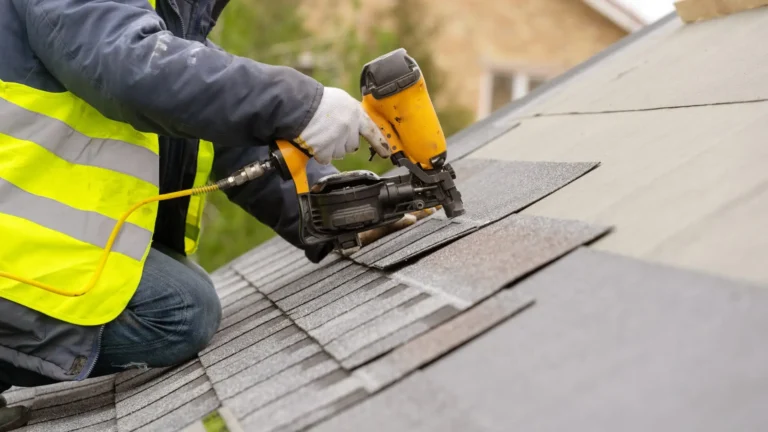
Even high-quality roofing products can perform poorly when installed incorrectly.
Choose a qualified roofing company in Virginia Beach that follows manufacturer specifications and local building requirements.
Ask how the contractor will handle underlayment, ventilation, flashing, fastening, and other roofing system components.
Questions to Ask a Roofing Contractor
Before choosing Class 4 shingles for your home, ask:
- Which Class 4 shingle products do you recommend for my roof, and why?
- Can you confirm that the selected product meets UL 2218 Class 4 requirements?
- How does its wind resistance compare with other roofing options?
- What is the complete installed cost compared with standard asphalt shingles?
- Does the manufacturer require specific installation methods to maintain warranty coverage?
- What workmanship warranty does your company provide?
- Can you provide the documentation needed for a possible insurance discount?
- What maintenance and inspections do you recommend after installation?
These questions can help you compare roofing options based on performance, cost, and long-term maintenance, not just the impact rating.
Final Thoughts
Class 4 shingles offer the highest impact-resistance classification under UL 2218 and may be a practical choice for homeowners in hail-prone areas.
They can resist certain types of impact damage better, but they are not hail-proof. Cost, installation quality, product specifications, insurance eligibility, and local weather conditions all matter when selecting a roofing system.
Before upgrading, compare specific products, confirm potential insurance benefits, and consult a qualified roofing contractor to determine whether Class 4 shingles suit your home.