Understanding roof anatomy helps you understand how your home stays protected from the weather and damage. In very simple words, roof anatomy means all the layers and parts of a roof, not only the top layer that you can see. The parts of a roof include the frame or decking, underlayment, shingles, flashing, ventilation and gutters. All these roof parts names have changed jobs like stopping rain or heat, wind and moisture from getting inside. When you learn these fundamentals, then it becomes easier to know your roof or find small complications early and take care of your home for a long time.
Roof Frame / Structure (The “Skeleton”)
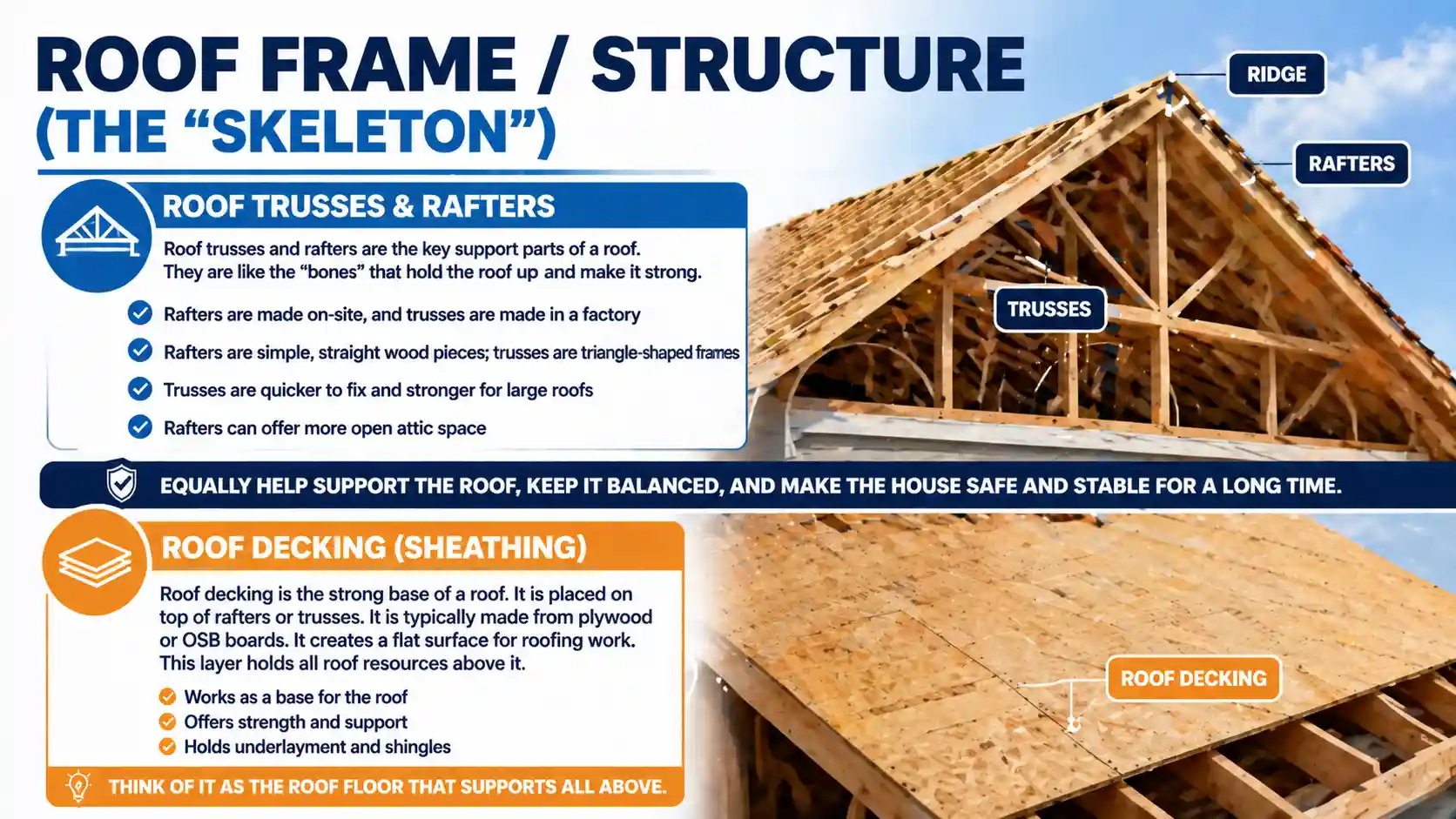
Trusses & Rafters
Roof trusses and rafters are the key support parts of a roof. They are like the “bones” that hold the roof up and make it strong. Rafters are long and slanted wooden pieces. They start from the top center of the roof (ridge) and go down to the edges of the house.
- Rafters are made on-site, and trusses are made in a factory
- Rafters are simple, straight wood pieces; trusses are triangle-shaped frames
- Trusses are quicker to fix and stronger for large roofs
- Rafters can offer more open attic space
Equally help support the roof or have it balanced and make the house harmless and stable for a long time.
Roof Decking (Sheathing)
Roof decking is the strong base of a roof. It is placed on top of rafters or trusses, and typically made from plywood or OSB boards. It creates a flat surface for roofing work. This layer holds all roof resources above it. Roof decking is a strong base layer fixed on rafters or trusses.
- Works as a base for the roof
- Offers strength and support
- Holds underlayment and shingles
Think of it as the roof floor that supports all above.
Roof Covering System (Weather Shield)
Underlayment
Underlayment is a thin layer placed beneath roof shingles on the roof base. It is typically made from felt paper or modern sheet material. It offers additional safety against water and dampness. If roof shingles are broken or missing, this layer still prevents water from entering the block.
What it does:
- Discontinues water from entering the roof base
- Protects the roof wood from wetness
- Acts as an additional protection layer
- Take down the chance of roof leaks
Underlayment offers hidden protection and extends roof life.
Shingles or Roofing Material
Shingles are the highest covering of a roof that can be obtained from outside. They face all weather like rain, heat or wind and sunlight. They are made from changed materials such as asphalt, metal, clay, stone or wood. Shingles protect the house and also give the roof its shape and look.
What they do:
- Block rain or wind and sun rays
- Work is the main weather barrier
- Support and protect the building structure
Shingles have the house harmless and form the outer roof shield.
Ridge Cap
A ridge cap is the cover placed on the highest line of the roof where the two sides join. It closes the roof peak and seals it. A ridge cap ends with rain, air and dust from going inside. It also helps the roof stay strong throughout strong winds and storms.
What it does:
- Covers the roof’s highest point
- Blocks water and air entry
- Protects the rooftop edge
- Supports roof airflow
A ridge cap protects the rooftop and stops leakage at the peak.
Water & Weather Management Parts
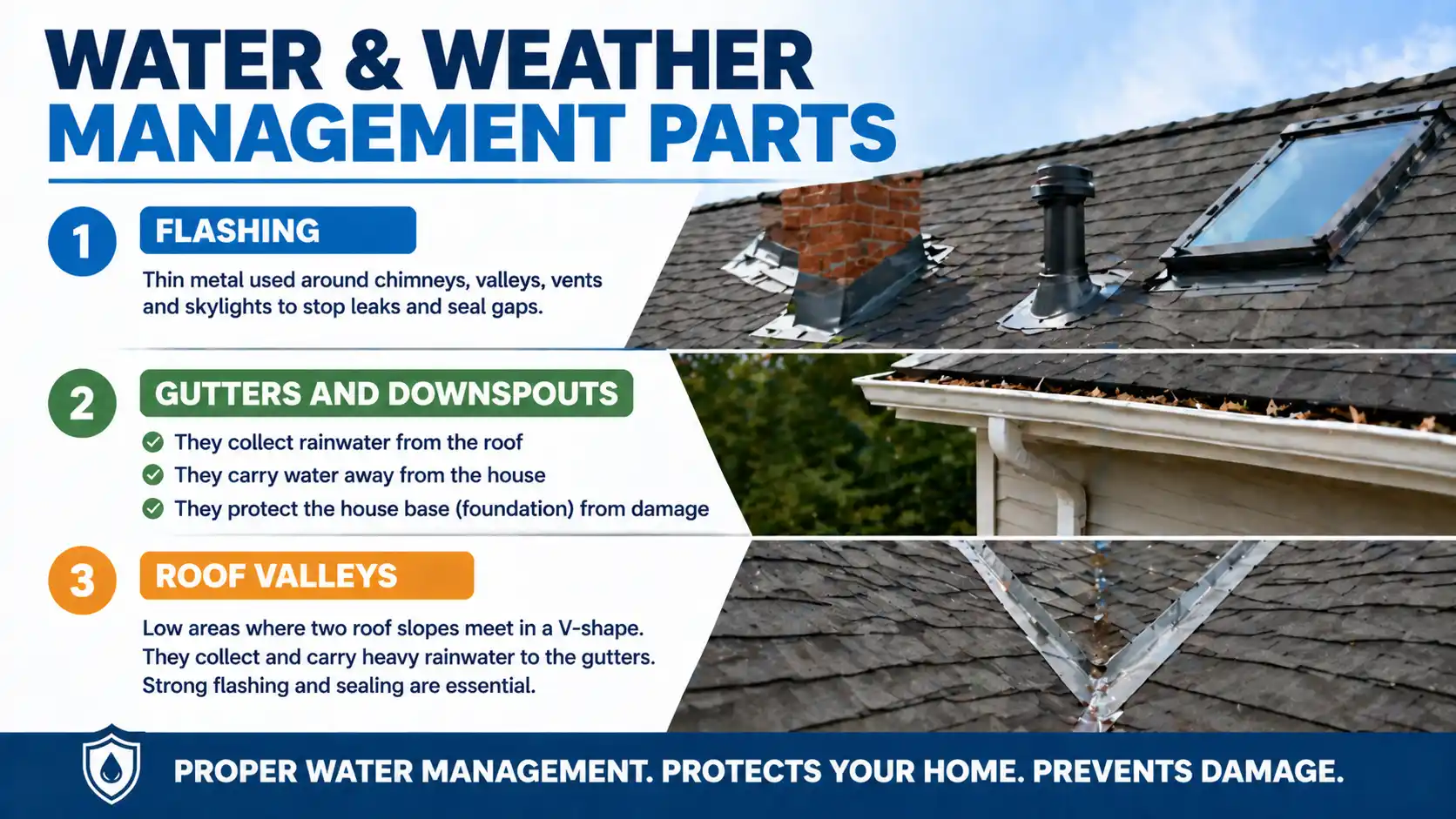
1: Flashing
Flashing is a thin sheet of metal used in weak or vulnerable areas of a roof. It is placed around chimneys, roof valleys, vents and skylights. It helps move rainwater away from key areas or stops leaks and seals gaps and edges to keep the roof safe from water damage.
2: Gutters and Downspouts
Gutters and downspouts are long pipes or channels fixed on the edges of the roof. They support controlling rainwater and protect your home from water damage. Without them, rainwater would run off the roof and may cause damage over time.
- They collect rainwater from the roof
- They carry water away from the house
- They protect the house base (foundation) from damage.
Gutters and downspouts keep your home safe or dry and safe from rainwater problems.
3: Roof Valleys
Roof valleys are the low areas where two sloping roof sides meet and create a V-shape. These parts are very key as they collect and carry a lot of rainwater during heavy rain. Water from the roof valleys is securely directed into the gutters, so it does not remain on the roof. Because a large amount of water flows through them, roof valleys require strong metal flashing and proper sealing.
Ventilation & Insulation Elements
Good Airflow is a key part of a roof structure and should be correctly understood.
Soffit Vents
Soffit vents are minor openings found under the roof edge (eaves). They allow fresh air into the attic and help keep air moving inside the house.
What they do:
- Let cool air enter the attic
- Help air flow correctly inside the roof space
- Lessen heat and moisture buildup
Good Airflow keeps the roof dry or strong and safe for long time by preventing heat and moisture problems.
Ridge Vents
Ridge vents are openings placed at the top of the roof. They let hot or wet air into the attic so it can escape easily. This helps keep the roof cooler and reduces moisture.
- Hot air can leave the attic effortlessly
- They help discontinue dampness, mold and roof damage
Ridge vents improve roof ventilation and ensure air flows properly. They also help increase roof life and make the house comfier inside.
Attic Insulation
Attic insulation is a layer in attic that helps control the house’s heat. It keeps indoor temperatures comfortable or lowers electricity bills and prevents additional heat from building up. Good ventilation also helps stop moisture damage or mold growth, protects roof shingles and avoids ice complications in cold weather.
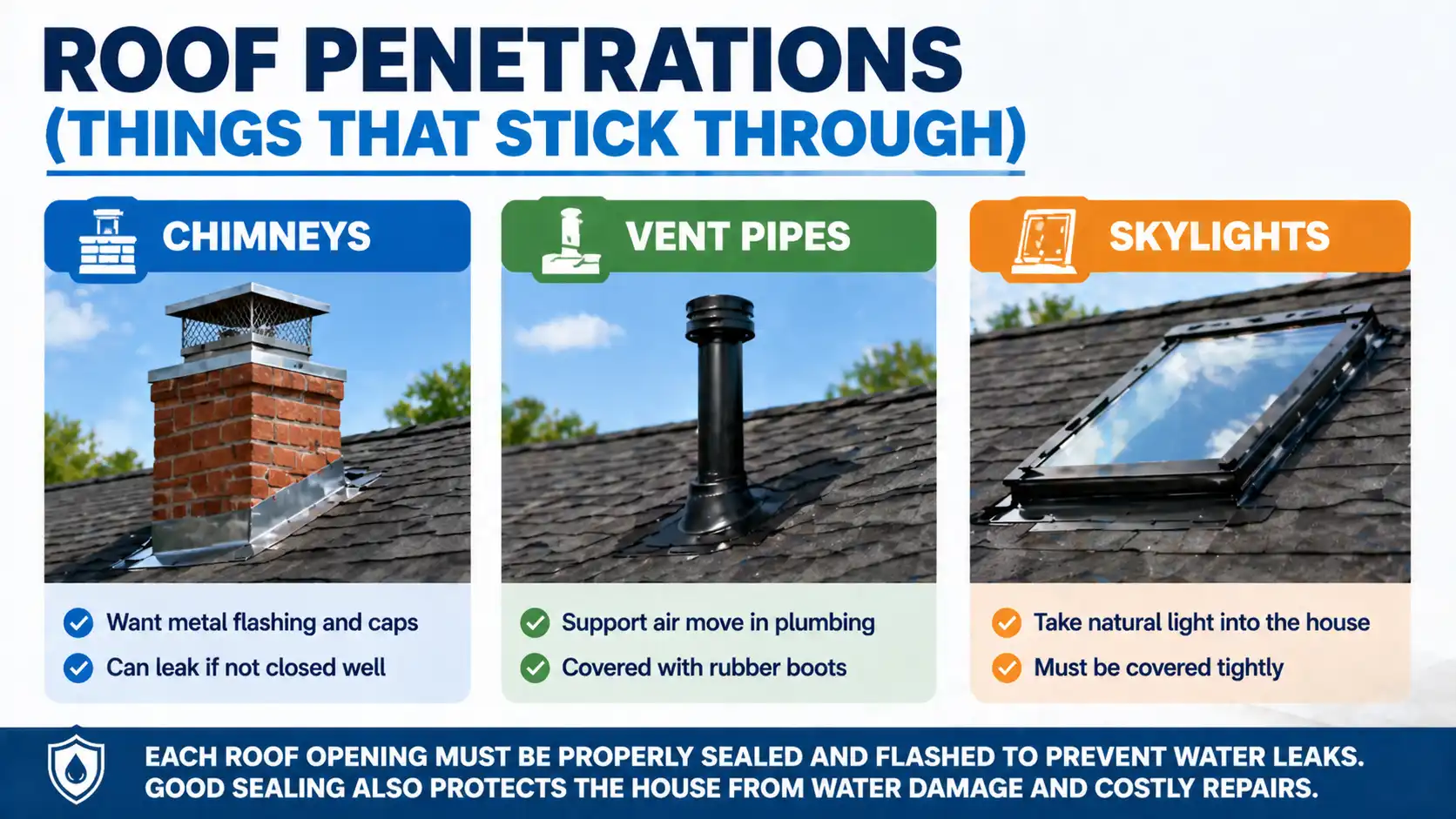
Roof Penetrations (Things That Stick Through)
Roof penetrations are holes or openings in the roof through which things pass. These spots are key as water can easily enter if they are not sealed well. Good sealing and care are required to have the roof safe and stop leaks.
Chimneys
- Want metal flashing and caps
- Can leak if not closed well
Vent Pipes
- Support air move in plumbing
- Covered with rubber boots
Skylights
- Take natural light into the house
- Must be covered tightly
Each roof opening must be properly sealed and flashed to prevent water leaks. Good sealing also protects the house from water damage and costly repairs.
Soffit, Fascia & Eaves (The Edge Elements)
Soffit, fascia and eaves are parts at the edge of the roof. They support and protect the house. They guide rainwater or support gutters and let air flow under the roof. Together, they have made the roof strong and made the house look good.
Eaves: the bottom edge of the roof that sticks out from the walls
Fascia: board at the roof edge that holds the gutters
Soffit: the bottom side of the roof overhang where air can pass
What they do together:
- Protect roof edges from damage
- Support air moves correctly below the roof
- Recover the look of the house
These parts are key as they protect the roof from rain, wind and heat. Checking and fixing them regularly helps keep the roof safe and lasting longer, and it also avoids costly repairs later on.
Roof Safety & Inspection Points
Understanding roof components and their functions helps you spot issues early. Regular checks help you find minor problems promptly.
Basic homeowner checklist:
- Search for broken or missing shingles
- Check sealing around chimneys, vents and skylights
- Clean and check valleys for dirt and water
- Check gutters for rust or blockage
Consistent checking has your roof safe, durable and long-lasting.
Common Questions About Roof Anatomy
What is the difference between decking and underlayment?
- Decking is the strong base of the roof
- Underlayment is a layer placed on top to protect from water
Do all roofs need ventilation?
Yes, each roof wants ventilation as it:
- Discontinues moisture from building up
- Supports the roof so it lasts longer
- Saves energy
What is a ridge cap and why is it important?
A ridge cap covers the top edge of the roof. It discontinues water from getting in and makes the roof look neat.
How can I find roof flashing?
Look for thin metal pieces around:
- Chimneys
- Skylights
- Roof edges
- Valleys
These support move water away from the roof.
Table: Quick Overview of Roof Parts
| Roof Part | Function | Why It Matters |
| Rafters/Trusses | Structural support | Holds entire roof system |
| Decking | Base layer | Supports roofing resources |
| Underlayment | Moisture barrier | Protects against leakages |
| Shingles | Outer layer | Shields from climate |
| Flashing | Water control | Stops leaks |
| Gutters | Drainage | Protects foundation |
| Vents | Airflow | Stops heat/moisture buildup |
| Ridge Cap | Peak protection | Seals top of roof |
Conclusion
To conclude that understanding to roof structure explained helps you know how every part of your roof works to protect your home. A roof is not only shingles but it is a complete system that switches rain, heat and air. When you learn about roof components and functions then you can identify minor problems early and avoid costly repairs. It also helps you communicate more effectively with roofing contractors Virginia Beach and make informed decisions about repairs or replacements. Each layer is key to safety and comfort. With consistent checks and basic knowledge, your roof can stay durable or last longer and protect your home in all weather.