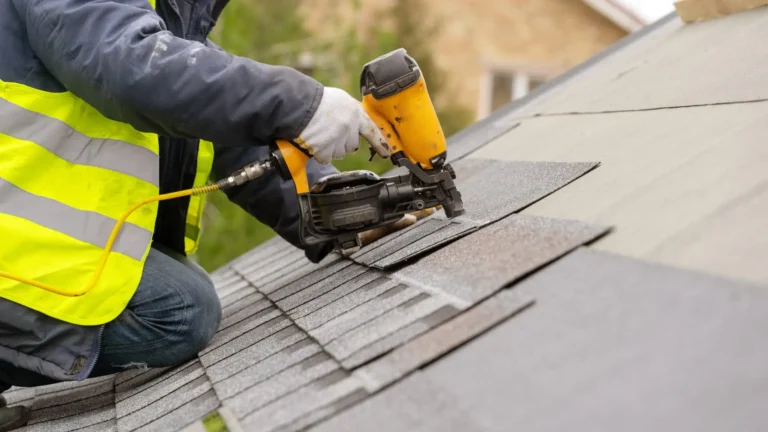
For a 2000 sq. ft. roof, the cost typically falls between $8,000 and $20,000. This rate includes the roof materials, employing professionals to fix it and taking off the old roof. A good way to check prices is by watching the roofing cost per square foot which shows how resources and labor affect the price. Asphalt shingles are typically cheaper while metal or tile roofs cost more but last longer. The shape and slope of the roof also matter—steeper roofs or ones with various angles, skylight or chimneys take more work and cost more. Knowing to these things along with typical roofing price per square foot helps homeowners plan or budget and avoid surprises which making the roof installation stress-free and smoother.
When searching for reliable roofers Virginia Beach homeowners trust, it is essential to understand how material choices and local building codes impact your final estimate.
Key Takeaways
-
The total cost for a 2000 sq. ft. roof installation typically falls between $8,000 and $20,000, with most homeowners spending an average of $10,000 to $15,000.
-
Material choice is a major price factor. Asphalt shingles are the most budget-friendly ($8,000–$12,000), while premium materials like metal, tile, or slate cost significantly more but offer much longer lifespans.
-
Roof complexity and pitch impact labor and resources. Steeper roofs or those with many angles, skylights, and chimneys require more safety gear and work, pushing costs toward the higher end.
-
Labor expenses generally account for 40%–60% of the total bill. These rates vary by region, with urban areas and cities typically having higher costs than rural locations.
-
Additional hidden costs such as permits ($100–$500), old roof removal ($1,000–$3,000), and structural repairs to the roof deck can quickly increase the final project price.
-
Long-term value should be considered alongside upfront costs. Energy-efficient materials like metal can lower cooling bills by 10%–25%, and professional installation ensures a warranty that DIY projects lack.
-
Regular inspections can save money by identifying minor issues like leaks, missing shingles, or poor ventilation before they evolve into major, expensive structural problems.
Cost Breakdown for a 2000 Sq Ft Roof
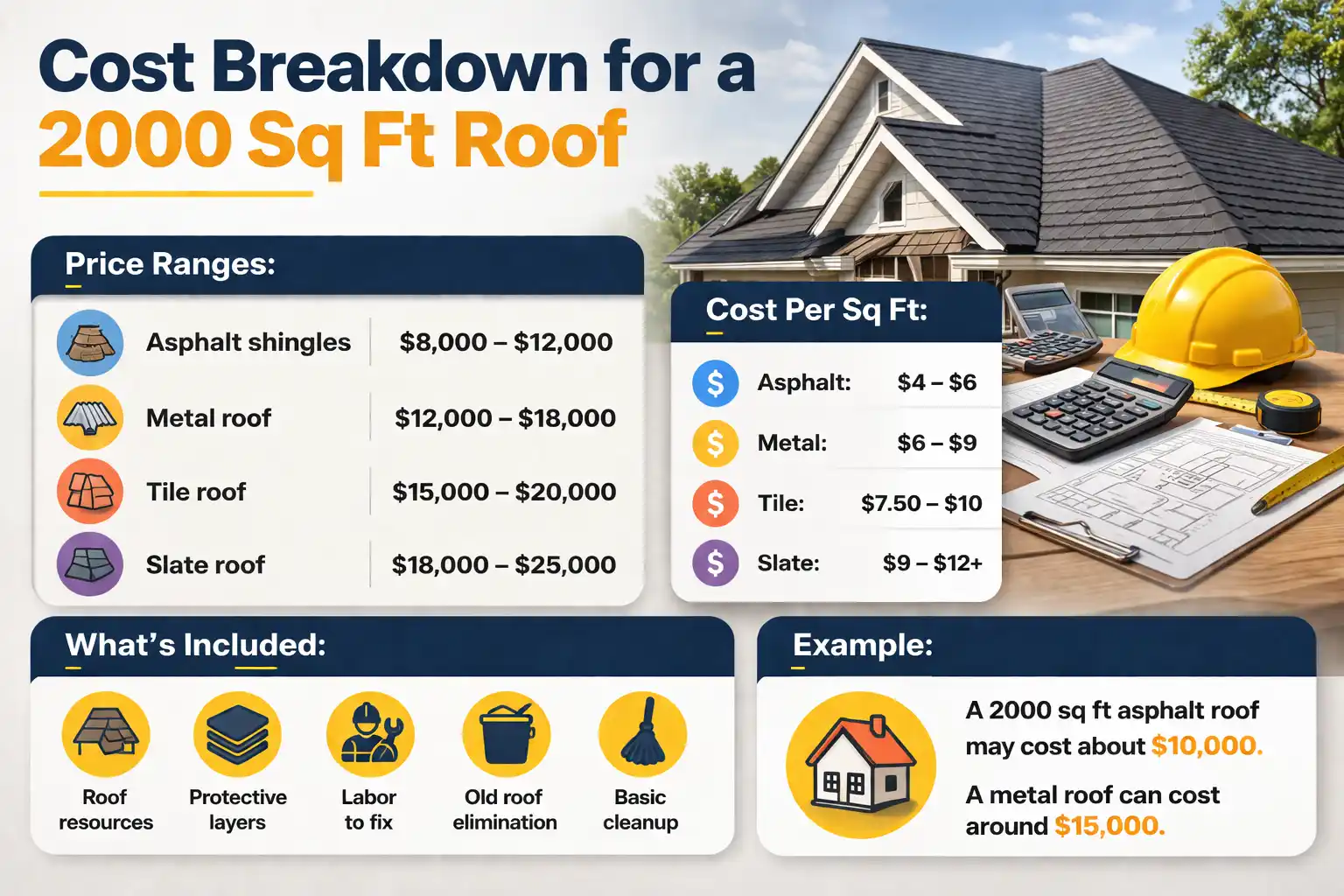
The price of a 2000 sq ft roof changes based on the material you select.
Price Ranges:
- Asphalt shingles: $8,000 – $12,000
- Metal roof: $12,000 – $18,000
- Tile roof: $15,000 – $20,000
- Slate roof: $18,000 – $25,000
Cost Per Square Foot:
- Asphalt: $4 – $6
- Metal: $6 – $9
- Tile: $7.50 – $10
- Slate: $9 – $12+
What’s Included:
- Roof resources
- Protective layers under the roof
- Labor to fix
- Old roof elimination
- Basic cleanup
Example:
A 2000 sq ft asphalt roof may cost about $10,000. A metal roof can cost around $15,000 as it lasts longer and takes more work to fix.
Key Cost Drivers for a 2000 Sq Ft Roof
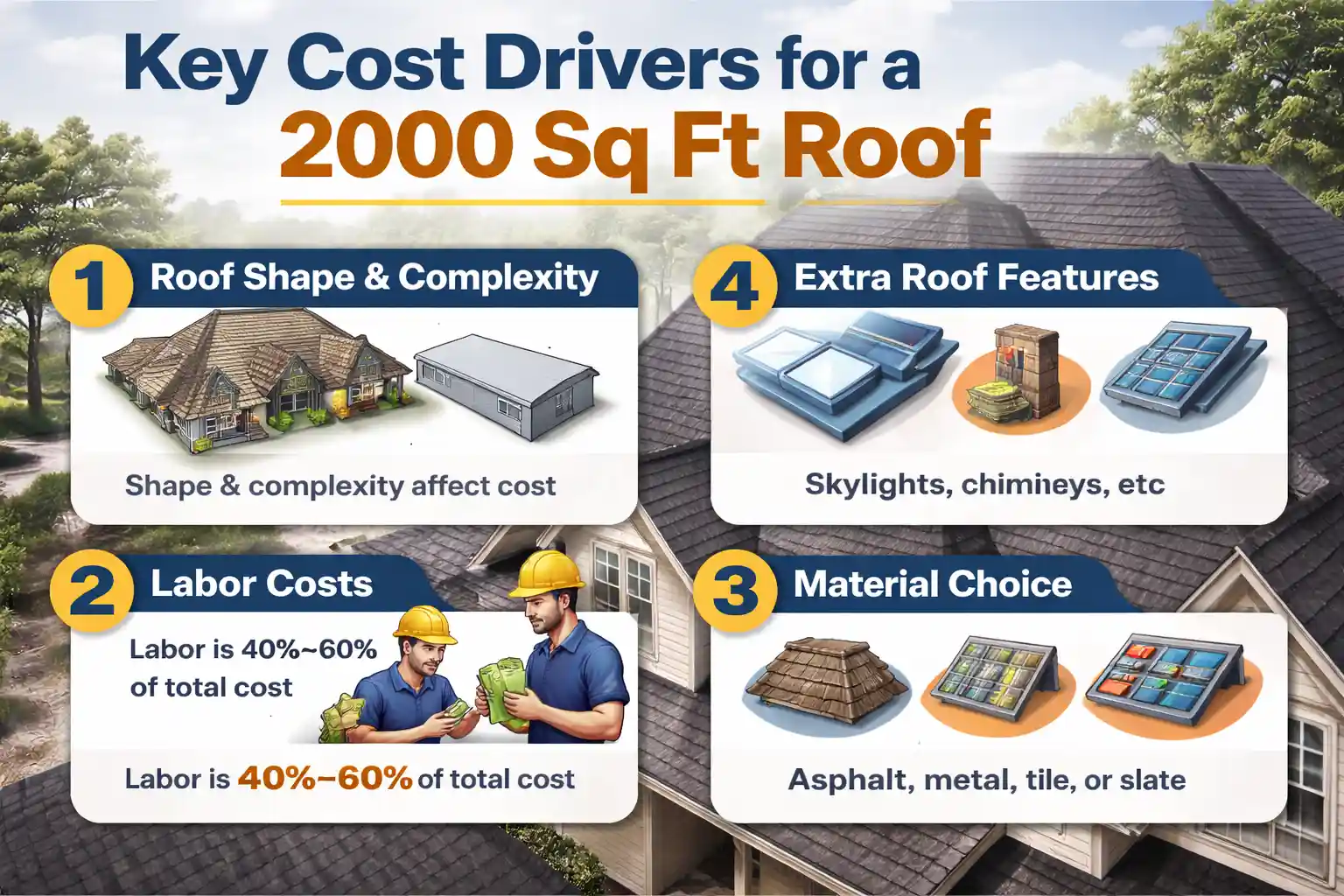
Not all roofs price the same. Even, if the size is the same then some things can cause the price to go up or down. Knowing to these factors helps you plan your budget.
1: Roof Shape and Complexity
- Flat or low roofs are stress-free and inexpensive.
- Steep roofs take more time and safety gear.
- Complex roofs with various slopes or valleys cost more.
Example: A simple roof may cost $8,000, a complex one over $18,000.
2: Labor Costs
- Labor is 40%–60% of the full price.
- Costs change with location, contractor involvement and difficulty.
- Large cities typically have greater labor rates than small towns.
3: Material Choice
Asphalt = inexpensive and common.
Metal = prices more but lasts longer.
Tile or slate = costly but very durable.
4: Extra Roof Features
- Skylights, chimneys, vents or solar mounts add price.
- Each extra part wants more work and resources.
Additional Costs to Consider
Getting a new roof costs more than just the installation. Many extra expenses can come up that homeowners frequently overlook. These include permits or taking out the old roof, setting damaged areas, changing parts like flashing and gutters, and adding warranties or insurance. Knowing to these prices helps you plan your budget and avoid overspending.
Extra Costs to Know:
Permits: Local rules may require permits to start work. They typically price $100–$500.
Old Roof Removal: Taking off and throwing away the old roof can cost $1,000–$3,000. Heavy resources like tile or slate cost more.
Roof Repairs: If the roof structure underneath is damaged, setting it can add $500–$2,000 or more.
Flashing and Gutters: Changing flashing costs $200–$1,000. Gutters may need repair or replacement, costing $1,000–$3,000.
Warranty and Insurance: Warranties may increase the price a little but they protect your roof for years.
Knowing these additional costs helps your roofing project stay on budget and avoids sudden bills.
Long-Term Costs: Maintenance and Energy Efficiency
When choosing a roof, then it’s not only about the price now. The material you select affects how much upkeep you want, your energy bills and how long the roof lasts.
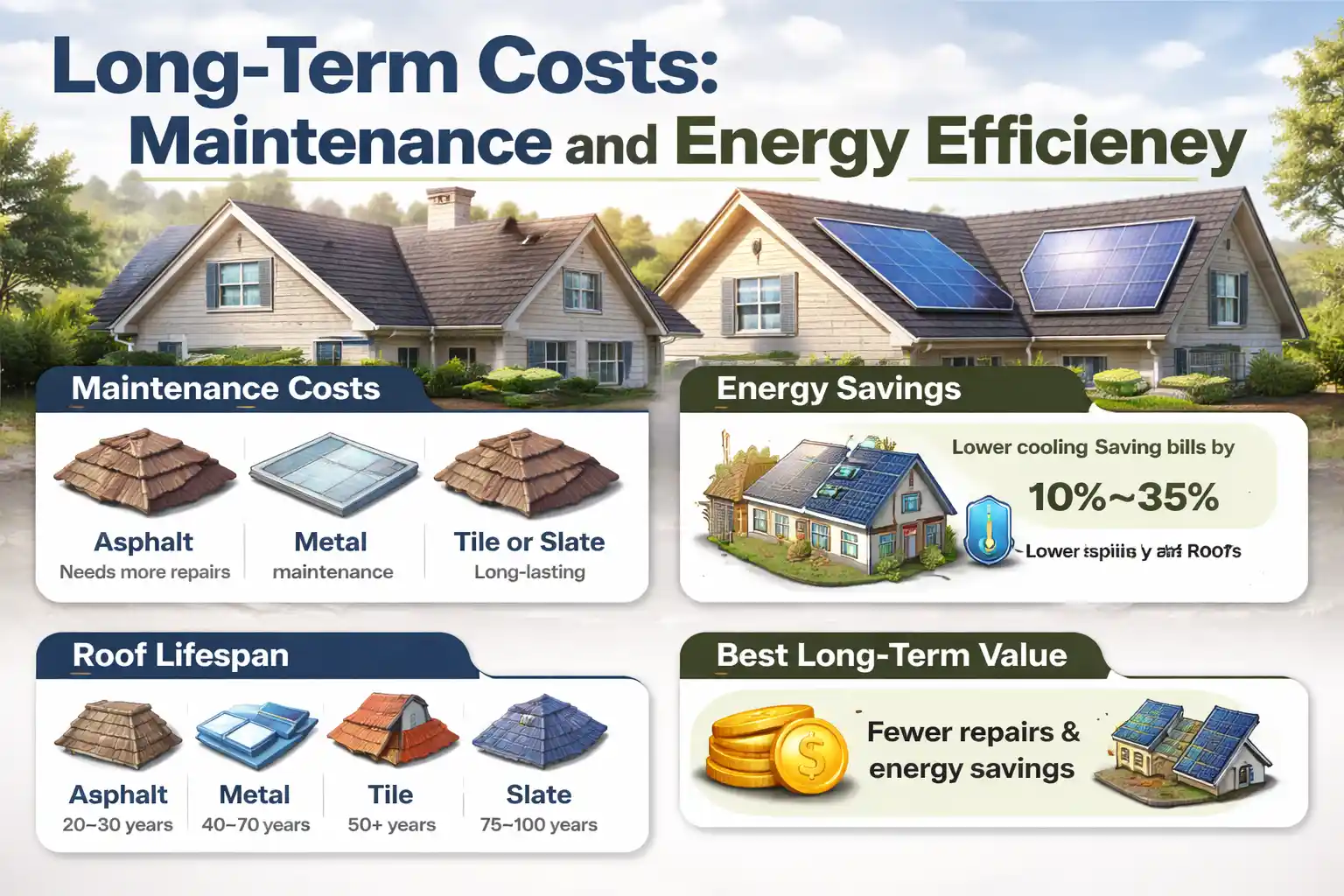
Maintenance Costs:
- Asphalt shingles need some repairs every few years.
- Metal roofs require very little maintenance and are strong.
- Tile or slate roofs last a long time but setting them can be costly.
Energy Savings:
The metal and reflective roofs can lower cooling bills by 10%–25% particularly in hot weather. Asphalt shingles are less reflective so they can create cooler temperatures. Selecting to an energy-saving roof can save money over time.
Roof Lifespan:
Asphalt shingles: 20–30 years
Metal: 40–70 years
Tile: 50+ years
Slate: 75–100 years
Best Long-Term Value:
Asphalt is inexpensive initially but metal and tile roofs are often better in the long run. They last longer, need fewer repairs and save on energy which making them a smart option for homeowners planning to stay for various years.
Why Prices Can Change by Region
Where you live can make a great change in roof costs. Things like worker pay, material supply, climate and local instructions all matter. Cities typically have higher labor prices and rural areas are inexpensive. If materials have to be brought from far away then the rate goes up. Bad weather or special building instructions can also make roofs more costly.
Key Points:
Labor Costs: Workers are paid more in cities, less in rural areas.
Materials: Shipping resources from far away adds price.
Weather: Snow, rain, or heat may require stronger roofs.
Local Rules: Some areas require special materials or specific methods for repairs.
Your location affects roof costs, so that prices can vary greatly across areas.
DIY vs Professional Roof Installation
Some homeowners think fixing or changing their roof themselves will save money. DIY can look cheaper as you don’t pay for labor. But roofing is tough and can be unsafe. You could slip, fall or put the roof on incorrectly which can cause damage and additional costs. Doing it yourself can also void the manufacturer’s warranty which leaving you unsure what to do if something goes wrong.
Employing a professional is safer and frequently cheaper in long run. Roofers have the correct tools, experience and know how to follow building instructions. They work sooner and do a better job. Most pros also give warranties so your roof is safe.
DIY Costs:
- Save on labor
- Lower upfront price
- Mistakes can be costly
DIY Risks:
- Falls or injuries
- Incorrect installation
- No warranty
Professional Benefits:
- Good quality work
- Roof warranty
- Fast completion
- Follows building instructions
- Expert Tip: A bad DIY roof frequently costs more to fix than employing a pro.
Bottom line: Professionals make roofing harmless, quicker and worry-free.

Roof Inspection Tips That Affect Cost
Before changing your roof, it’s essential to check it carefully to save money. Search for water damage or leaks as they can worsen and cost a lot to fix. Check for missing, broken or damaged shingles which can let water in and shorten your roof’s life. Look at roof deck for mold or rot particularly in wet areas, since setting it later is costlier. Make certain the roof has good ventilation like poor airflow can cause heat, ice buildup or damage the roof sooner. Finding to these problems timely lets you fix minor issues before they become major ones or saving money and making your roof last longer. The regular roof checks keep your home safe and help prevent unexpected repair costs.
Final Thoughts
To sum up that 2000 sq ft roof installation cost typically ranges from $8,000 to $20,000. Most homeowners spend about $10,000 to $15,000 on materials and roof style. The asphalt shingles are inexpensive while metal or tile roofs cost more, but last longer and may save money on repairs and energy bills. To get the best deal, research materials or get multiple contractor quotes and consider additional costs like maintenance. Knowing to cost per square foot helps you plan. With good planning, you can get a durable and continuing roof that fits your budget.