A roof replacement is a significant home project, and in most instances, it may be overwhelming to most homeowners. Getting acquainted with the necessary steps for replacing a roof will reduce stress, prevent unexpected events, and ensure your house remains prepared. The condition of your roof, its ageing, or the fact that it is no longer keeping the roof over your property, learning how to do it, all point towards it being easier and more manageable.
This article describes the process of a roof replacement in simple, straightforward terms so you know what to expect at every step.
Initial Roof Inspection and Assessment
Professional inspection is the initial procedure in any roof replacement. A roofing company that inspects your current roof can assess its condition and identify issues.
In this examination, they examine:
- Missing or broken shingles
- Leaks or water damage
- The decking or structural problems are weak.
- Flashing and ventilation issues.
The inspection will entail recommendations and a clear estimate. This involves the nature of the required materials, the schedule, and the cost. This measure will ensure that no concealed problems arise in the future.
For more on what happens during a professional roof inspection, see this guide from the National Roofing Contractors Association (NRCA)
Choosing Roofing Materials
After the inspection, the process of choosing roofing materials follows. The decision will be made based on your financial ability, the climate level, and the type of house you are staying in.
The usual roofing materials are:
- Asphalt (the most inexpensive and the most popular)
- Metal roof (durable and efficient in energy consumption).
- Tile (durable and heavier) roofing.
- Commercial or modern flat-roofing materials.
Your contractor will discuss the advantages and disadvantages of both so that you will have the information you need to make the right choice for your house.
Preparing Your Home Before Work Begins
Prior to the roof replacement, some preparations are required. Roofing can produce noise and may vibrate within the house.
To prepare:
- Pull automobiles off the driveway.
- Take down the weak objects on the walls and shelves.
- Place attic cover products to keep dust off.
- Give information to neighbors regarding future employment.
Safety nets, such as tarps and covers, are also provided by the roofers to protect your property and landscaping.
Removing the Old Roof
Elimination of old roofing material is the initial significant construction process. The contractors remove old shingles or tiles to expose the roof deck.
The reason why this step is significant is that:
- It reveals hidden damage
- Ensures the installation of the new roof is correct.
- Prevents future leaks
All wastes are swept away and properly discarded. The professional crews are working to minimize disruption during this stage.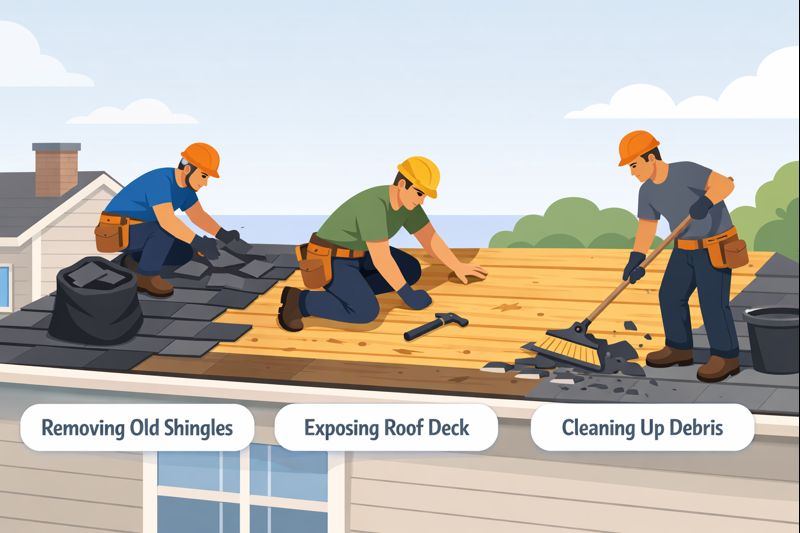
Inspecting and Repairing the Roof Deck
After the old roof has been removed, the roof deck is checked. The roof is based on the deck, which must be solid.
If damage is found:
- Deteriorated or rotted wood is substituted.
- Nails are secured properly.
- Installation preparation on the surface is done.
Today, by fixing these problems, you would save your new roof and avoid structural issues in the future.
Installing Underlayment and Flashing
Protective layers are then placed after the deck has been prepared. These are layers that are used to block moisture and enhance durability.
This stage includes:
- Waterproofing the floors with underlayment.
- Providing flashing about chimneys, vents, and edges.
- Having proper ventilation components.
These materials are important for preventing leakage and enhancing the roof’s performance.
Installing the New Roof
The next stage of the project is the most obvious: installing the new roofing material. Shingles, tiles, or panels are carefully and securely installed.
Roofers:
- Adhere to the manufacturer’s guidelines.
- Please make sure that it is aligned and sealed.
- Secure edges and ridges
This phase can take between 1 and 3 days, depending on the size of the roof and the type of material.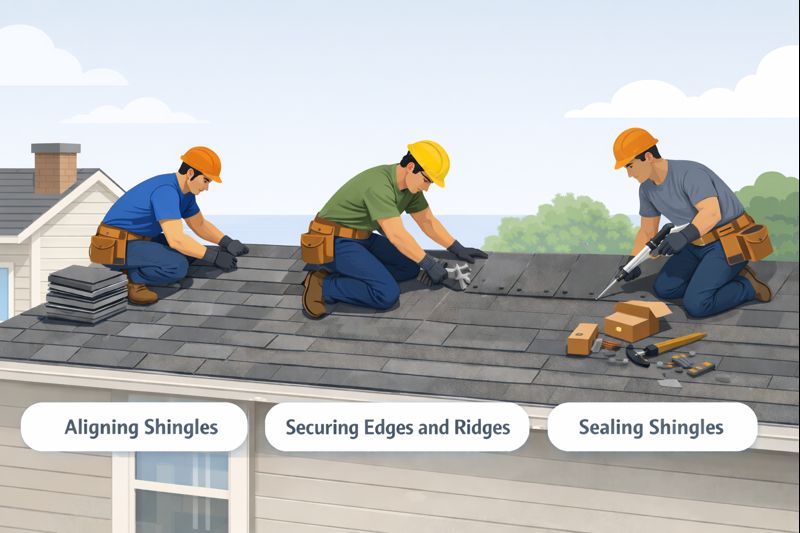
Final Inspection and Cleanup
After the installation is complete, the contractor conducts the final inspection. They ensure all installations are properly completed and safe.
Cleanup includes:
- Disposing of wastes and materials.
- Using magnets to check the yard for nails.
- Clearing gutters and the surrounding area.
An expert roofing firm cleans up your property and leaves it safe.
Aftercare and Warranty Information
The payment for this roof replacement will include maintenance tips and advice on warranty coverage from your contractor. This incorporates content warrants and artistry assurances.
Basic care tips:
- Their schedule should be checked periodically.
- Keep gutters clean
- Address minor issues early
The knowledge of your warranty will guarantee you long-term peace.
For trusted roof maintenance tips to help protect your investment and extend its lifespan, check this homeowner guide from Owens Corning.
Final Thoughts
Replacing a roof can sound like a huge undertaking, but it will be much more manageable when one is aware of what to expect. Since it begins with inspection and continues through final cleanup, every step aims to protect your home and enhance its value. When you have the right contractor and proper communication, your experience with getting your roof replaced can be a stress-free and even painless endeavor that provides greater protection for many years to come.