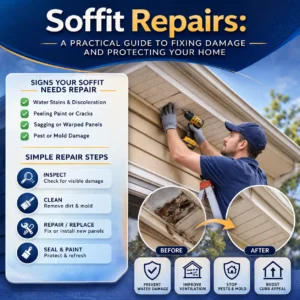
Damaged soffits are not only about looks but they can mean more problems for your home. The minor issues like rot, water damage or pests can worsen if ignored. Soffits support your attic’s breathability and protect your roof. If they fail then you might get moisture, mold or even damage to your home’s structure. Signs to watch for include peeling paint, soft wood or pest activity. Setting soffits early lets air flow or prevents bigger problems and saves money. This guide will show you how to spot soffit damage or do soffit repairs step by step and identify when to call a professional.
Key Takeaways
-
Soffits are the underside of the roof overhang; they are critical for attic ventilation, which prevents moisture buildup, mold growth, and structural rot while regulating indoor temperatures.
-
Homeowners should regularly inspect for peeling paint, sagging sections, staining, or “soft” wood. Auditory cues like scratching or visible droppings often indicate pest infestations (birds, squirrels, or insects).
-
Most popular for its low maintenance and resistance to water/pests.
-
DIY fixes involve a five-step process: assessing damage with a screwdriver test, removing compromised sections, cleaning/sealing the area, installing matched materials, and applying a weatherproof finish.
-
To extend soffit life, gutters must be kept clear of debris to prevent water overflow, and mesh should be installed behind vents to block pests while maintaining airflow.
-
A professional should be hired if damage involves large-scale rot, electrical components, or high-altitude repairs that require specialized safety equipment and structural expertise.
What Is a Soffit and Why Is It Important?
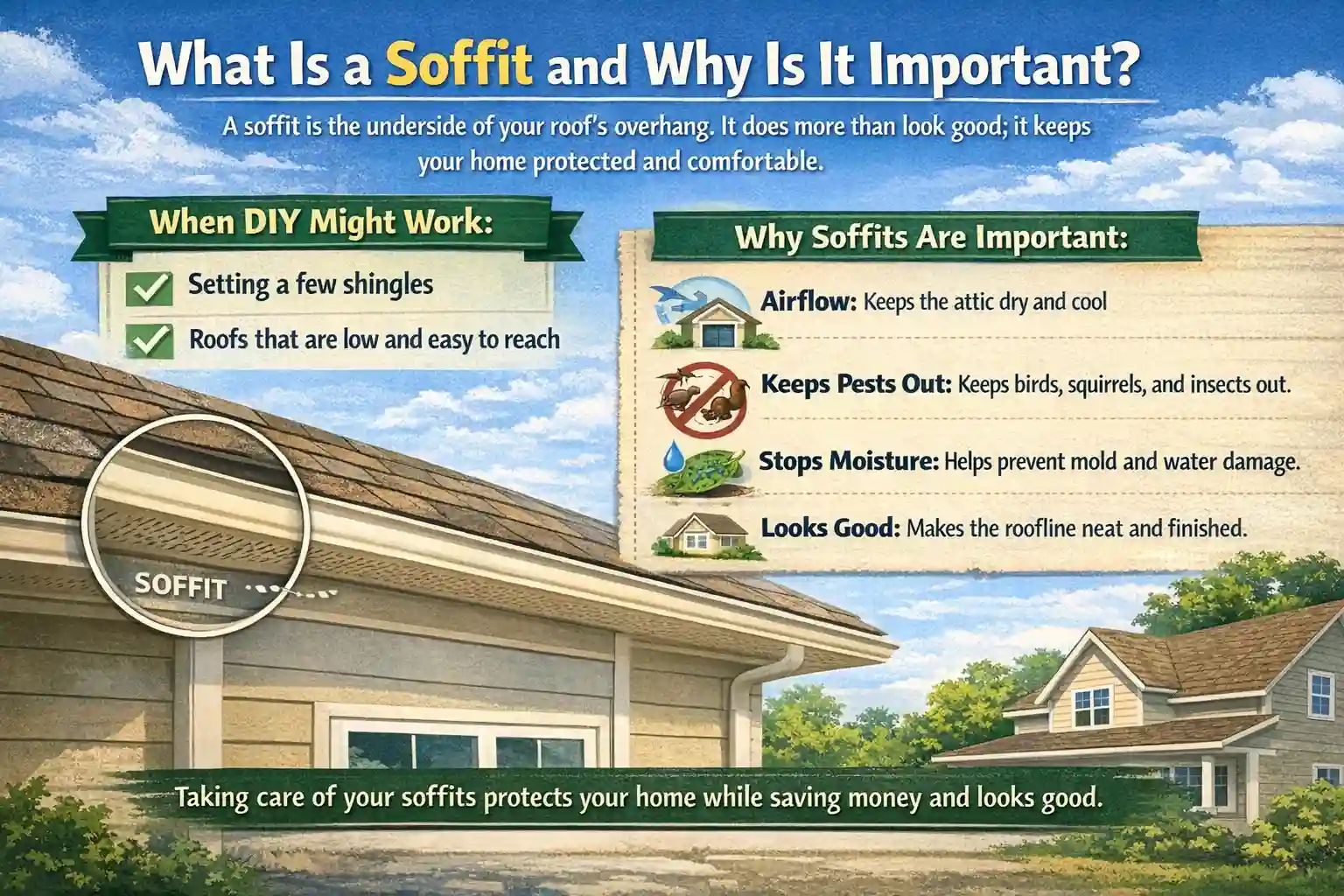
A soffit is the bottom part of your roof that hangs over the sides of your house. It’s not only for looks but it helps keep your home safe and comfy. Some soffits have small vents that let air flow into the attic. This has the attic cool or ends moisture and stops mold. Taking care of soffits too keeps pests out and makes your home look neat.
Why Soffits Are Important:
Airflow: Has the attic been dry and cool?
Keeps Pests Out: Keeps birds, squirrels and insects out.
Stops Moisture: Helps stop mold and water damage.
Looks Good: Makes the roofline neat and over.
Looking after your soffits protects your home or saves money and makes it look good.
Common Soffit Problems
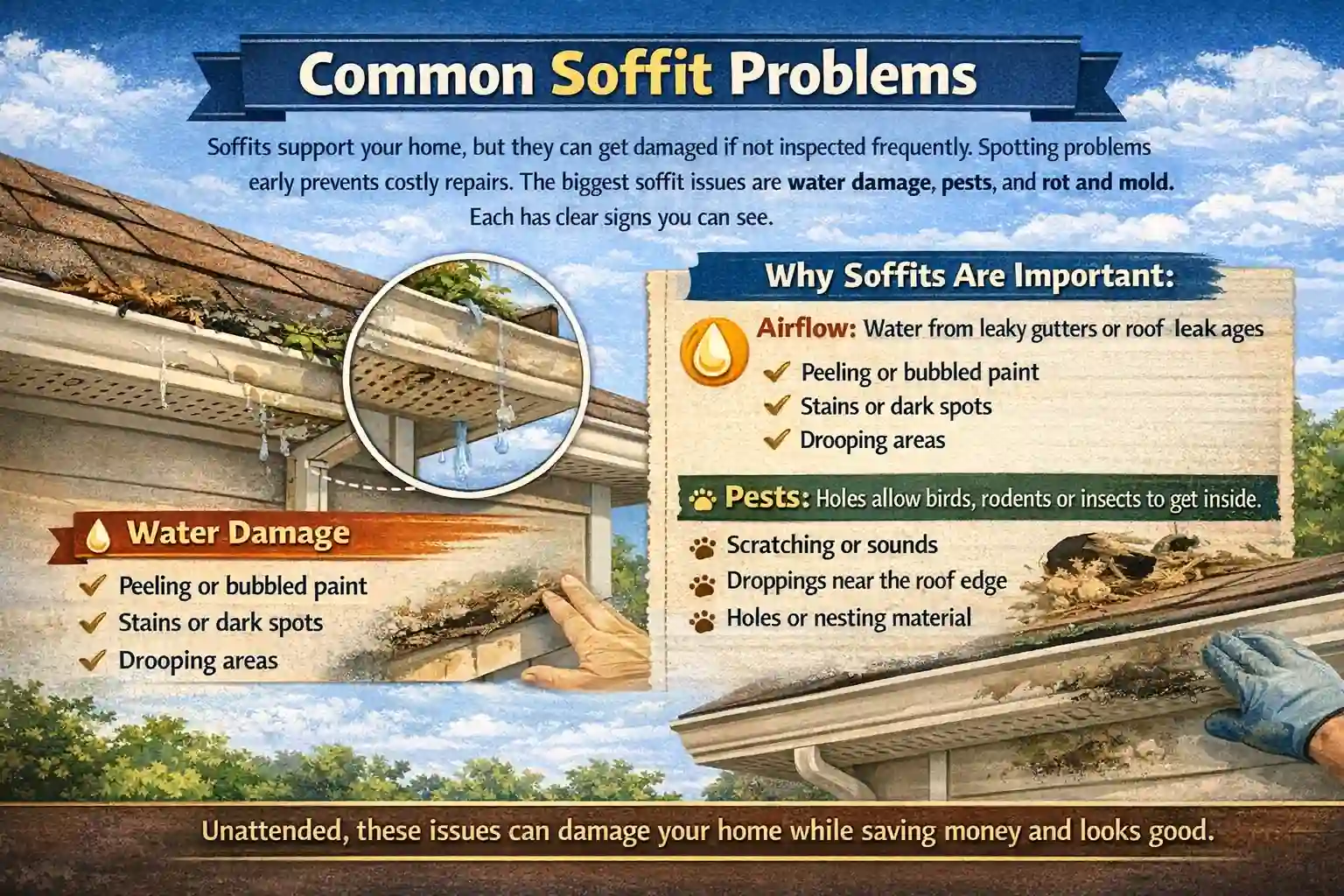
Soffits support your home, but they can get damaged if not checked regularly. Finding to complications on time stops more expensive repairs. The main soffit complications are water damage, pests and rot or mold. Each has clear symbols you can see.
1: Water Damage
Water from leaky gutters or roof leakages and poor drainage can damage soffits.
Look for:
- Paint peeling or bubbles
- Stains or dark spots
- Drooping areas
2: Pests
Holes or gaps allow birds, rodents or insects to get inside.
Look for:
- Scratching or sounds
- Droppings near the roof edges
- Holes or nesting material
3: Rot and Mold
Wood soffits can rot, or mold can grow in damp spots.
Look for:
- Soft or crumbling wood
- Musty odors
- Visible growth indicates a failure in reducing attic moisture and heat buildup.
If overlooked, these problems can damage your roof and home structure.
DIY Soffit Repair: Step-by-Step
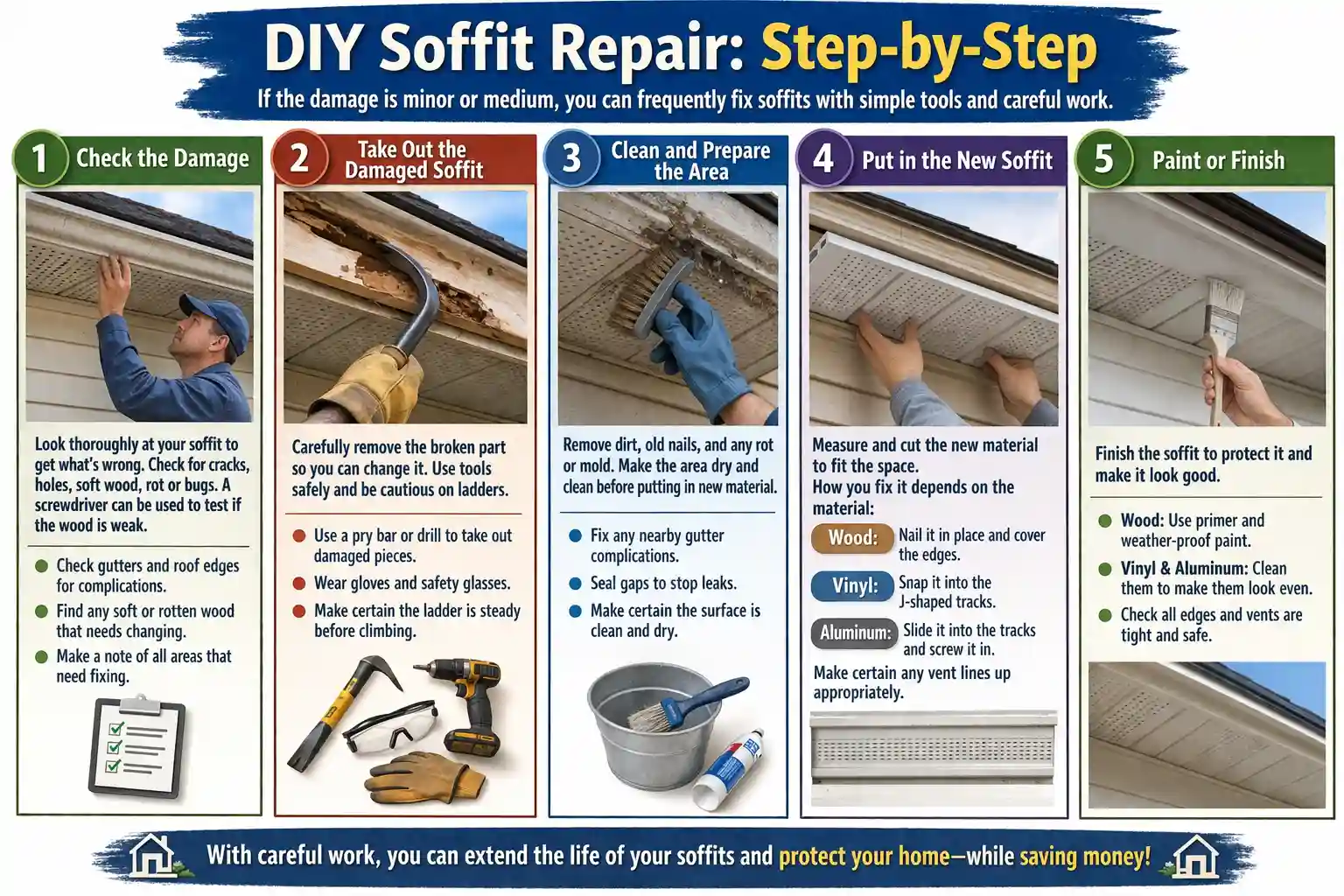
If the damage is minor or medium, you can frequently fix soffits with simple tools and careful work.
Step 1: Check the Damage
Look thoroughly at your soffit to get what’s wrong. Check for cracks, holes, soft wood, rot or bugs. A screwdriver can be used to test if the wood is weak.
- Check gutters and roof edges for complications.
- Find any soft or rotten wood that needs changing.
- Make a note of all areas that need fixing.
Step 2: Take Out the Damaged Soffit
Carefully remove the broken part so you can change it. Use tools safely and be cautious on ladders.
- Use a pry bar or drill to take out damaged pieces.
- Wear gloves and safety glasses.
- Make certain the ladder is steady before climbing.
Step 3: Clean and Prepare the Area
Remove dirt, old nails, and any rot or mold. Make the area dry and clean before putting in new material.
- Fix any nearby gutter complications.
- Seal gaps to stop leaks.
- Make certain the surface is clean and dry.
Step 4: Put in the New Soffit
Measure and cut the new material to fit the space.
How you fix it depends on the material:
Wood: Nail it in place and cover the edges.
Vinyl: Snap it into the J-shaped tracks.
Aluminum: Slide it into the tracks and screw it in.
Make certain any vent lines up appropriately.
Step 5: Paint or Finish
Finish the soffit to protect it and make it look good.
Wood: Use primer and weather-proof paint.
Vinyl & Aluminum: Clean them to make them look even.
Check all edges and vents are tight and safe.
When to Hire a Professional for Soffit Repairs
Some soffit problems are easy to fix, but others require a professional. If water damage or rot is in a big area or disturbs the house structure then a professional can fix it safely. Pests like birds, squirrels or insects need special tools to remove them and seal the area so they don’t come back. Repairs near electricity, attic vents, or high places can be unsafe so it’s better to call a professional. A professional does the job securely and makes it last longer.
Key Points:
- Great water damage or rot needs a professional.
- Pests must be removed, and the area closed.
- Hard or unsafe repairs are best for professionals.
- Professionals save time and lessen stress.
- Proper repair discontinues hidden damage and future complications.
Employing the right professional has your soffits safe and your home safe.
Soffit Repair Materials
Picking the correct material is key to making your soffit last. Each material has good points and bad points. Knowing the cost helps you select the best one. Vinyl is a good choice for various homes.
- Wood Soffits
Good: Looks good and easy to cut
Bad: Can rot or get water damage, wants regular care
Cost: Cheap at first but prices go up over time
- Vinyl Soffits
Good: Low care, stays safe from water and pests, stress-free to put in
Bad: Can crack in very hot or cold climates and has few colors
Cost: Inexpensive and lasts a long time
- Aluminum Soffits
Good: Durable, weather-proof, doesn’t rot, light
Bad: Prices are higher, and can dent effortlessly
Cost: Costly but very long-lasting
Vinyl is typically the best option for price and durability.
Preventing Future Soffit Damage
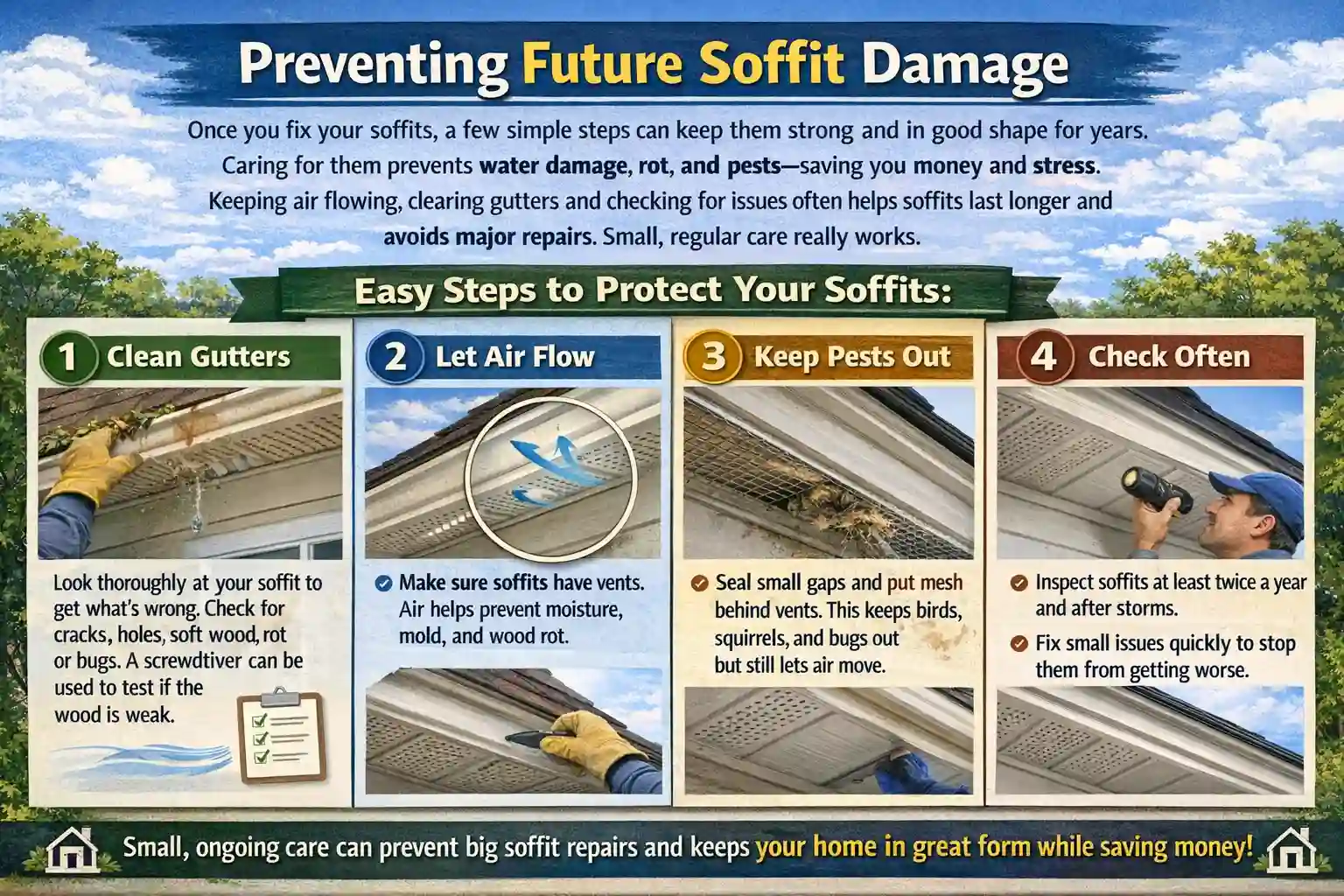
Once you fix your soffits, a few simple steps can make them strong and in good form for a long time. Taking care of them prevents water damage, rot and pests which saving you money and concern. Keeping air flowing, cleaning gutters and checking for complications frequently helps your soffits last longer and avoids great repairs. Small and regular care actually helps.
Easy Steps to Protect Your Soffits:
Clean Gutters: Remove leaves and debris so water flows away from your roof, not onto your soffits.
Let Air Flow: Make certain soffits have vents. Air supports the prevention of moisture, mold and wood rot.
Keep Pests Out: Seal minor gaps and put mesh behind vents. This has birds, squirrels and bugs out, but still lets air move.
Check Often: Look at soffits at a minimum twice a year and after storms. Fix to minor problems promptly to prevent them from worsening.
Doing these steps has your soffits dry or safe and lasting longer, which protecting your home.
Final Thoughts
To sum up that fixing to soffits is not hard. Some small complications like cracks or water damage and early rot can be fixed fast and save you time and money. Learn to spot these complications or choose the right resources and follow simple repair steps to have your soffits strong. Cleaning gutters and checking for pests, too, helps them last longer and stops more problems. Small repairs can typically be done yourself but a professional should repair serious damage or large areas with rot or water. Good soffits protect your home from the climate, have air moving in your attic and make your house look nice. With consistent care and small repairs, soffits can last for various years. Taking care of them offers you peace of mind and helps avoid costly repairs later.