Proper Eavestrough Downspout Installation is actually important to protecting your home from water damage. Downspouts move rainwater from roof away from your house, which preventing water from pooling around the foundation. If not addressed appropriately then water can cause basement leaks, foundation cracks or soil erosion and siding damage. Using to correct resources like aluminum, PVC or steel and following to right steps helps water flow the right way.
It means installing downspouts in correct place which ensuring a slight slope and connecting them to the proper drainage system. Installing to downspouts the right way protects to your home and yard and stops price complications.
Key Takeaways
- Foundation Protection: Prevents structural cracks, basement leaks, and soil erosion by diverting water away from the base.
- Material Comparison: Choice between budget Vinyl, versatile Aluminum, or premium Copper based on durability and climate needs.
- Property Preservation: Stops water from staining exterior siding, causing mold, or washing away landscaping.
- Strategic Installation: Using elbow connectors, brackets every few feet, and waterproof sealant to ensure a tight, leak-proof system.
- Extended Drainage: Utilizing splash blocks or extensions to move discharge a safe distance from the home.
- Error Prevention: Avoiding common mistakes like incorrect slopes, loose pipe connections, or placing outlets too close to the foundation.
- Risk Mitigation: Reducing the need for expensive repairs and knowing when to hire a professional for complex roof layouts.
Why Are Downspouts So Important?
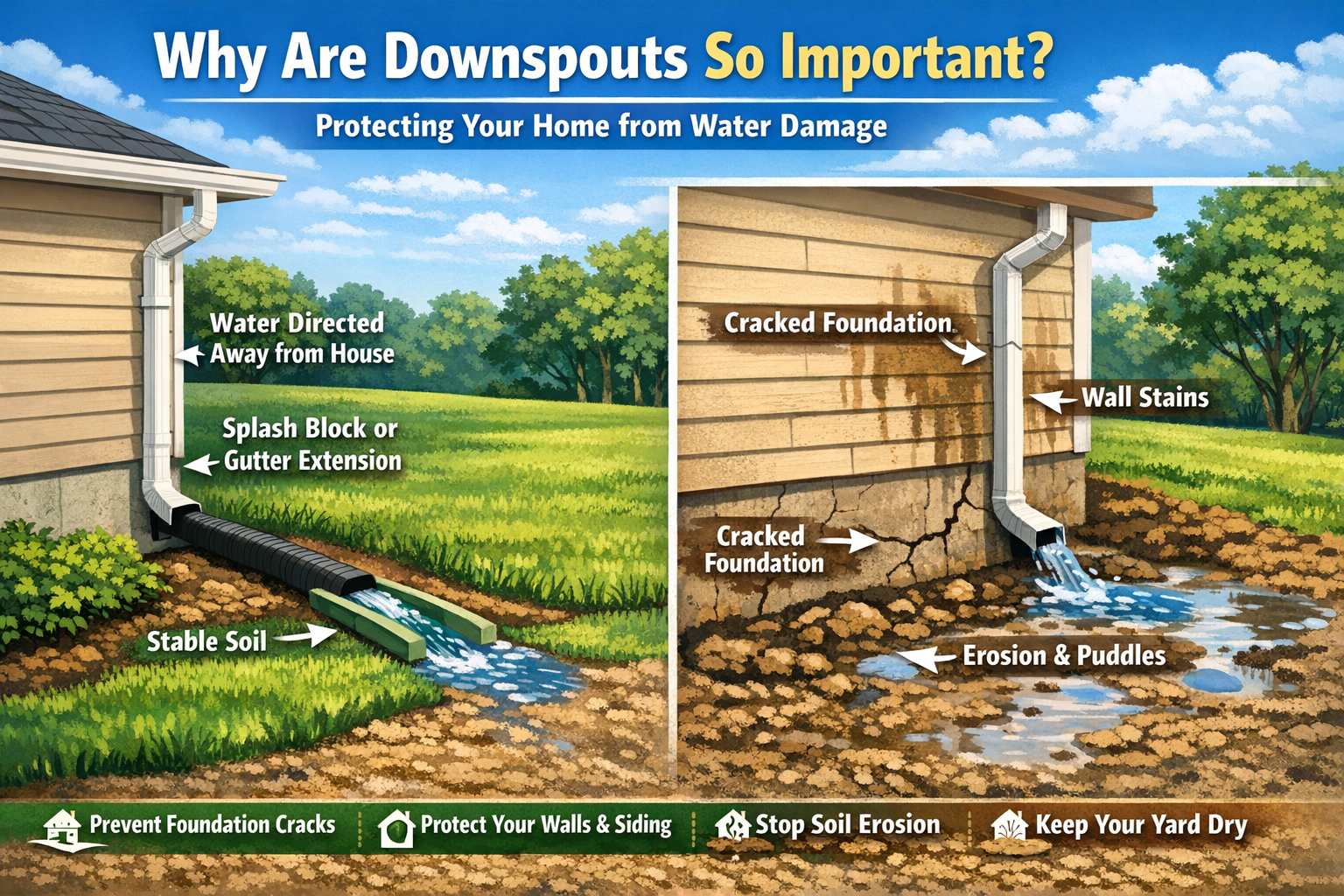
Downspouts help keep your home safe from water complications. They take rainwater from gutters and carry it away from your house. This protects the base or basement and walls. Without downspouts, water can collect near your home which leading to cracks, muddy soil and wall stains. Putting them in the correct place keeps water away and your home dry. Just as you might calculate how many bundles of shingles in a square to ensure a sturdy roof, properly placing your downspouts is essential for a complete and harmless drainage system.
Key Points:
- Carry water away from the foundation to prevent cracks and leakages.
- Keep walls and siding from getting wet or stained.
- Stop soil from washing away around your home.
- Keep the ground around your house steady.
Use gutter extensions (pipes) or splash blocks (concrete pads under downspouts) to carry water farther away.
What Happens When Downspouts Are Incorrectly Installed?
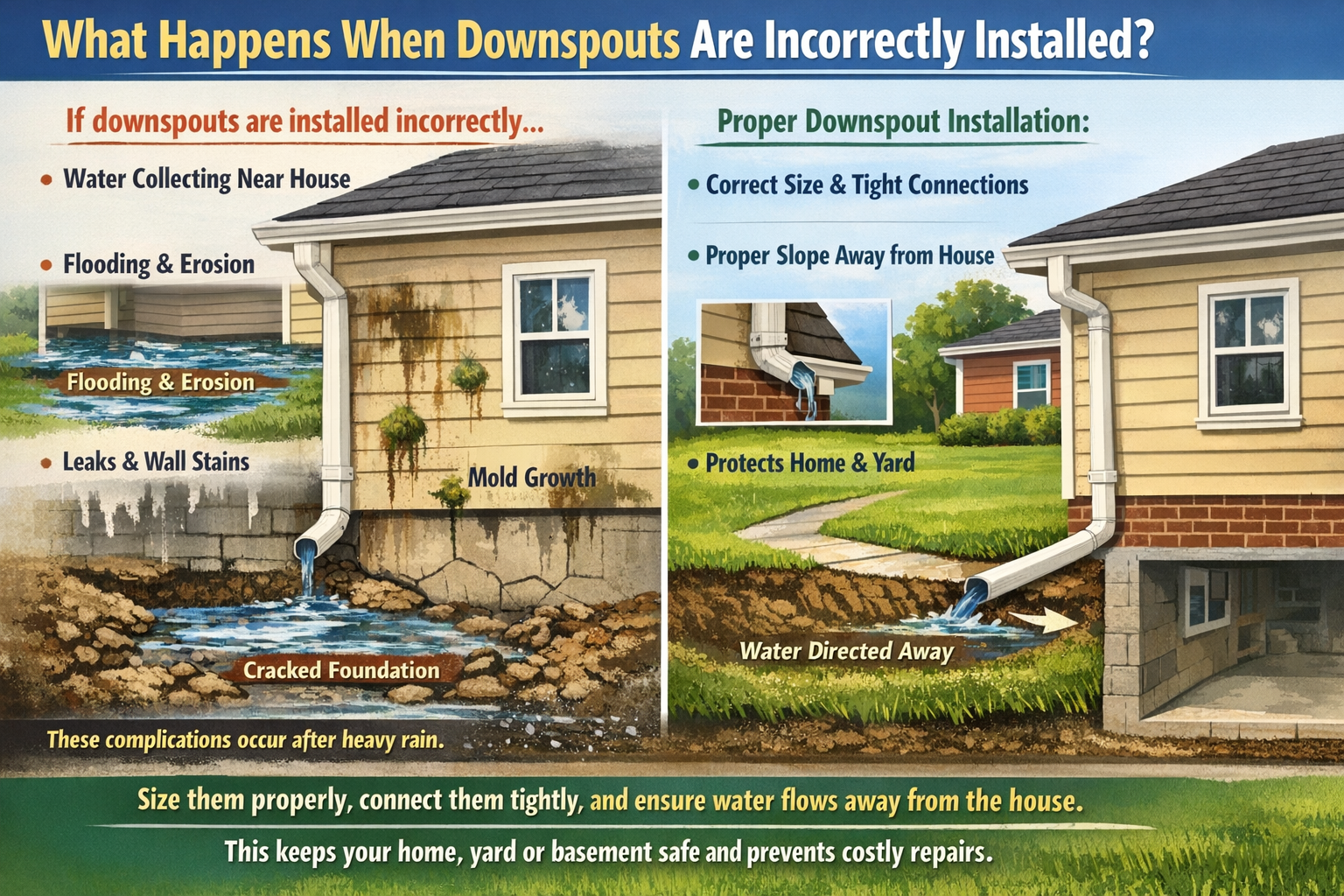
If downspouts are installed incorrectly, then water can collect near your house. This can cause flooding or wash away soil and even crack the base. Loose or incorrect connections can cause water leaks or stain walls and lead to mold. Even a slight tilt or an incorrect slope can cause water to flow back into the house instead of away from it. These complications occur after heavy rain.
A best way to avoid concerns is to properly fix downspouts like size them carefully or connect them tightly and ensure water flows away from the house. This keeps your home, yard or basement safe and prevents costly repairs.
Types of Downspouts — Which Material Is Best for You?
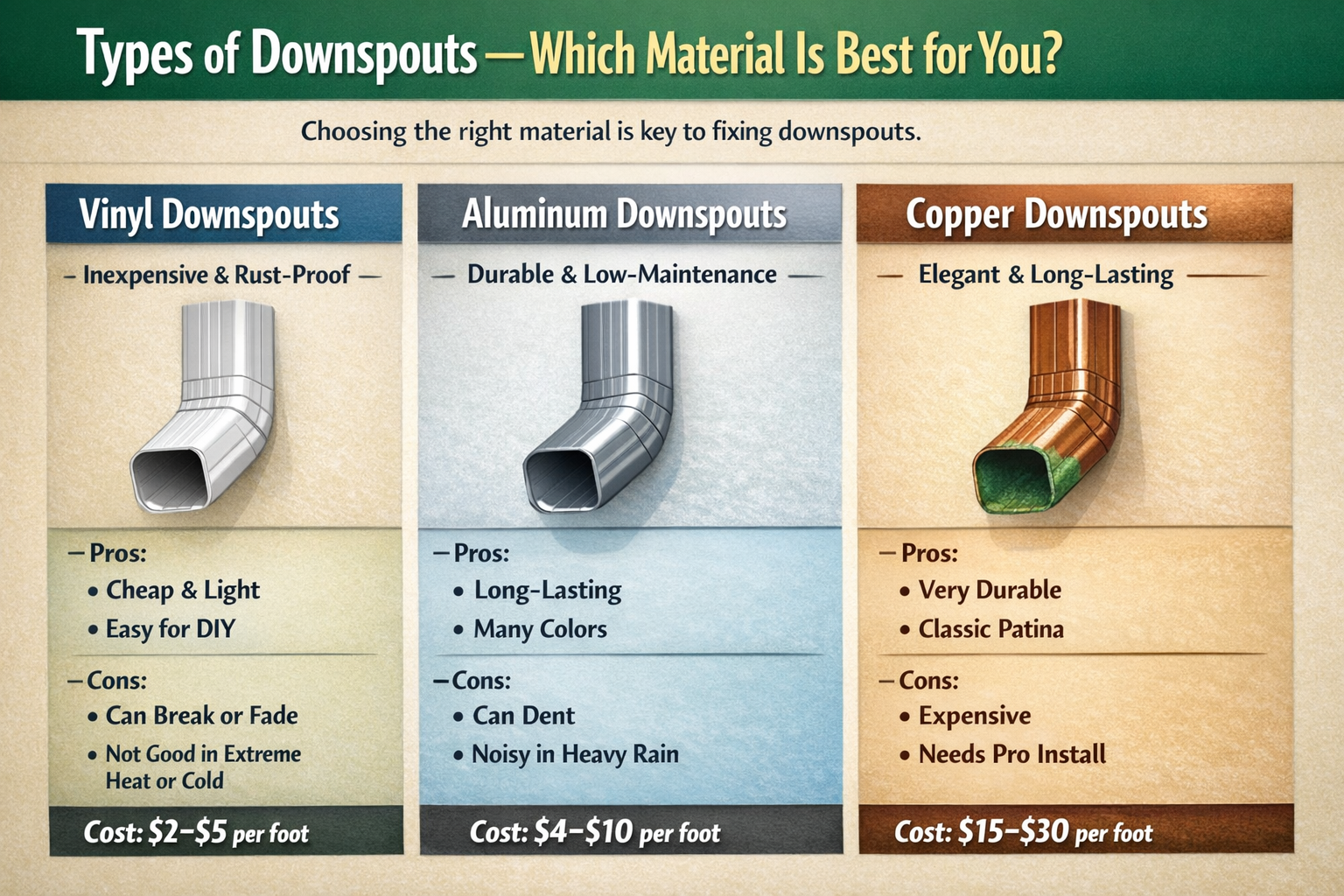
Selecting to the right material is key to fixing downspouts. The different materials have changed benefits centered on your weather or money and house style.
Vinyl Downspouts
Vinyl downspouts are inexpensive and easy for homeowners to install. They are light and easy to fix yourself, making them a popular choice for DIY projects. Vinyl does not rust and works well in wet weather, requiring very little care. However, over time, it can become brittle and break in extreme temperatures. Too much sun can also cause the material to fade or crack. While great for DIY, many homeowners consult a roofing company in Virginia Beach to ensure their entire drainage system is optimized. Pros: inexpensive, light, rust-proof. Cons: can break or fade, sensitive to extreme heat or cold. Cost: about $2–$5 per foot.
Aluminum Downspouts
Aluminum downspouts are light or strong and don’t rust so they work well in most weather. They come in many colors to match your house.
Good points: last long, easy to set up and need little care.
Bad points: can get dents and can be noisy in heavy rain.
Cost: usually $4–$10 per foot. They cost more than vinyl but last longer. This makes them a good option if you need something strong and low-maintenance.
Copper Downspouts
Copper downspouts are the best choice as they last a long time and look nice. Over time, they develop a greenish patina which gives them a classic look. Pros: Very durable, does not rust, wants little care and looks beautiful. Cons: Costly, must be fixed by a professional, and can dent if hit. Cost: About $15–$30 per foot, more than vinyl or aluminum. Although they cost more, copper downspouts are a good investment for a durable or long-lasting and elegant home.
Tools and Materials Needed for Installation
Previously, to fix a downspout, get all your tools and materials ready. You will want a tape measure, a hacksaw or metal snips, a drill or screwdriver, a level and a ladder. erials, you want downspout sections, elbow connectors, brackets or straps, screws or rivets and waterproof sealant. You might also use a splash block or downspout extension to move water away from your home. Using to correct brackets, seals and fasteners will keep them all strong and long-lasting. Having all the parts ready makes the job stress-free or quicker and safer which giving you a neat and working drainage system.
Step-by-Step Guide to Installing Downspouts
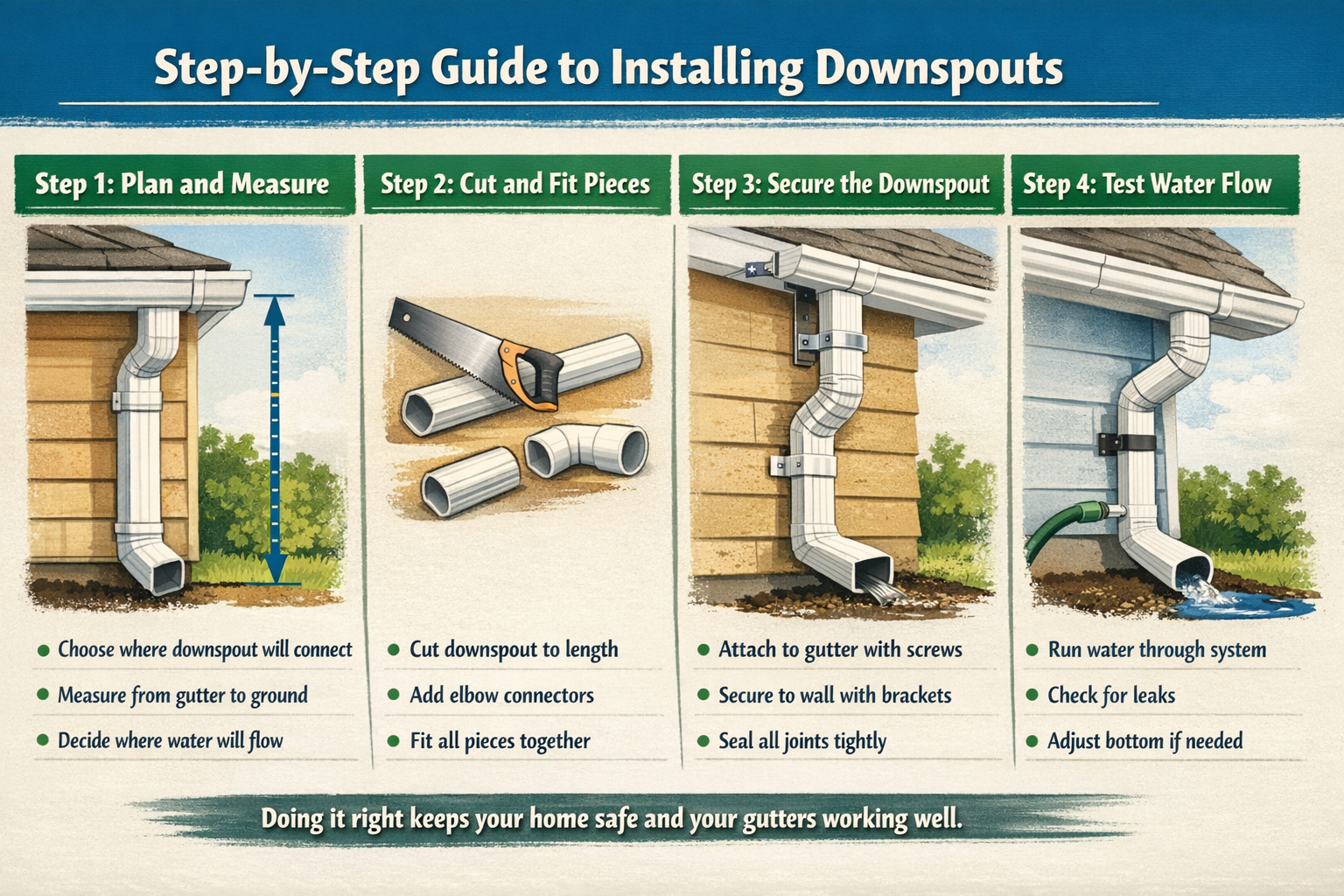
Installing a downspout is easy if you follow the steps cautiously. Plan where it will go pr measure appropriately and make certain all pieces fit tightly. Doing each step gradually helps your system work well and keeps water away from your home.
Step 1: Plan and Measure
Choose where the downspout will connect to the gutter. Corners or edges work best. Measure from the gutter to the ground. Choose where water will flow away from your house. This tells you how many sections you need.
Step 2: Cut and Fit Pieces
Cut the downspout to the right length. Add elbow connectors at the top so it fits against the wall. Fit all pieces together before securing them.
Step 3: Secure the Downspout
Connect the top to the gutter with screws or rivets. Secure the downspout to the wall with brackets or straps at intervals of every few feet. Make certain joints are tight and sealed.
Step 4: Test Water Flow
Run water through the system with a hose. Check for leaks and ensure that water flows away from the house. Adjust the bottom if required.
Doing it right keeps your home safe and your gutters working well.
Common Mistakes and How to Avoid Them
Many people make mistakes when fixing downspouts which can lead to water problems around the house. The common problems include placing the outlet too close to the foundation or loose pipes, unsealed joints and incorrect water flow direction.
Tips to avoid the mistakes:
- Have the outlet away from foundation.
- Secure the pipe with enough brackets.
- Seal all joints to stop leaks.
- Make certain that water flows away from the house.
Following to these simple steps will keep your downspout working well and protect your home from water damage.
When to Call a Professional
Even if you like doing things yourself, some downspout jobs are better left to an expert. Houses with many roof sections or complicated layouts can make water flow tough to manage. Long downspouts with several bends require careful planning to prevent leaks or clogs. If your gutters frequently get blocked, overflow or water pools near the house then it’s a sign you should get assistance. Professionals can inspect your entire drainage system, adjust slopes or recommend the best downspout placement and secure everything. Hiring a professional ensures water flows safely away from your home which keeping your house and yard safe.
Conclusion
To conclude, installing eavestrough downspouts correctly is a vital step in keeping your home safe from moisture damage. By using durable materials and ensuring water is directed away from the foundation, you can prevent expensive structural complications. Whether you manage the project yourself or hire a professional, understanding the importance of eavestrough installation for protecting your home from water damage is key to a healthy home. Regularly checking the system and avoiding common problems, such as incorrect slopes or loose pipes, will ensure your drainage works effectively for years to come.