Shingling, gutters, and flashing are among the areas where many homeowners are concerned about roof care. But one significant aspect is often overlooked: attic insulation. Adequate attic insulation makes a substantial contribution to safeguarding your roof and enhancing energy savings and the longevity of your house. Insulation is a correct installation that has been shown to control temperature and moisture and prevent common roofing issues.
In this article, we will discuss the benefits of attic insulation for your roof and why it is a wise investment for any homeowner.
What Is Attic Insulation and Why Does It Matter
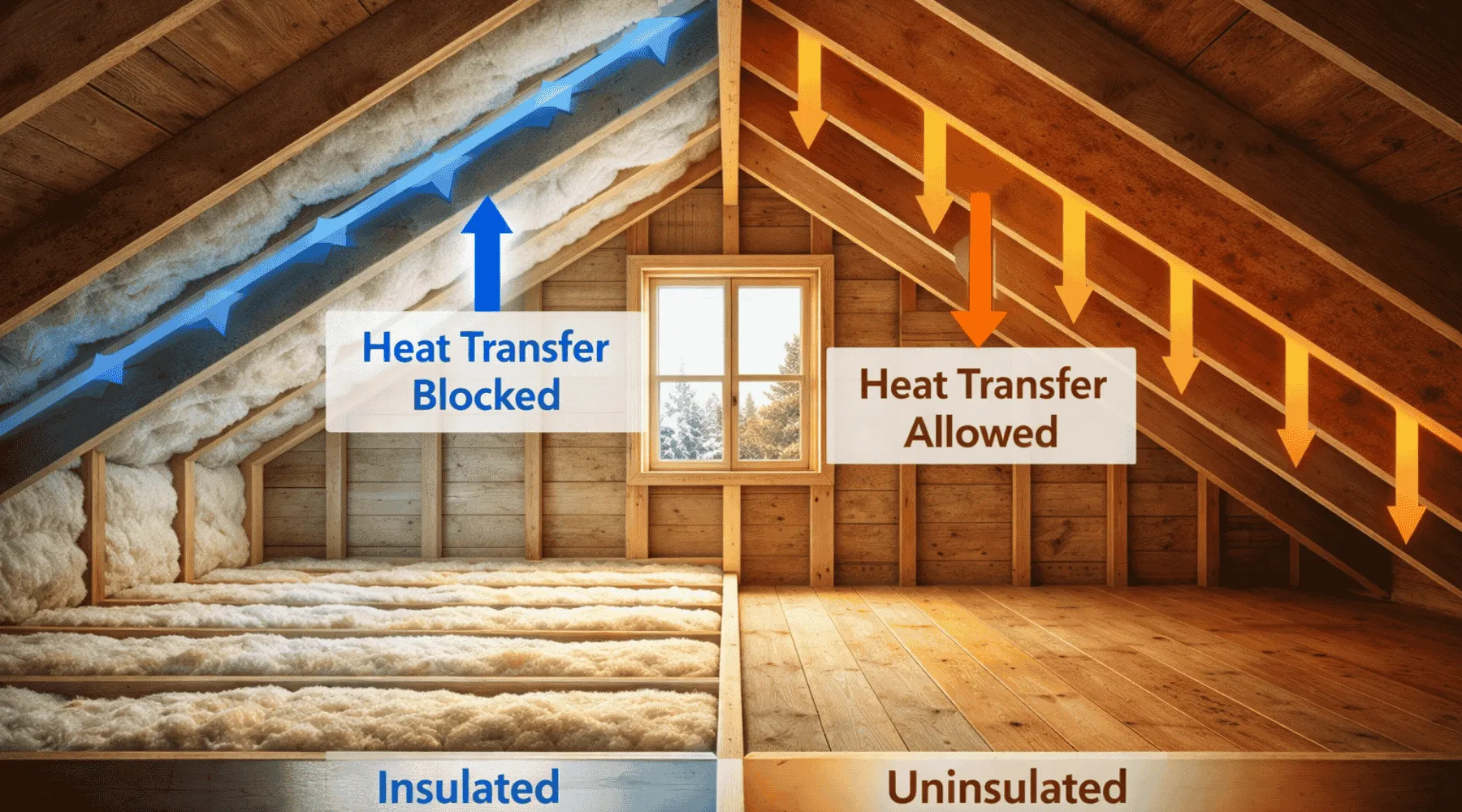
Attic insulation is a substance used in the attic to reduce heat transfer between your house and the outside. It retains warm air in winter and prevents heat from entering in warm summer. With an insulated roof and attic, you have a stable, secure roof and attic year-round.
The lack of insulation leads to the accumulation of heat and moisture in the attic. It can harm roofing materials It can harm roofing materials, such as shingle roofing, increase energy costs, and cause structural problems that manifest over the long term.
How Attic Insulation Protects Your Roof
Reduces Heat Damage
In warm seasons, there is a possibility of heat build-up in the attic and accelerated degradation of roofing materials. Excess heat can:
- Warp roof decking
- Crack shingles
- Weaken roof adhesives
Proper insulation makes the attic cooler, reducing stress on your roof and extending its life.
Prevents Ice Dams in Winter
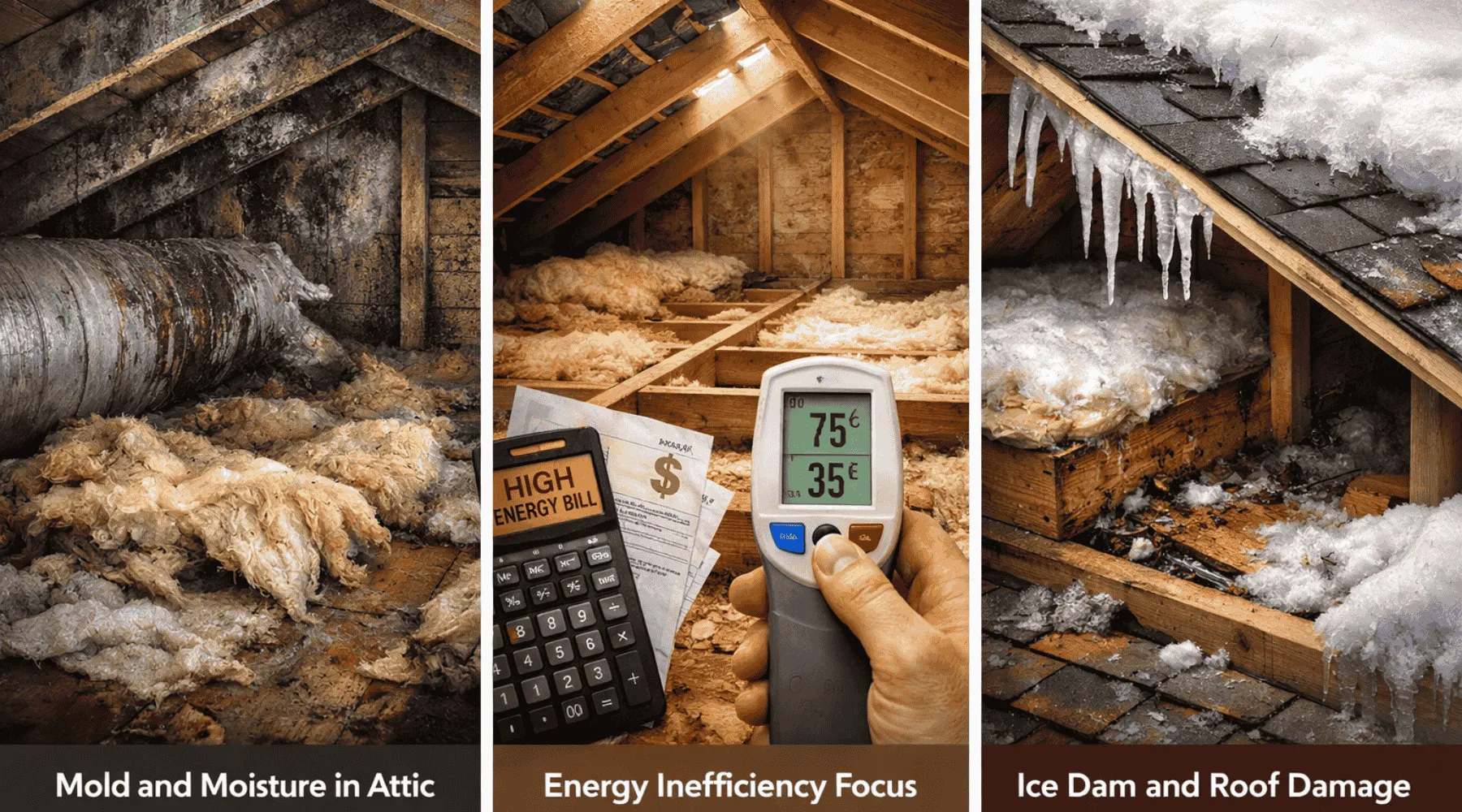
Poor insulation in colder climates will allow heat in your home to escape to the attic. This melts the snow on the roof and refreezes on the edges, forming ice dams. Ice dams can lead to:
- Water leaks
- Damaged shingles
- Rotting roof edges
The attic insulation helps keep warm air in the house and prevents uneven snow melting, thus saving your roof throughout winter.
Controls Moisture and Condensation
One of the largest dangers of any roof is moisture. Home insulation can be poor, allowing warm air in the home to rise into the attic and condense. This moisture can cause:
- Mold growth
- Wood rot
- Weakened roof structure
Correct insulation, supplemented by ventilation, will help regulate moisture and maintain a dry attic.
Improves Energy Efficiency and Reduces Roof Stress
Lack of proper attic insulation means your heating and cooling systems will have to work harder to keep your home comfortable. This continued temperature change enhances the roof’s expansion and contraction, which may reduce its longevity.
Your home maintains a constant temperature with ease due to adequate insulation. This will reduce tension on the roofing materials and minimize energy bills.
Signs Your Attic Insulation Needs Improvement
Better insulation of the attic may be required in case you notice:
- High energy bills
- Uneven indoor temperatures
- Ice dams on the roof
- Moldy or wet odor in the attic.
- Shingles on the roof that wear out too fast.
The problems usually begin in the attic and extend to the roof over time.
Types of Attic Insulation That Help Roof Health
Fiberglass Insulation
Fiberglass is cheap and effective at reducing heat transfer, and it serves well when properly mounted. For more information on how fiberglass insulation can help your home, check out Energy Star: Attic Insulation.
Spray Foam Insulation
Provides a tight seal against air and powerful moisture protection. It offers a good attic and roof cover.
Blown-In Insulation
Perfect for filling gaps and other hard-to-reach areas, and for helping keep attics at a consistent temperature.
Depending on your home’s design, climate, and budget, you can choose the appropriate insulation. You can learn more about different insulation types at Department of Energy: Insulation and Air Sealing.
Professional Installation Makes a Difference
It is equally important that attic insulation is installed properly, as much as the selection of materials. An ineffective installation may leave gaps, limit air circulation, or trap moisture. When a professional installer is used, they make sure:
- Even coverage
- Proper airflow
- Correct insulation levels
- Long-term roof protection
Professional insulation can ensure that your roof works better and lasts longer.
Long-Term Benefits of Proper Attic Insulation
When attic insulation is properly undertaken, the homeowners enjoy:
- Longer roof lifespan
- Reduction in heating and cooling expenses.
- Reduced moisture problems
- Improved indoor comfort
- Less need for roof repairs
It is among the most affordable methods of covering your roof and your home.
Conclusion
Attic insulation should be installed properly to ensure healthy roofs. It eliminates overheating and moisture issues and protects against seasonal weather loads. Insulation helps your roof perform better and last longer by maintaining a constant attic temperature.
To insulate your roof and keep energy costs down, one of the best long-term solutions is to improve attic insulation.
FAQs
Is it possible that a leaky roof is caused by poorly performing insulation in the attic?
Yes. Weak insulation may cause water accumulation and ice formation, leading to leaks in the roofs over time.
What is the frequency of checking the attic insulation?
Attic insulation must be checked every few years, or if you have noticed high energy bills, moisture conditions, or roofing problems.