When deciding between Owens Corning and Malarkey shingles, it can be confusing to choose when both are marketed as high-quality by various contractors. The fact is, neither brand is always better, and that is where most homeowners get caught. The construction of these shingles prioritizes several factors, and these exceptions are important based on your weather, budget, and how long you intend to remain in your house.
Rather than enquiring as to which brand takes the cake in general, it would be more advantageous to ask how well your circumstances fare with this or that shingle. The factors include climate exposure, longevity outlook, the local installer’s experience, and even insurance. When you know the way these shingles will work in a real-life scenario, the choice tends to be much more obvious.
Key Takeaways
- Owens Corning and Malarkey shingles cater to different needs based on climate, budget, and long-term plans.
- Owens Corning uses traditional oxidized asphalt, while Malarkey uses polymer-modified asphalt for added flexibility and impact resistance.
- Malarkey shingles perform better in extreme weather conditions, such as hail, heat, and cold.
- Proper installation is more crucial than the shingle brand for your roof’s performance.
- Consider long-term performance and repair frequency, not just upfront cost, when choosing between Owens Corning and Malarkey.
How These Brands Differ at a High Level
Owens Corning shingles are also known for their uniformity, extensive availability, and reliability. They are widely used in residential areas, where many contractors are not shy about installing them because they are mainstream and easy to install.
Malarkey approaches it differently. They are concerned with polymer-modified asphalt that enhances the flexibility and impact resistance. This has given Malarkey a reputation for surviving harsh weather conditions, particularly in areas with high hail and temperature fluctuations.
Both are reputable. They are constructed with other priorities in mind.
Material & Construction Differences That Actually Matter
The greatest disparity between Owens Corning and Malarkey lies not in branding but in the asphalt itself.
Most Owens Corning architectural shingles are made with traditional oxidized asphalt. This form of asphalt is stable and has been tested before, though it becomes more brittle over time due to natural weathering and UV exposure, particularly under extreme heat or cold cycles.
Malarkey applies polymer-modified, or rubberized, asphalt. This involves incorporating polymers into asphalt to improve its flexibility. Such flexibility allows shingles to bend rather than crack when temperatures are low or when struck by impact.
Durability & Weather Performance in Real Conditions
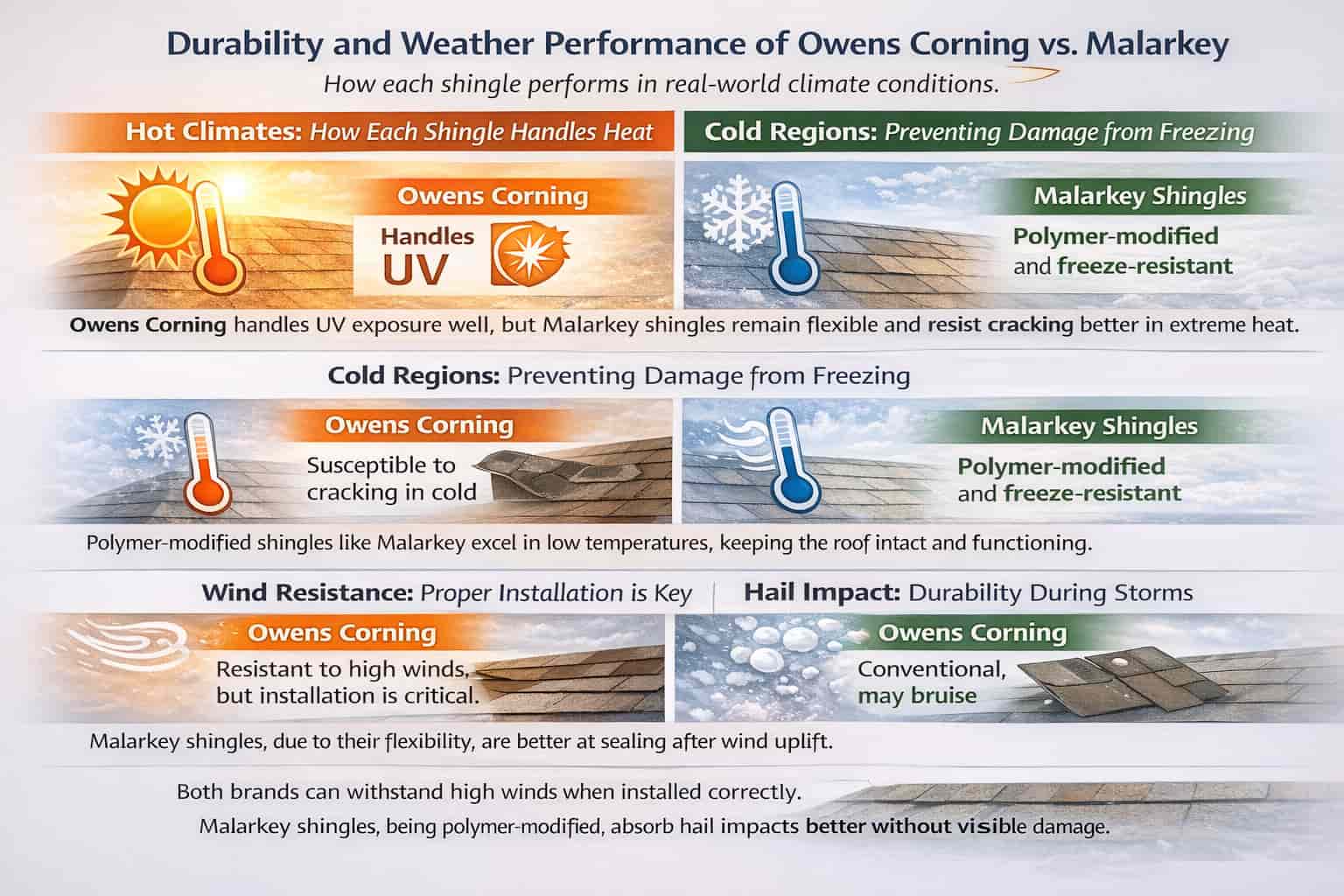
In hot climates, choosing shingles with high solar reflectance often referred to as Energy Star certified cool roofs can help lower attic temperatures and extend the life of the asphalt. Owens Corning does this well; however, polymer-modified shingles tend to remain flexible in high heat.
Flexibility is even bigger in cold regions. The malarkey shingles are usually resistant to freezing, which helps reduce cracking during winter.
Both brands rely on proper installation to achieve wind performance. If you are looking for expert shingle roofing in Chesapeake, VA, it is vital to choose a contractor who understands how coastal winds impact shingle sealing. When properly installed, either one can withstand a high wind. Nevertheless, flexible shingles will seal more quickly once wind uplift has occurred.
The difference is most evident in hail. Conventional shingles can develop bruising or loss of granules after the occurrence of hailstorms, whereas polymer-modified shingles can absorb the impact without any visible damage.
Impact Resistance & Insurance Considerations
Malarkey also offers several Class 4 impact-resistant shingles designed for storm-prone areas. These shingles are tested to withstand hail impacts, which can destroy ordinary asphalt products.
Installation of Class 4 shingles can also result in insurance discounts to the homeowners in some regions. This depends on the insurer and locality, and savings are never guaranteed, but it is worth asking.
Warranty Differences and What Homeowners Often Misunderstand
Many homeowners assume that warranties cover them for most roofing problems. In fact, the warranties primarily apply to manufacturing faults, not to installation or normal wear.
Owens Corning and Malarkey both have good manufacturer warranties, but neither can compensate for poor craftsmanship. Not covered are ventilation issues, inappropriate nailing, and flashing errors, regardless of the brand used.
Warranty coverage can be increased through contractor certification programs, though the quality of installation remains more important than the paperwork. A well-designed, properly installed roof with good ventilation usually performs better than a high-quality product that is poorly installed.
Price Differences and Why Roofing Quotes Vary
The price of Owens Corning shingles is generally lower initially and is readily available in the market, so material costs are predictable.
The price of malarkey shingles is more closely related to the use of polymer-modified materials and to low regional availability. In other locations, Malarkey is not regularly installed by the same number of contractors, which may increase labor costs.
A higher price does not necessarily translate into better, but a low price does not necessarily translate into a bargain either. The cost conversation should include long-term performance, repair frequency, and storm resilience.
Which Shingle Brand Makes More Sense for Your Home?
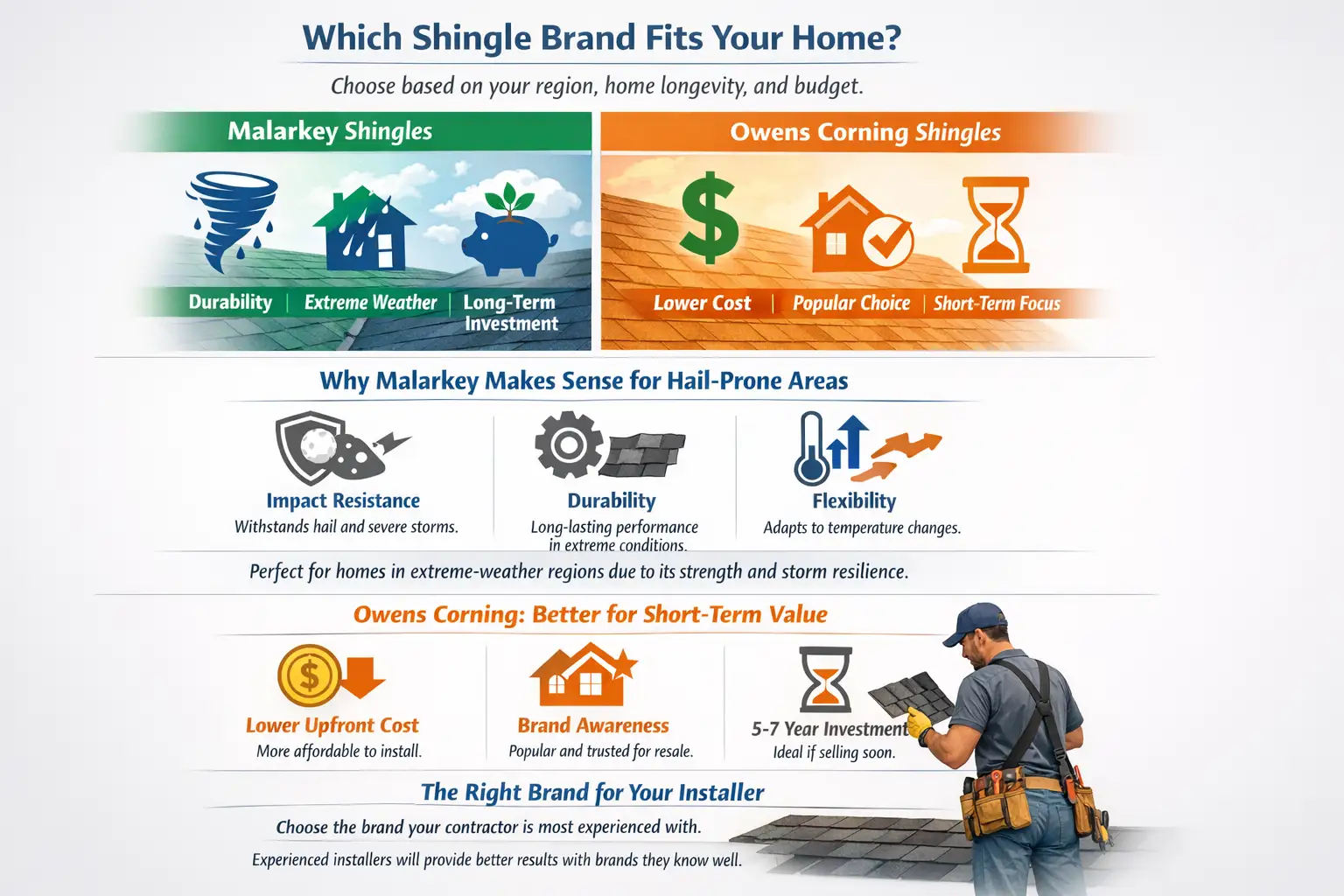
In a hail or extreme-weather region, Malarkey would usually make more sense, since it offers impact resistance and flexibility. If you intend to sell your house in 5-7 years, Owens Corning can be a convenient option given its brand awareness and lower upfront cost.
Polymer-modified shingles may be worth the investment if long-term stability and reduced storm damage are the top priorities.
If selecting a contractor is a problem due to their lack of availability or experience installing them in your area, the best results may be achieved with the brand your roofer is most comfortable installing, rather than pushing one they rarely install.
What Your Roofing Contractor Should Help You Decide
An excellent contractor will not sell a brand without any provocation. They are supposed to describe the effects of ventilation, roof slope, attic condition, and the local climatic conditions on the performance of the shingles.
Ask your roofer which brand they have seen perform well in your area, rather than which one they sell the most. The use of local experience can be more important than what manufacturers say.
Brand loyalty should never override installation quality, flashing details, or ventilation compatibility.
Final Thoughts
Both Owens Corning and Malarkey produce reliable roofing shingles, but the two are geared toward different priorities. Owens Corning provides uniformity, low cost, and widespread installer knowledge. In more severe climates, Malarkey focuses on flexibility, impact resistance, and durability.
No single winner in this case. Which decision is better depends on the type of place you are in, the kind of roof you have, and your future expectations for it. You can find a comparison between Malarkey and GAFs shingles in this blog.
FAQs
Is Malarkey better than Owens Corning?
We cannot say what is better or worse, because it depends entirely on your choices and needs. Malarkey can operate in harsh weather, whereas Owens Corning is suitable for normal weather.
Is there a longer length of stay for Malarkey shingles?
They tend to be stiff and hit harder, which can sustain performance under harsh climatic conditions.
Are Owens Corning shingles more cost-effective?
Yes, in general, because it is more widely available and has a lower material cost.
Does Class 4 Shingles ensure a discount on insurance?
No. The discounts will be based on your insurer and location.
Is the brand more important than the installation?
Yes. Even the best shingles may be ruined by poor installation.
What brand are contractors attracted to?
Tastes differ by region, experience, and climate, not because one brand is objectively the best.
Is it possible to combine a ventilation system and shingles?
To avoid warranty or performance claims, your contractor is expected to ensure compatibility.