Choosing the correct roofing system is a major decision, particularly for commercial buildings with flat or low-slope roofs. Two of the most prevalent roofing types that homeowners and property owners consider now are the Modified Bitumen roofing and TPO roofing. They are both popular, reliable, and widely used, yet that is where the difference lies, since they meet divergent needs with respect to your building, budget, and long-term goals. Knowledge of the differences between these two systems can help you make a confident decision that will save you money.
If you are struggling to choose the right roofing system for your building, the following comparison will simplify the process and help you understand it better.
What Is Modified Bitumen Roofing?
Modified Bitumen roofing is an asphalt-based roofing system that has been in use for decades over flat and low-slope roofs. It is prepared by adding rubber or plastic to customize the traditional asphalt to enhance flexibility and strength. Such roofs are typically constructed in layers and reinforced with fiberglass or polyester sheets.
The strength and reliability of modified bitumen are among its greatest benefits. It is designed to support foot traffic, which makes it a good solution when the roof needs frequent servicing or when it provides access to equipment. It is so old that most property owners can rely on it as a tried-and-tested solution.

What Is TPO Roofing?
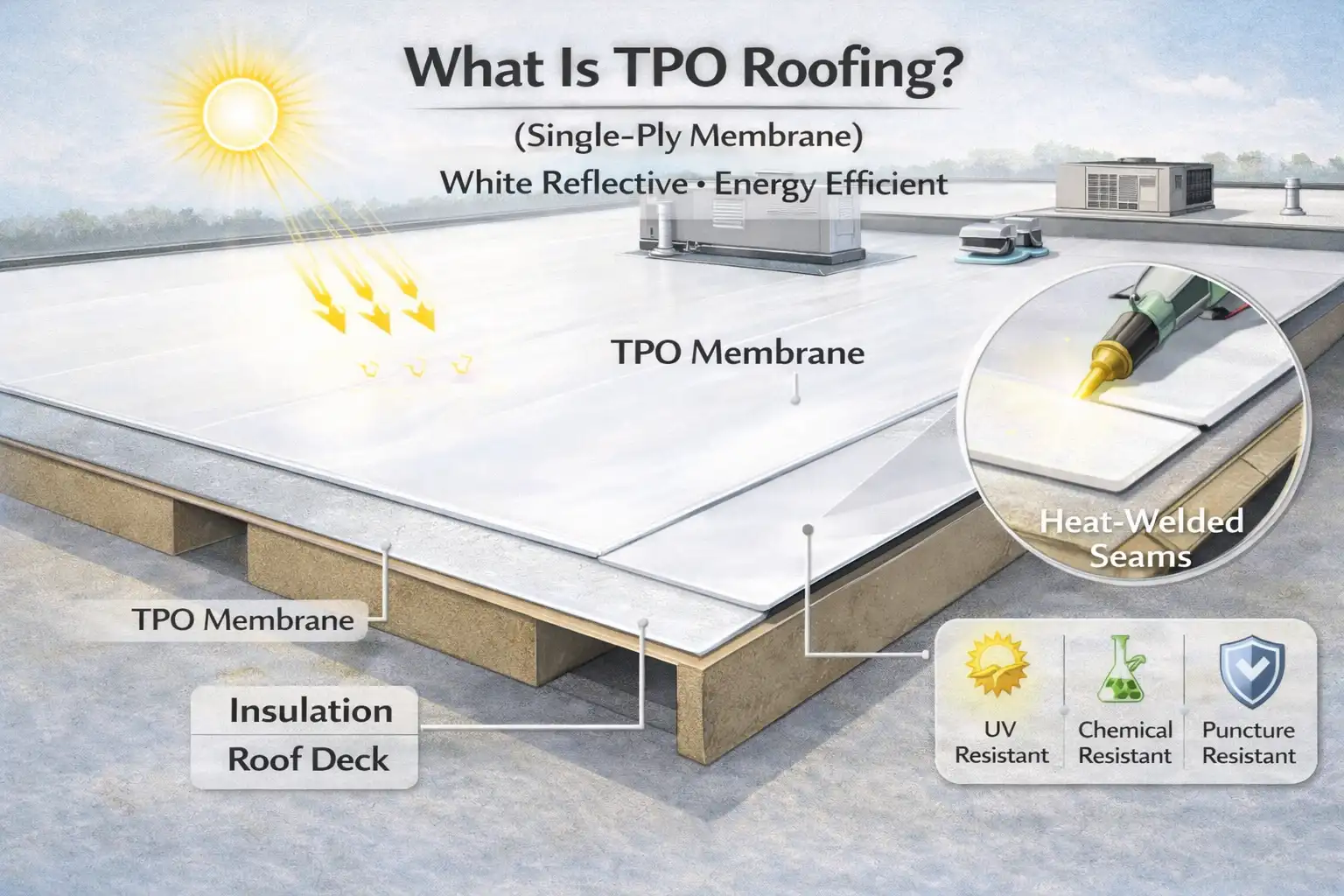
TPO (Thermoplastic Polyolefin) roofing- Thermoplastic polyolefin roofing is a single-layered roofing membrane used in commercial buildings. It is known to have a white reflective surface that allows it to absorb less heat and is therefore more energy-efficient. The seams of TPO membranes are heat-welded to form a watertight bond.
TPO roofing has been popular in recent years for its performance-to-price ratio and energy conservation. It is light, flexible, and made to resist UV, chemicals, and punctures.
Durability and Lifespan Comparison
Both systems are equally durable, though with varying capacities.
Altered Bitumen roofing can withstand physical damage very well. It has a stratified architecture that offers additional security against punctures and tears. It may have a lifespan of 20 years or longer with proper upkeep and installation. It is particularly effective in places where roofs are heavily used.
TPO roofing can also stand the test of time, but it does not have layers; it is just a membrane. TPO roofs have a life of 15 to 25 years when installed properly. The seams are heat-welded, which is also a big strength and eliminates the risk of leakage with time.
Temperature Control and Energy Efficiency.
TPO roofing is clearly superior in energy efficiency. It has a white, reflective surface that deflects sunlight, thereby limiting the amount of heat collected in the building. This can reduce heating expenses, particularly in hot regions, and enhance home comfort.
Modified bitumen roofs are typically darker, indicating they absorb more heat. Although a reflective coating can enhance efficiency, it can degrade over time.
TPO roofing is generally the more appropriate choice if one of the top priorities is lowering energy bills and keeping your building cooler.
Installation and Project Timeline
There are various methods for installing modified bitumen roofing, including torch-applied, self-applied, and cold-applied. Some techniques are more labor- and time-intensive (for multiple layers). The quality of installation is paramount because when it is done poorly, it will cause subsequent problems.
TPO roofing is normally faster to install. The huge sheets of membrane occupy more space, and the seams are heat-welded to ensure consistency. Introduction: Work with less labor and less disturbance to your property because faster installation is possible.
In projects where deadlines are a constraint, the TPO roofing can be more effective.
Maintenance and Repairs
Both roofing systems are relatively inexpensive to maintain, provided they are used well, yet some differences should be taken into consideration.
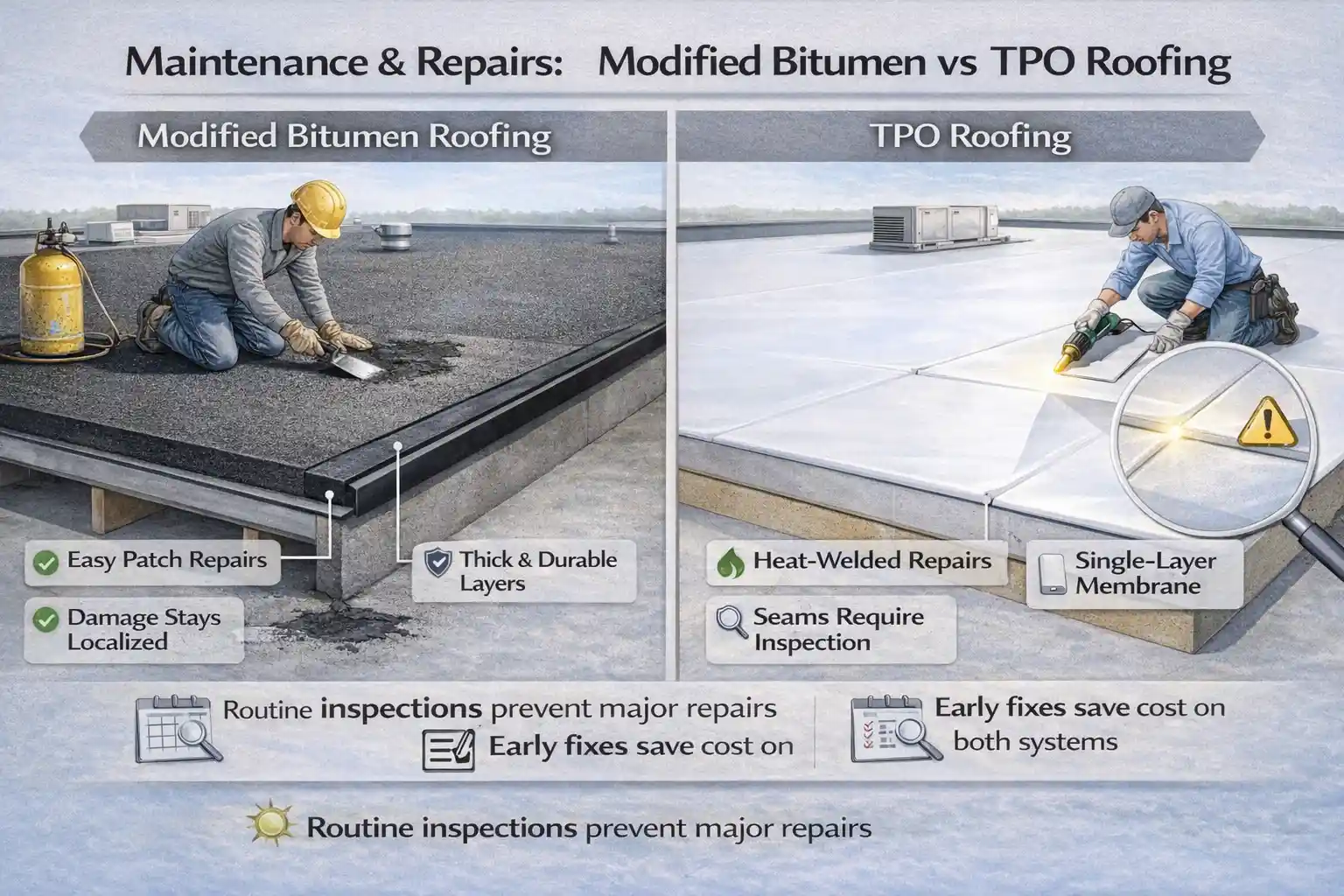
Bitumen-modified roofs are easy to repair, as damage can be patched in most cases without compromising the entire system. They are also less likely to be damaged or cause minor damage due to their thickness.
TPO roofs can also be repaired; however, the repair process typically entails re-welding or replacing membrane parts. Frequent checks are necessary to ensure seams remain intact.
Overall, both systems have the advantage of regularly inspected systems that allow for the identification of minor problems at their initial stage.
Cost Considerations
Modified bitumen roofing may be costlier in the short run due to labor and material costs, but its long-term lifespan may be valuable for some structures.
TPO roofing is initially cheaper and offers a financial payoff in energy savings. This combination makes it an attractive choice for many property owners.
The optimal price will be determined by the duration of your building ownership, the amount of energy you will consume, and the roof’s purpose.
Which Roofing System Is Right for You?
The decision made between modified bitumen and TPO roofing is based on your own demands:
- Modify Bitumen is the best option when people frequently access your roof, you prefer a conventional multi-layered system, and durability is of utmost importance.
- Select TPO Roofing when energy conservation, faster installation, and reduced initial costs are the primary concerns.
It has no universally applicable solution. The best option will vary depending on your building’s structure, climate, budget, and long-term plans.
Final Thoughts
Both modified bitumen and TPO roofing are also dependable in flat and low-slope roofing. They all have their specific benefits, and knowing why one will be better than the other can help you decide. Instead of buying one based on trends or price, it is necessary to discuss how the roof will perform over time.
Domi roofing is a company that assists property owners in assessing their roofing requirements and selecting options that offer long-term protection and value. If you do not know which system to use in your building, a professional evaluation will guide you in the right direction and help you spend intelligently on your roof.