Everything under your roof is your family, your possessions, and the base of your home. However, not all homeowners know when their roof is in trouble until a leak is spotted or severe damage has already occurred. Roof issues often have an insidious beginning and proceed slowly. When they occur, they may cost more and inconvenience those being repaired, which may not be necessary. The warning signs can help you take action before small problems culminate into big issues.
If you do not know the condition of your roof, this article will help you understand what to look for and why it is essential to take care of it on time.
Why Roof Damage Often Goes Unnoticed
The majority of roofs are constructed to last several years, making it easy to assume everything is okay. When viewed from the ground, issues such as broken shingles, deteriorated flashing, or trapped water cannot always be detected. The roof system is eroded by weather, aging materials, and poor ventilation.
Homeowners will put off inspections because they will not see an apparent leak. Regrettably, water may pass through roofing coverings and cause damage even before it appears on the ceiling or wall. By the time interior signs are visible, the roofs might be ruined.
Shingles That Show Wear or Damage
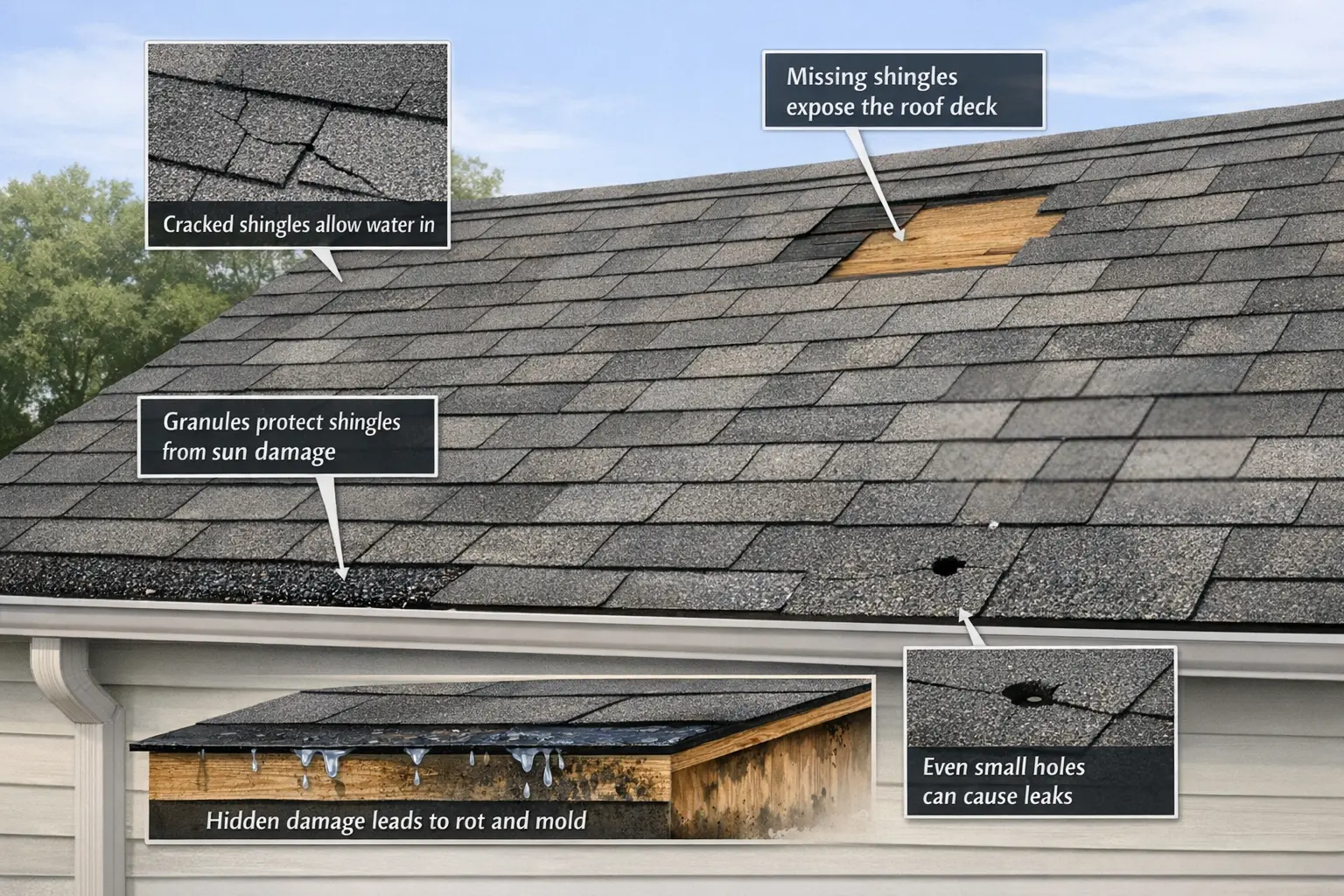
The roof is covered with shingles, which are the first line of defense. As soon as they start failing, your roof is at risk. Cracked or missing shingles are good indicators that the roofing material is deteriorating. Another red flag is granules that accumulate in gutters, particularly in asphalt shingle roofs. These granules prevent sun damage to the shingles, and as soon as they wear out, the roof becomes susceptible to rapid aging.
A few shingles with holes can cause water to enter. Even a small hole left unattended may result in leaks, rot, and mold growth under the surface.
Leaks, Water Stains, and Moisture Inside the Home
Some of the most evident indications of roof difficulty include water stains on walls or ceilings. These stains could be yellow or brown, and their size could continue to increase over time. Although the area might be dry, in most cases, water had penetrated the roof at some stage.
The dampness of the attic is another warning. Wet insulation and visible mold mean that the roof is letting water or damp air in. Uncontrolled, this moisture can undermine wooden structures and reduce their energy efficiency.
Sagging or Uneven Roof Lines
A roof must look even and straight. Any depressions or cusps along the roofline could indicate a structural problem in that area. This may be due to prolonged exposure to moisture, rotting of the decking, or excessive weight from debris or stagnant pool water.
Sagging is a major issue, and it cannot be overlooked. It usually implies that the roof is not currently supporting itself properly and needs to be taken care of by a professional.
Flashing and Seal Failures
Chimneys, vents, skylights, and roof edges have flashing installed to keep the water out of the vulnerable locations. Flashing may crack, become loose, or corrode with time. The inability of the seals leads to easy water penetration into the roof system.
Flashing problems are difficult to detect until one closely examines the issue; hence, they can be ignored until they start to cause leaks. These points of weakness can be revealed at an early stage through regular inspection, and much damage can be avoided.
Higher Energy Bills Without Explanation
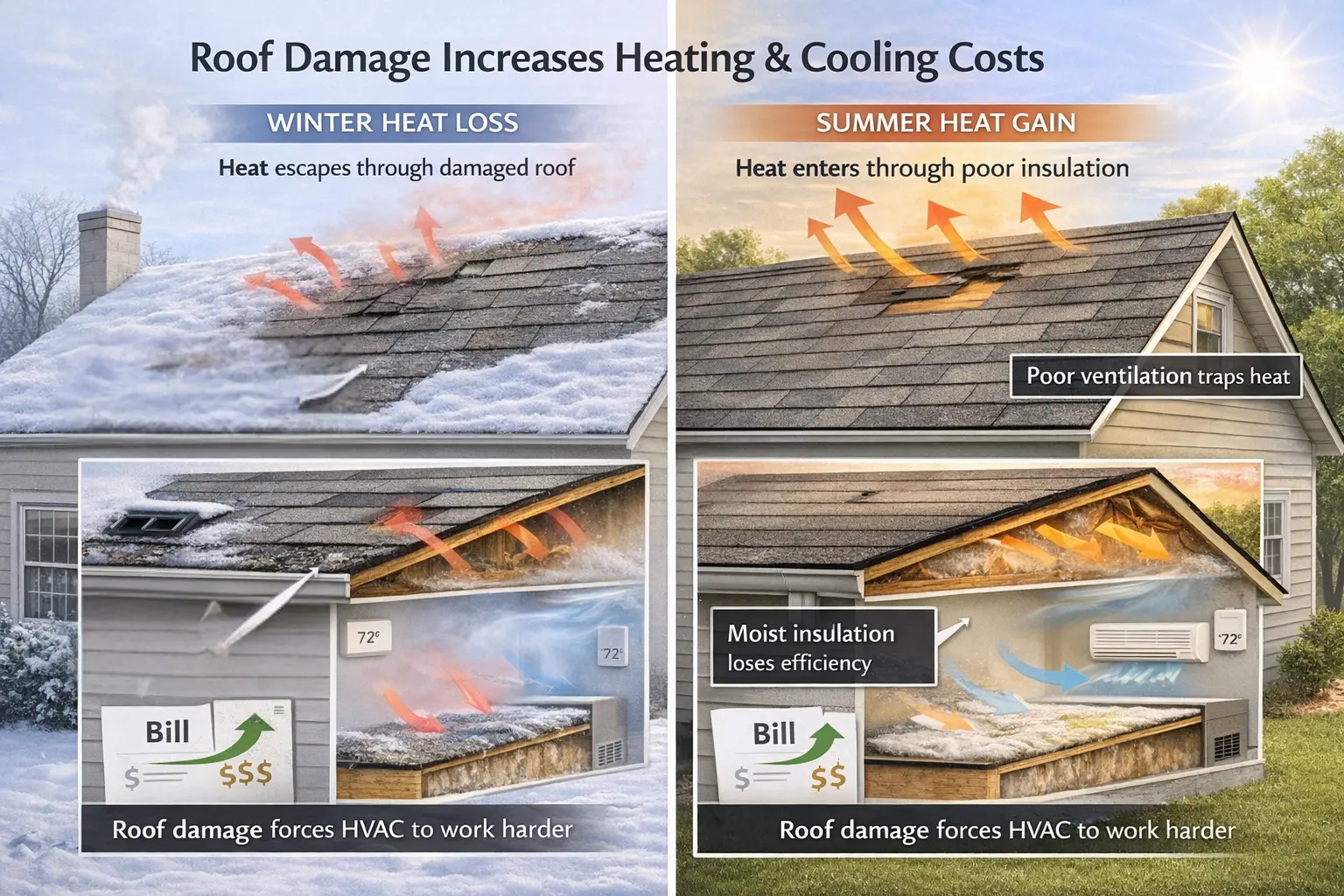
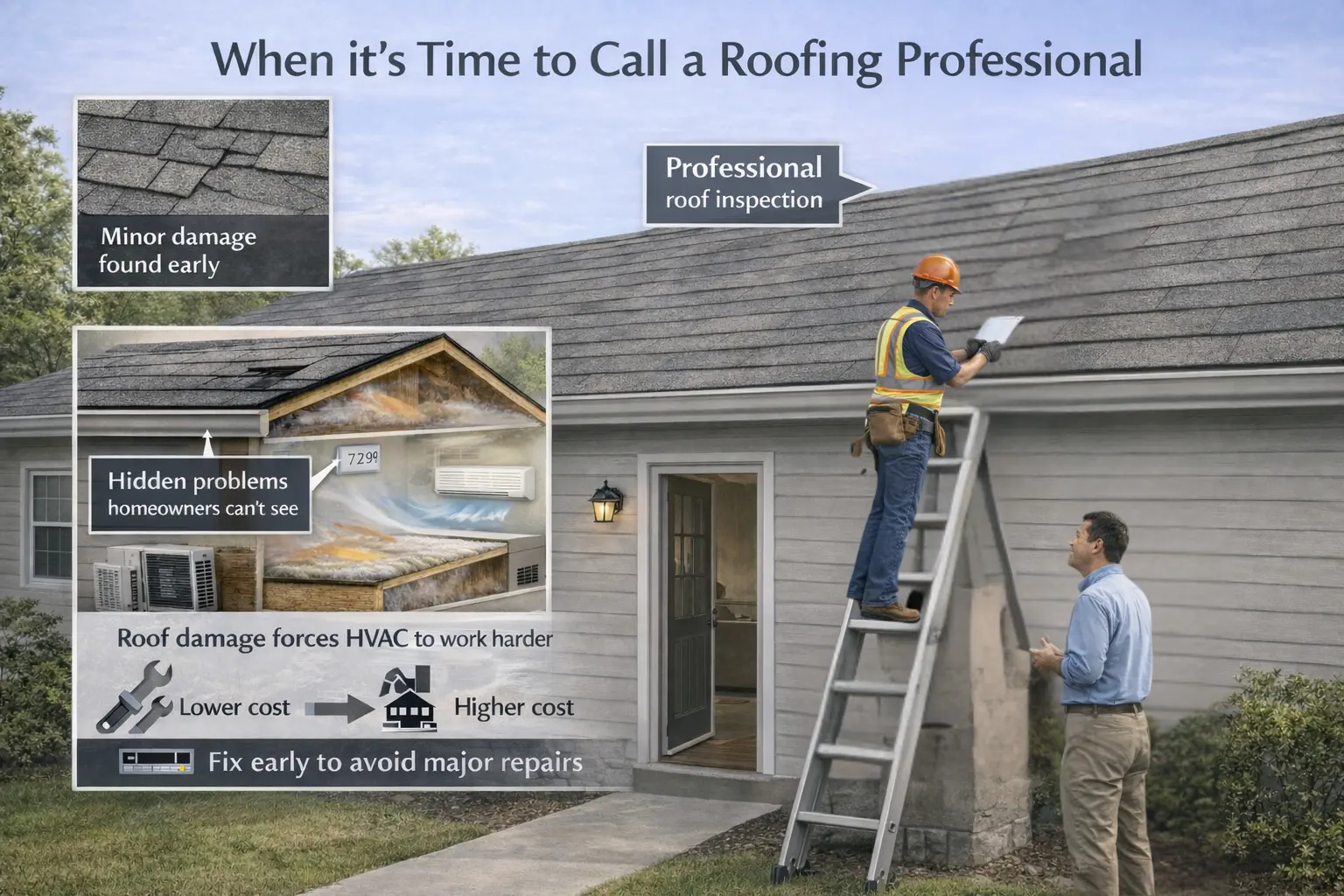
Assuming you have been paying much more on your energy bills but cannot tell why, your roof might be experiencing the same issue. Bad ventilation and damaged roofing materials can result in heat loss in winter and gain in summer. This causes your HVAC to work harder, thereby increasing energy costs.
A weakened roof can also allow moisture to enter the insulation, thus lowering its efficiency. Solving the roof problem would enhance comfort and reduce the electricity payments. According to the U.S. Department of Energy, how roof insulation and ventilation affect energy efficiency plays a major role in controlling heating and cooling costs.
Age of the Roof Matters
Every roof has a lifespan. The lifespan of asphalt shingles is 20-30 years, and other materials have different lifespans. As your roof nears its expected lifespan, it is more likely to encounter issues, even if it may seem okay when looking at the building.
Old roofs are prone to storms, leaks, and material wear. Frequent maintenance is necessary when the roof is old, so the homeowner knows when to repair or replace it and avoid emergencies.
Storm Damage You Can’t Always See
Heavy rain, strong winds, hail, and falling debris may damage a roof. At times, the damage is too apparent, yet in many cases, it is not. The wind can carry off the shingles to the point of breaking their seal, and the hail can bruise the shingles without leaving any cracks.
It is prudent to have your roof inspected after it has been exposed to harsh weather. Unrecognized storm damage can deteriorate over time and may not be insured if left unaddressed.
Storm-related damage to roofs that is not initially evident can lead to gradual but persistent roofing-system weakening long before leaks become obvious inside the house, according to research by the Insurance Institute for Business & Home Safety.
Why Early Action Saves Money
Failure to pay attention to initial symptoms tends to make repairs more expensive. Even a small leak can lead to rotted decking, damaged insulation, and interior damage. The growth of molds may also be hazardous, and their removal may be expensive.
It is possible to solve problems in their initial stages, thereby saving on easy repairs and prolonging your roof’s life. It also allows you time to think rather than respond to an emergency.
When to Call a Roofing Professional
If any of the above signs occur, you need to get a roofing expert. You can have a professional inspection, which might give you certainty and confidence, though you are uncertain. Skilled roofers can diagnose defects that are not apparent, discuss your problems, and prescribe the most suitable course of action depending on the state of your roof.
At Domi Roofing, we focus on the actual condition of our clients’ roofs and encourage them to take action before minor issues become major problems. Whether there is a minor repair to consider or a more significant solution, professional advice can ensure that your home remains safe.
Final Thoughts
By the time the destruction starts to manifest itself, your roof might be in danger. Shingles are deteriorating, moisture levels are low, energy bills are increasing, and materials are old; these are all factors to consider. The only way to guard your home and prevent expensive surprises, including urgent roof repairs, and keep the house in good condition by repairing it on time.
If you are not sure about the condition of your roof, it’s better to save time, stress, and money in the future by having it inspected now. A good roof is not only a matter of security, but it is also a matter of peace of mind.
Frequently Asked Questions
How often should homeowners have their roof inspected?
Most homeowners should schedule an annual roof inspection and follow severe weather, heavy rain, or high winds.
Can roof damage exist even if there is no visible leak?
Yes. Roof damage often begins below the surface, allowing moisture to seep into a home long before stains or leaks become visible.
Are missing or damaged shingles a sign of a serious problem?
Even a handful of broken shingles can allow water to infiltrate the roof, leading to leaks and, if left unfixed, rot and mold.
What causes a roof to sag or look uneven?
Weak or collapsing roofs are frequently the result of long-term water damage (such as rotting roof decking and compromised structural integrity), excessive loads from debris, and saturated standing water.
Do roof problems cause high energy bills?
Yes. If the roof is damaged or there’s insufficient ventilation, heat is lost in winter and trapped in summer, pushing your HVAC system into overdrive.
When do I call a roofer?
You need to call a Roofing Professional if you see warning signs such as water stains, damaged shingles, dips in the structure, or after very strong storms.