Are you considering metal-covered roofing or have you already installed one? You have probably received mixed guidance on the matter of grounding. Some individuals believe that metal roofs are attractive to lightning, so they should be grounded, while others believe that it is not necessary to ground the metal roof at all. The confusion is universal and often leaves homeowners concerned about safety, electrical hazards, or code violations.
It is short and simple: in most domestic cases, metal roofing does not require grounding. But it is possible to understand why this would dispel the myths and clarify when grounding is necessary.
Why People Think Metal Roofs Need Grounding
Metal is a conductor; therefore, it is logical to assume that a metal roof would increase the risk of lightning strikes or electrical hazards. The belief has existed for decades, and in most cases, out of context.
Actually, there is no lightning attraction to metal roofing. Lightning strikes the tallest elevation in an area or the path of minimum resistance toward the ground, not certain materials. The metal roof of a house is not more likely to be struck than the asphalt roof of the same structure.
This is one of the false notions that makes people question grounding.
How Metal Roofs Actually Behave During Lightning
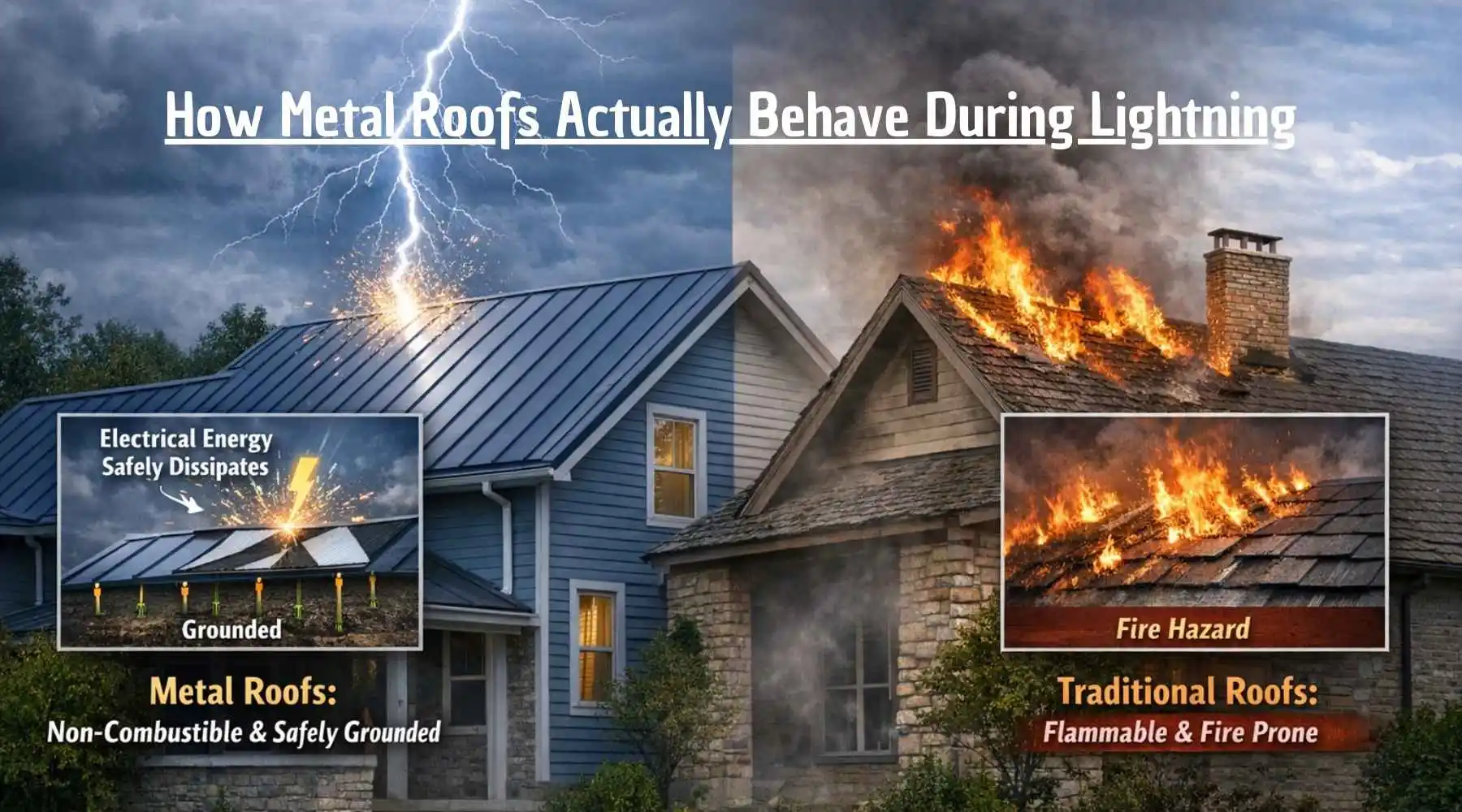
Even when the house is struck by lightning, a metal roof can be safer than other types of roofing.
Here’s why:
Metal does not burn, hence it will not be hit by lightning. When well-fitting, metal coverings enable the dissipation of electrical energy through the surface, thereby reducing heat concentration. Grounding systems in electrical wiring are already used in most houses to direct excess energy into the ground safely.
On the contrary, the conventional roofing materials, such as wood shake or asphalt shingles, are flammable and can pose a greater risk of fire in extreme circumstances.
Do Building Codes require Grounding?
For normal residential houses, building codes do not require grounding for metal roofs.
The electrical grounding requirements are concerned with:
- Electrical systems
- Appliances
- Antennas
- Lightning protection systems (in place)
In most areas, a typical metal roof, properly installed in accordance with the manufacturer’s requirements, is not subject to mandatory grounding requirements.
But codes may differ according to:
- Local regulations
- Commercial buildings vs residential buildings.
- Special buildings (communication towers or industrial plants).
This is why it is always prudent to go by the local code advice- though in the case of the normal home, it is not always necessary to ground the roof itself.
In the Cases when Grounding is required.
Special Structures
Additional grounding may be necessary for buildings such as hospitals, data centers, radio towers, or agricultural units with sensitive equipment.
Tall or Isolated Buildings
Houses in hilly areas or in remote communities can benefit from professional lightning risk evaluation.
Grounding in such situations is not only part of an engineered system but also required because the roof is metal.
When Grounding May Be Necessary
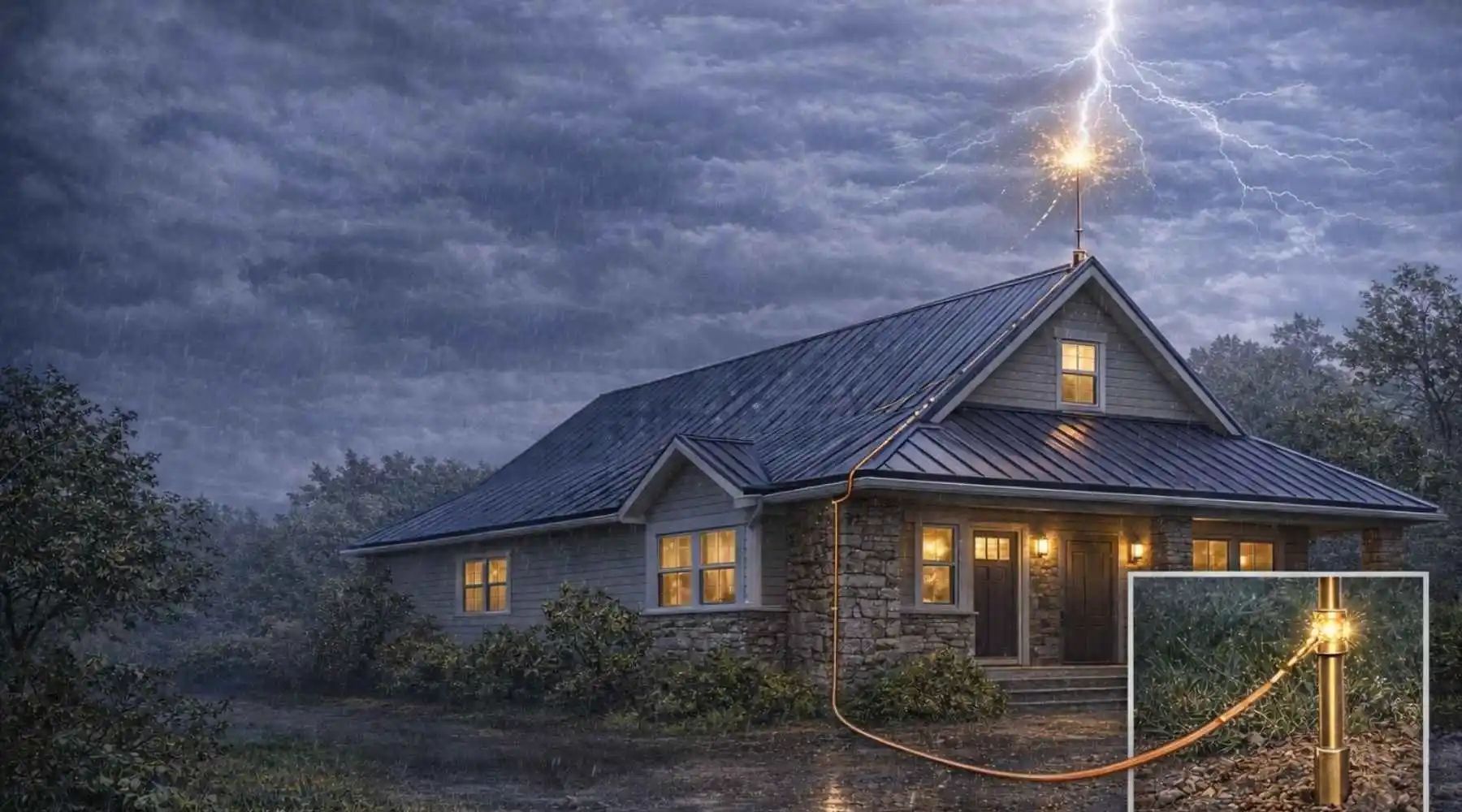
Even though metal roofs do not typically require grounding, certain conditions may warrant grounding or lightning protection systems. The company also provides lightning systems.
When a home has a specific lightning rod system, the roof elements can be bonded to it so that the released energy can be controlled.
What About Electrical Safety and Static Electricity?
The next issue homeowners complain about is static electricity buildup. In real-life residential conditions, there is no safety issue with static buildup on the metal roof.
Why?
- Smaller roof panels are also attached to grounded framing parts.
- The building is already connected to the home’s electrical grounding.
- Naturally, the static charge is dissipated in rain, humidity, and airflow.
Do Metal Roofs Increase Lightning Strike Risk?
No. Research and industry statistics consistently indicate that lightning strikes are not affected by roof material.
Lightning is influenced by:
- Height
- Geographic location
- Surrounding terrain
- Storm intensity
Eliminate the prestige that lightning would be naturally attracted to a metal roof. When a strike is made, the conductive properties of metal will, in fact, cause the energy to disperse safely as opposed to being trapped in heat.
Benefits of Metal Roofing Beyond Safety
Knowledge of grounding also explains the growing popularity of metal roofs:
- Fire-resistant
- Durable in extreme weather
- Long lifespan
- Energy-efficient
- Low maintenance
These practical pros are often lost amid safety myths, even though modern metal roofing systems are designed with performance and protection in mind.
Should You Really Interview an Electrician or a Roofer?
In case you do not know whether a certain situation needs grounding, it is always better to do it:
- Roofing contractor, licensed.
- A local building inspector
An electrician who is conversant with area codes.
They can evaluate your set, place, and any systems that may exist to offer advice regarding your house.
Final Thoughts
For most homeowners, metal roofs do not need to be grounded. They are not lightning magnets, do not pose electrical hazards, and are not expected to be grounded under the conventional building code for residences. In fact, metal-like roofing may provide better fire resistance and safety than the standard material.
The trick is to ensure it is installed and compliant with local laws, not grounded unnecessarily because of old myths.
Knowledge of how modern roofing systems function helps homeowners make confident, informed choices. From standards, material selection, or code compliance, the right information is key to ensuring your roof works as it should over the next couple of years.